THE ADVENTURE COLLECTIVE® · Independent discovery and booking for outdoor travel

Walk white travertine terraces, wander the marble streets of Ephesus and watch balloons rise over Cappadocia on this five-day loop through Turkey’s Aegean and central plateau. Expect long days of walking on uneven surfaces, domestic flights, and a mix of guided history and hands-on local craft stops.
Walk white travertine terraces, wander the marble streets of Ephesus and watch balloons rise over Cappadocia on this five-day loop through Turkey’s Aegean and central plateau. Expect long days of walking on uneven surfaces, domestic flights, and a mix of guided history and hands-on local craft stops.
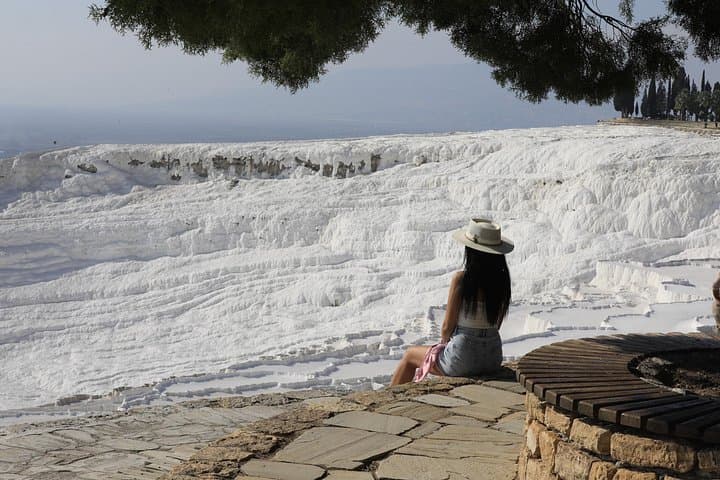
Dawn breaks over white terraces and sunlit ruins: a woman steps barefoot onto Pamukkale’s travertines and pauses, the thermal water whispering around her ankles as steam rises into a chill morning. Later, in the shade of Ephesus’s marble colonnades, a guide traces the sweep of Roman processions along Frontinus Street while the theater’s stones hum with centuries of voices. By Day 4, the landscape has shifted again — canyon walls and cone-shaped fairy chimneys curve beneath a dozen hot air balloons, their colored envelopes like planets suspended above a lunar plain.
Verified experiences and guided adventures in the surrounding area.
Operated by Turkey Experiences · Kuşadası, Aydın
Dawn breaks over white terraces and sunlit ruins: a woman steps barefoot onto Pamukkale’s travertines and pauses, the thermal water whispering around her ankles as steam rises into a chill morning. Later, in the shade of Ephesus’s marble colonnades, a guide traces the sweep of Roman processions along Frontinus Street while the theater’s stones hum with centuries of voices. By Day 4, the landscape has shifted again — canyon walls and cone-shaped fairy chimneys curve beneath a dozen hot air balloons, their colored envelopes like planets suspended above a lunar plain.
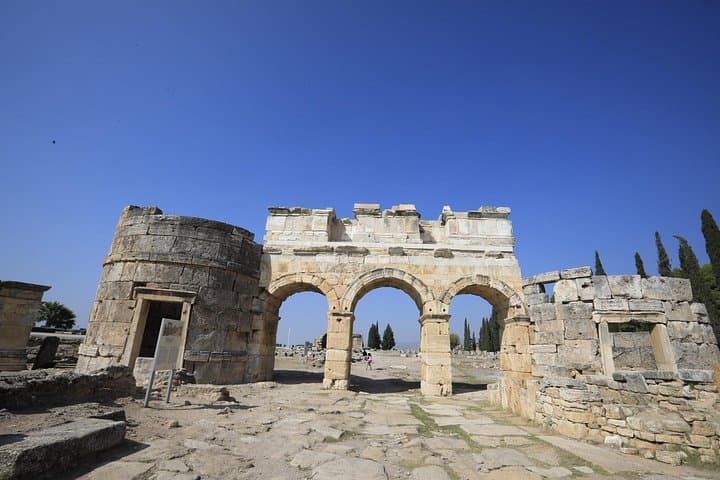
This five-day loop stitches three of western Turkey’s most arresting landscapes into one coherent route: the calcium-carved terraces and Hierapolis necropolis at Pamukkale; the shoreline grandeur and classical urbanism of Ephesus; and the surreal valleys and rock-hewn churches of Cappadocia, with optional moments in between — Aphrodisias, Priene, Miletus, and the abandoned Greek houses of Doğanbey.
Geology sets the stage. Pamukkale’s travertines formed over millennia as mineral-rich springs deposited calcium carbonate, building tiered white pools. Coastal Ephesus, once a bustling harbor, has retreated inland as the Mäander River delivered silt. Cappadocia’s fairy chimneys owe their shapes to volcanic tuff eroded by wind and rain, soft enough to be carved into dwellings and churches yet durable when capped by harder stone.
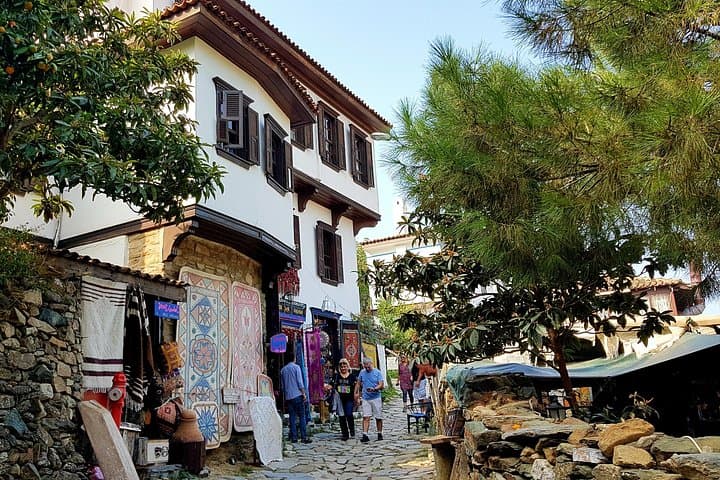
Culturally the route spans layers: Hellenistic city planning, Roman civic life and baths, Byzantine monasticism, and rural Anatolian handicrafts still practiced in Avanos. Local guides — trained and licensed — anchor each visit with dates, restoration histories and brief archeological context. Small-group formats (max ~10) keep visits focused and move efficiently between sites.
Practical edge: expect a lot of walking on uneven surfaces — cobbles, packed tuff, and wet travertine — so solid footwear and steady footing matter. Timings are deliberate: sunrise balloon flights and morning tours at Ephesus avoid heat and crowds; mid-day is best for a long lunch and pottery demos in Avanos. Hydration is constant; sunscreen and a sun hat are non-negotiable in summer. Bring cash for secondary entrance fees (Antique Pool) and tips.
Plan logistics around transfers: flights link Istanbul, Denizli (Pamukkale), Izmir (Ephesus), and Cappadocia; the itinerary includes domestic segments and multiple hotel nights (Kuşadası, Cappadocia). Optional add-ons — Cleopatra’s Antique Pool swim, paragliding over Pamukkale — add memorable perspectives but can change timing. For mindful travel, respect boardwalks at Pamukkale and follow guide instructions in fragile archaeological zones to limit wear.
For travelers who want history, geology and landscape in one sweep, this is a compact, varied itinerary — equal parts classroom and open-air theater, with a practical rhythm that lets sunrise balloons and ancient stone both have their moment.
moderate.
5 days.
Moderate fitness required — multiple 1–2 hour walks on uneven, sometimes wet terrain each day; ability to manage stairs and short hikes.
The balloon is included for some booking options but optional on others — check your package level and book the balloon early to secure a slot.
You can bathe in designated thermal pools; the Antique (Cleopatra) Pool often has an extra fee and is accessed separately from the free travertine terraces.
Expect multiple walks of 30–90 minutes daily over uneven ground; overall the trip involves several hours of on-foot exploration each day.
Yes — the itinerary includes domestic flights between Istanbul, Denizli/Izmir and Cappadocia on scheduled days as part of the package.
Children can participate, but the tour notes it’s not recommended for those with significant back, heart or mobility problems due to uneven terrain and stairs.
Guides are licensed by Turkey’s Ministry of Culture & Tourism; English-language guides are provided for the semi-private tours in this package.
Ephesus was a major Roman port and civic center; Hierapolis (above Pamukkale) is an ancient spa city founded in the Hellenistic era and later expanded by Rome and Byzantium.
Pamukkale’s terraces are sensitive to foot traffic and water diversion; visiting is managed with boardwalks and controlled flows — follow site rules to help preserve the formations.
Turkey Experiences operates guided outdoor trips and adventures with an emphasis on safety, stewardship, and memorable experiences.
Dawn breaks over white terraces and sunlit ruins: a woman steps barefoot onto Pamukkale’s travertines and pauses, the thermal water whispering around her ankles as steam rises into a chill morning. Later, in the shade of Ephesus’s marble colonnades, a guide traces the sweep of Roman processions along Frontinus Street while the theater’s stones hum with centuries of voices. By Day 4, the landscape has shifted again — canyon walls and cone-shaped fairy chimneys curve beneath a dozen hot air balloons, their colored envelopes like planets suspended above a lunar plain.
Dawn breaks over white terraces and sunlit ruins: a woman steps barefoot onto Pamukkale’s travertines and pauses, the thermal water whispering around her ankles as steam rises into a chill morning. Later, in the shade of Ephesus’s marble colonnades, a guide traces the sweep of Roman processions along Frontinus Street while the theater’s stones hum with centuries of voices. By Day 4, the landscape has shifted again — canyon walls and cone-shaped fairy chimneys curve beneath a dozen hot air balloons, their colored envelopes like planets suspended above a lunar plain.
This five-day loop stitches three of western Turkey’s most arresting landscapes into one coherent route: the calcium-carved terraces and Hierapolis necropolis at Pamukkale; the shoreline grandeur and classical urbanism of Ephesus; and the surreal valleys and rock-hewn churches of Cappadocia, with optional moments in between — Aphrodisias, Priene, Miletus, and the abandoned Greek houses of Doğanbey.
Geology sets the stage. Pamukkale’s travertines formed over millennia as mineral-rich springs deposited calcium carbonate, building tiered white pools. Coastal Ephesus, once a bustling harbor, has retreated inland as the Mäander River delivered silt. Cappadocia’s fairy chimneys owe their shapes to volcanic tuff eroded by wind and rain, soft enough to be carved into dwellings and churches yet durable when capped by harder stone.
Culturally the route spans layers: Hellenistic city planning, Roman civic life and baths, Byzantine monasticism, and rural Anatolian handicrafts still practiced in Avanos. Local guides — trained and licensed — anchor each visit with dates, restoration histories and brief archeological context. Small-group formats (max ~10) keep visits focused and move efficiently between sites.
Practical edge: expect a lot of walking on uneven surfaces — cobbles, packed tuff, and wet travertine — so solid footwear and steady footing matter. Timings are deliberate: sunrise balloon flights and morning tours at Ephesus avoid heat and crowds; mid-day is best for a long lunch and pottery demos in Avanos. Hydration is constant; sunscreen and a sun hat are non-negotiable in summer. Bring cash for secondary entrance fees (Antique Pool) and tips.
Plan logistics around transfers: flights link Istanbul, Denizli (Pamukkale), Izmir (Ephesus), and Cappadocia; the itinerary includes domestic segments and multiple hotel nights (Kuşadası, Cappadocia). Optional add-ons — Cleopatra’s Antique Pool swim, paragliding over Pamukkale — add memorable perspectives but can change timing. For mindful travel, respect boardwalks at Pamukkale and follow guide instructions in fragile archaeological zones to limit wear.
For travelers who want history, geology and landscape in one sweep, this is a compact, varied itinerary — equal parts classroom and open-air theater, with a practical rhythm that lets sunrise balloons and ancient stone both have their moment.