THE ADVENTURE COLLECTIVE® · Independent discovery and booking for outdoor travel

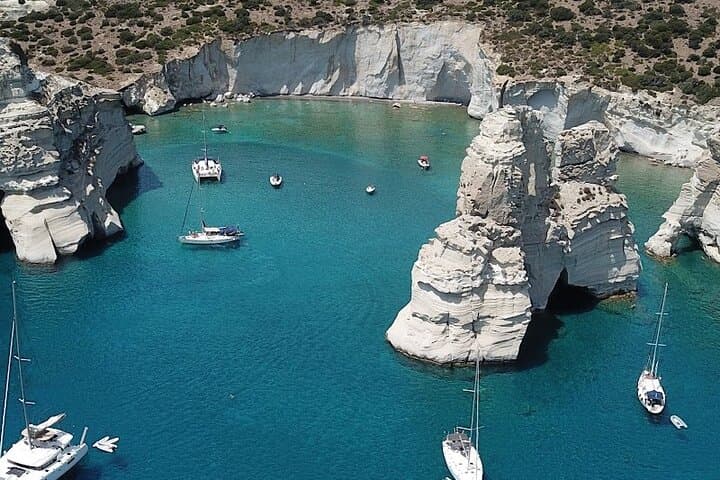
See Milos, Kimolos and uninhabited Polyegos from above on a 20-minute helicopter loop. This intimate flight highlights Kleftiko’s cliffs, abandoned mining scars and coastal caves—ideal for photographers and short-duration thrill-seekers.
See Milos, Kimolos and uninhabited Polyegos from above on a 20-minute helicopter loop. This intimate flight highlights Kleftiko’s cliffs, abandoned mining scars and coastal caves—ideal for photographers and short-duration thrill-seekers.
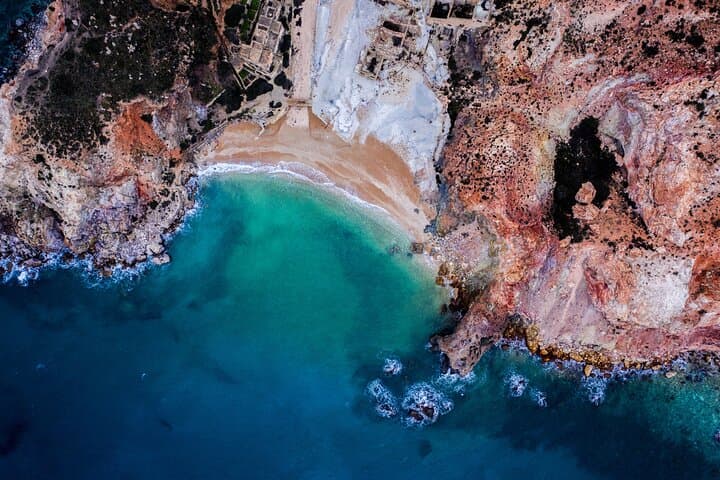
You lift from the small heliport at Milos Airport and the Aegean opens beneath you—rock ribs and white cliffs, turquoise bays, and islands that look hand-carved from chalk. In twenty minutes the helicopter threads a route over Kleftiko’s vertical reefs, skims the volcanic scars of Thiorichia and arcs past the tiny, goat-patrolled Polyegos before sweeping along Kimolos’ pale perlite slopes.
Verified experiences and guided adventures in the surrounding area.
Operated by hoper · Adamas, South Aegean
You lift from the small heliport at Milos Airport and the Aegean opens beneath you—rock ribs and white cliffs, turquoise bays, and islands that look hand-carved from chalk. In twenty minutes the helicopter threads a route over Kleftiko’s vertical reefs, skims the volcanic scars of Thiorichia and arcs past the tiny, goat-patrolled Polyegos before sweeping along Kimolos’ pale perlite slopes.
Milos is a geologist’s map: obsidian and volcanic tuff shaped its coves and fed ancient mines. The island’s history is visible in its harbor towns and the discovery of the Venus de Milo; mineral extraction and fishing have long defined local life. Kimolos’ chalky deposits and Polyegos’ isolation speak to a quieter maritime culture and habitats for seabirds and the rare Mediterranean monk seal.
From the cabin you’ll notice contrasts—the dark, rusted quarry scars that once fueled local industry and the pristine sea caves that now shelter marine life. The pilot’s narration points to the little Church of Agios Georgios perched on an islet and the abandoned mining terraces that color the coast.
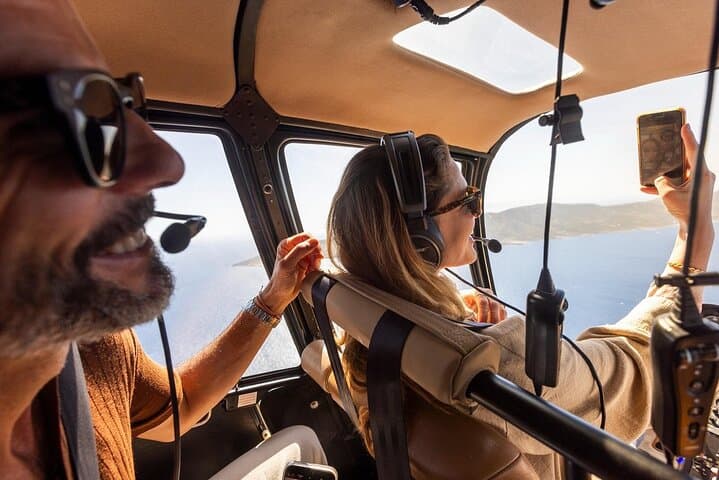
Practicalities are straightforward: this is a short, intimate flight capped at four passengers with pickup from Milos Airport; bottled water is provided. Bring a camera and sunglasses, keep documents handy for check-in, and time your flight near sunset for the richest light. Expect brief security checks, weight declarations, and a strict no-hover policy over sensitive marine sites to protect monk seals. This flight is a fast, high-impact way to read the islands’ geology and shoreline in a single sweep—pure perspective with minimal footprint.
easy.
20–30 minutes.
Minimal physical fitness required; ability to board a helicopter and sit unassisted for the short flight.
The scheduled airborne time is 20 minutes; meet at the heliport inside Milos Airport for check-in and boarding.
Yes—flights are limited to four passengers and you’ll be asked to provide weights during booking for load balance and safety.
This is an observation flight that passes over Polyegos and nearby coastlines; there are no landings on uninhabited islets.
Flights are canceled for unsafe weather; the operator offers refunds for cancellations made at least 24 hours prior or if the flight is canceled due to conditions.
Milos has a long mining history—obsidian and later sulfur and perlite extraction shaped its economy and coastline; the island also produced the famous Venus de Milo statue.
Polyegos and several Aegean sea caves are important marine habitats; maintain distance from haul-out sites and follow operators’ rules to minimize disturbance.
hoper operates guided outdoor trips and adventures with an emphasis on safety, stewardship, and memorable experiences.

You lift from the small heliport at Milos Airport and the Aegean opens beneath you—rock ribs and white cliffs, turquoise bays, and islands that look hand-carved from chalk. In twenty minutes the helicopter threads a route over Kleftiko’s vertical reefs, skims the volcanic scars of Thiorichia and arcs past the tiny, goat-patrolled Polyegos before sweeping along Kimolos’ pale perlite slopes.
You lift from the small heliport at Milos Airport and the Aegean opens beneath you—rock ribs and white cliffs, turquoise bays, and islands that look hand-carved from chalk. In twenty minutes the helicopter threads a route over Kleftiko’s vertical reefs, skims the volcanic scars of Thiorichia and arcs past the tiny, goat-patrolled Polyegos before sweeping along Kimolos’ pale perlite slopes.
Milos is a geologist’s map: obsidian and volcanic tuff shaped its coves and fed ancient mines. The island’s history is visible in its harbor towns and the discovery of the Venus de Milo; mineral extraction and fishing have long defined local life. Kimolos’ chalky deposits and Polyegos’ isolation speak to a quieter maritime culture and habitats for seabirds and the rare Mediterranean monk seal.
From the cabin you’ll notice contrasts—the dark, rusted quarry scars that once fueled local industry and the pristine sea caves that now shelter marine life. The pilot’s narration points to the little Church of Agios Georgios perched on an islet and the abandoned mining terraces that color the coast.
Practicalities are straightforward: this is a short, intimate flight capped at four passengers with pickup from Milos Airport; bottled water is provided. Bring a camera and sunglasses, keep documents handy for check-in, and time your flight near sunset for the richest light. Expect brief security checks, weight declarations, and a strict no-hover policy over sensitive marine sites to protect monk seals. This flight is a fast, high-impact way to read the islands’ geology and shoreline in a single sweep—pure perspective with minimal footprint.