THE ADVENTURE COLLECTIVE® · Independent discovery and booking for outdoor travel

A brisk, two-day cultural loop that pairs Pamukkale’s white travertine terraces and Hierapolis ruins with the marble streets of Ephesus and a night in Kusadasi. Practical for travelers who want UNESCO highlights plus optional thermal swims or paragliding.
A brisk, two-day cultural loop that pairs Pamukkale’s white travertine terraces and Hierapolis ruins with the marble streets of Ephesus and a night in Kusadasi. Practical for travelers who want UNESCO highlights plus optional thermal swims or paragliding.
You arrive on a sun-warmed terrace of white stone, steam lifting off shallow thermal pools as the cliff-edge light slices across calcified steps. The travertines of Pamukkale glint like a frozen river daring you to trace its rim; later the cobbled avenues of Ephesus open into a theater that still hears the echo of ancient orators.
Verified experiences and guided adventures in the surrounding area.
Operated by Turkey Experiences · Pamukkale, Denizli
You arrive on a sun-warmed terrace of white stone, steam lifting off shallow thermal pools as the cliff-edge light slices across calcified steps. The travertines of Pamukkale glint like a frozen river daring you to trace its rim; later the cobbled avenues of Ephesus open into a theater that still hears the echo of ancient orators.
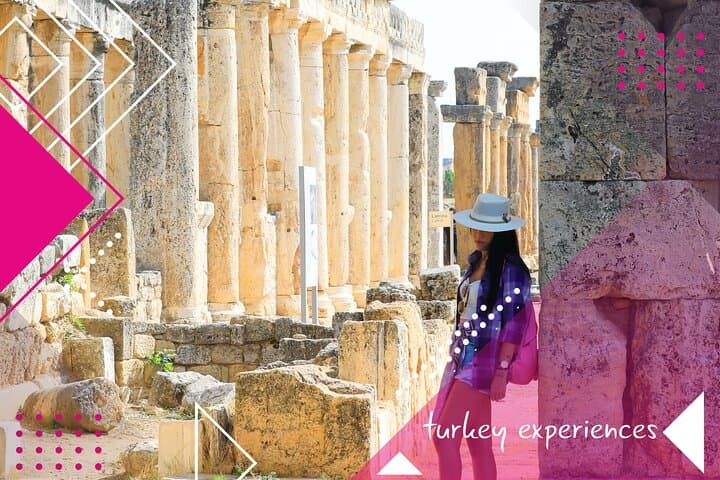
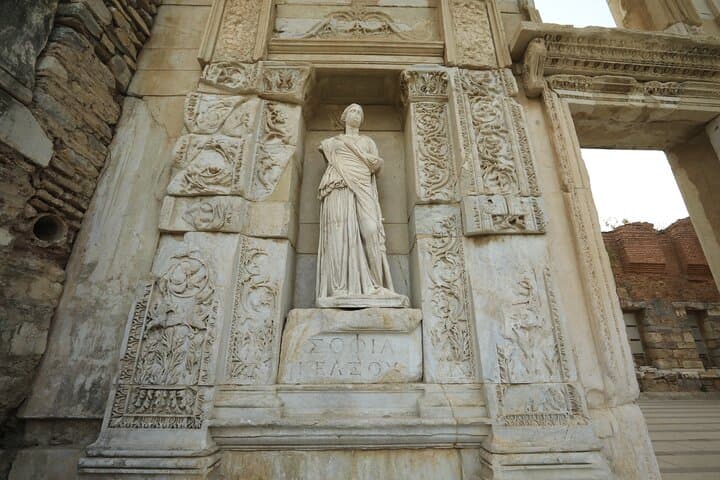
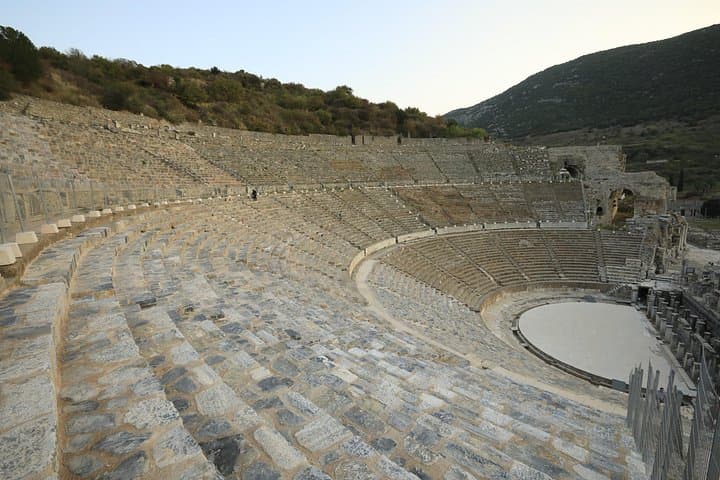
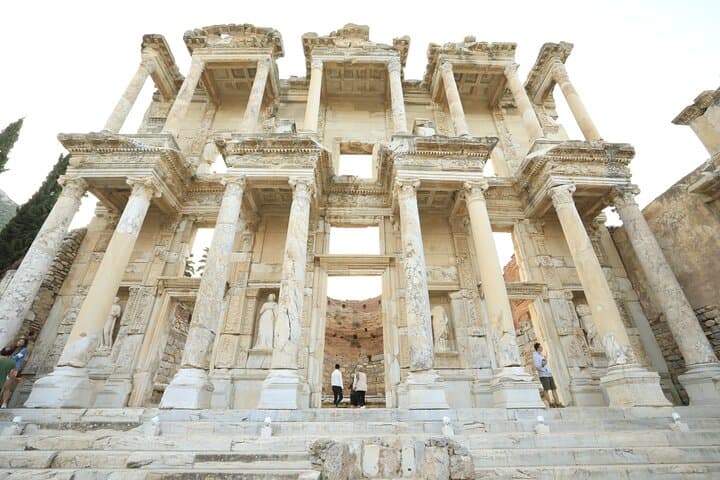
This short, concentrated route threads two UNESCO sites with Aegean coast culture. Pamukkale and its Roman spa city Hierapolis have drawn travelers to mineral springs for millennia; the geological terraces formed by calcium-rich waters flowing down a slope over tens of thousands of years. Ephesus, once a major Mediterranean port, preserves Celsus Library, the Great Theatre and the footprint of a commerce-and-faith crossroads that shaped late antiquity. Kusadasi provides a modern seaside contrast with Ottoman caravanserai and small port-side bazaars.
Travel here mixes easy walking over uneven stone with moments that require steady footing and sun management. Expect guided commentary on ancient irrigation, the archaeological finds from terraces and the living crafts of the Aegean towns. Optional extras—an on-site thermal swim in the Antique (Cleopatra) Pool or a short paragliding run above Pamukkale—add variety.
Practical guidance: start early to avoid crowds, wear rubber-soled shoes for slick travertines, and carry a refillable water bottle; the site limits where you can walk and asks visitors to remove shoes in parts of the terraces to protect the formations. If using domestic flights included in the package, keep passport details and luggage limits ready. With basic fitness and sun protection, this two-day loop is a concentrated, tangible slice of Turkey’s layered past and geology.
moderate.
2 days.
Moderate level of fitness—capable of multiple hours of walking on uneven surfaces and climbing short stairways.
Guided entrance arrangements are handled by the operator; typical site admission is included in the itinerary as noted, but some optional extras like the Antique Pool have additional fees.
Yes — the operator offers a discounted add-on for a Cappadocia hot air balloon experience if you elect to connect onward instead of returning to Istanbul.
The itinerary allows time to wade on the terraces and to visit the Antique/Cleopatra Pool for a fee at the spa facility; note rules about shoes and protected areas.
The operator states 15 kg checked plus 8 kg cabin per person for domestic flights; advise the supplier ahead of time if you need more capacity.
Ephesus was a major Roman port and early Christian center; Hierapolis developed as a spa town under Roman and Byzantine rule, linked to the region’s hot springs.
Pamukkale’s travertines are fragile; visitors must follow designated paths and shoe rules to prevent erosion, and local water management keeps the terraces fed while balancing tourism demand.
Turkey Experiences operates guided outdoor trips and adventures with an emphasis on safety, stewardship, and memorable experiences.
You arrive on a sun-warmed terrace of white stone, steam lifting off shallow thermal pools as the cliff-edge light slices across calcified steps. The travertines of Pamukkale glint like a frozen river daring you to trace its rim; later the cobbled avenues of Ephesus open into a theater that still hears the echo of ancient orators.
You arrive on a sun-warmed terrace of white stone, steam lifting off shallow thermal pools as the cliff-edge light slices across calcified steps. The travertines of Pamukkale glint like a frozen river daring you to trace its rim; later the cobbled avenues of Ephesus open into a theater that still hears the echo of ancient orators.
This short, concentrated route threads two UNESCO sites with Aegean coast culture. Pamukkale and its Roman spa city Hierapolis have drawn travelers to mineral springs for millennia; the geological terraces formed by calcium-rich waters flowing down a slope over tens of thousands of years. Ephesus, once a major Mediterranean port, preserves Celsus Library, the Great Theatre and the footprint of a commerce-and-faith crossroads that shaped late antiquity. Kusadasi provides a modern seaside contrast with Ottoman caravanserai and small port-side bazaars.
Travel here mixes easy walking over uneven stone with moments that require steady footing and sun management. Expect guided commentary on ancient irrigation, the archaeological finds from terraces and the living crafts of the Aegean towns. Optional extras—an on-site thermal swim in the Antique (Cleopatra) Pool or a short paragliding run above Pamukkale—add variety.
Practical guidance: start early to avoid crowds, wear rubber-soled shoes for slick travertines, and carry a refillable water bottle; the site limits where you can walk and asks visitors to remove shoes in parts of the terraces to protect the formations. If using domestic flights included in the package, keep passport details and luggage limits ready. With basic fitness and sun protection, this two-day loop is a concentrated, tangible slice of Turkey’s layered past and geology.