THE ADVENTURE COLLECTIVE® · Independent discovery and booking for outdoor travel

Walk Pamukkale’s chalky travertines, step into Ephesus’ Roman avenues and rise over Cappadocia in a hot-air balloon on this compact, semi-private four-day tour. Expect cultural depth, geology up close, and practical logistics—all organized for travelers who want an immersive route without the guesswork.
Walk Pamukkale’s chalky travertines, step into Ephesus’ Roman avenues and rise over Cappadocia in a hot-air balloon on this compact, semi-private four-day tour. Expect cultural depth, geology up close, and practical logistics—all organized for travelers who want an immersive route without the guesswork.
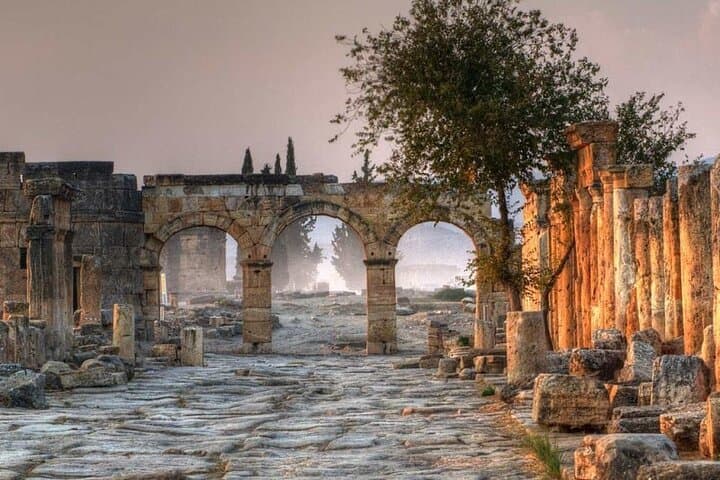
Morning arrives on the travertines like a careful painter: light slides over white calcium terraces, pools holding the sky in miniature. You stand barefoot where generations have waded—feet cool, socks folded in your hand—while a guide traces Hierapolis’ stone streets and names the emperors who once walked them. The day unfurls as a sequence of textures: salt-soft terraces, the mosaic grit of Roman baths, and Ephesus’ marble façades rising sharp against the Aegean light.
Verified experiences and guided adventures in the surrounding area.
Operated by Turkey Experiences · Pamukkale, Denizli Province
Morning arrives on the travertines like a careful painter: light slides over white calcium terraces, pools holding the sky in miniature. You stand barefoot where generations have waded—feet cool, socks folded in your hand—while a guide traces Hierapolis’ stone streets and names the emperors who once walked them. The day unfurls as a sequence of textures: salt-soft terraces, the mosaic grit of Roman baths, and Ephesus’ marble façades rising sharp against the Aegean light.
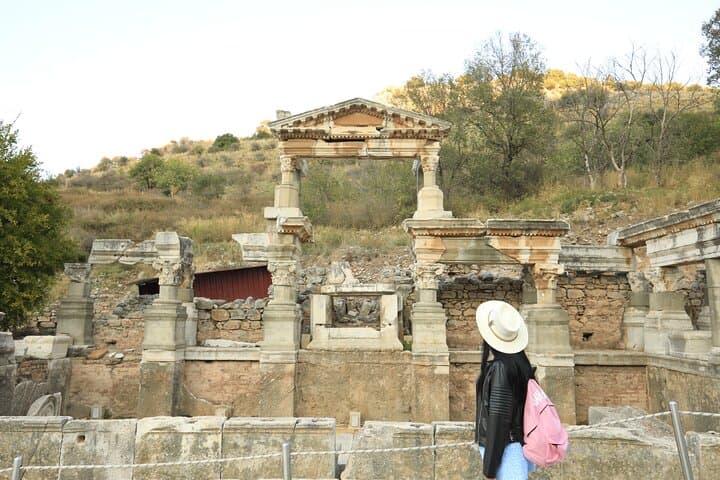
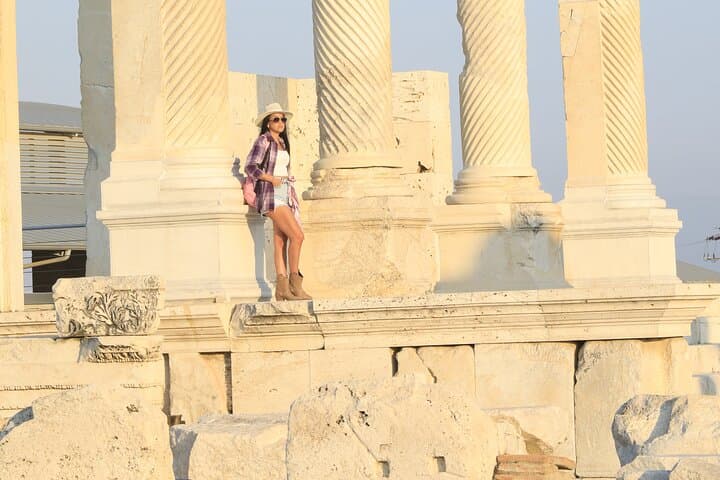
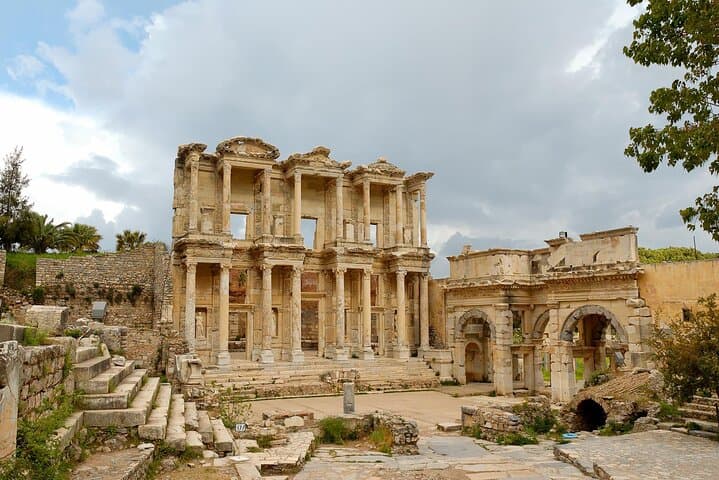
This semi-private, four-day route stitches together two of Turkey’s most theatrical landscapes. Pamukkale’s travertines are a geological ledger—thermal waters depositing carbonate to build the famous white shelves. Above them, Hierapolis keeps the slow record of prescriptive architecture: necropoleis, theaters and sacred pools where Roman citizens bathed. A short drive toward the coast brings you to Kusadasi and then Ephesus, once a bustling port and a crossroads of religion and trade; the Celsus Library and Grand Theater still hint at that old importance.
From the natural springs of Denizli to Cappadocia’s pumice-carved valleys, the itinerary balances geology with culture. Cappadocia’s fairy chimneys are wind and ash at work, soft tuff carved into towers and rooms that became churches, homes, and hideouts. The trip includes a sunrise hot-air balloon flight over that lunar panorama and a camel ride through the Rose and Red Valleys—two different ways to let the landscape move under you.
Locals keep the region’s traditions alive: carpet cooperatives in Cappadocia, pottery in Avanos, and a market rhythm in Kusadasi where olives, figs and sea-salty anchovies appear on small plates. Expect a professional guide licensed by the Ministry of Culture and Tourism, domestic flights between Istanbul, Denizli and Cappadocia, three lunches and hotel pick-ups, and a maximum group of ten for a personalized feel.
Practical edge: Pamukkale requires you to remove shoes on the travertines; bring light socks or a pack to carry them. Domestic flights typically allow 15 kg checked luggage plus an 8 kg cabin bag—confirm details early. The hot-air balloon is scheduled at sunrise and can be weather-dependent; allow a buffer before any international connections. Sun protection, steady walking shoes for archaeological sites and a refillable water bottle will make each day easier.
In four days you’ll move from thermal springs to classical ruins to volcanic valleys. Each stop asks for different pacing—slow in the pools, curious in the museums, deliberate on the balloon platform—and rewards with moments that are both cinematic and quietly instructive: the sound of pigeons on Guvercin Adasi, the warm steam of a thermal spring daring you to wade, and the hush of Cappadocia as balloons lift into a pale gold sky.
moderate.
4 days.
Moderate—be comfortable walking on uneven surfaces, climbing stairs and short trails; some early wakeups for flights/balloons.
Yes—the itinerary includes a sunrise hot-air balloon flight in Cappadocia; it is weather-dependent and may be rescheduled for safety.
Yes—walking on the white travertines must be done barefoot to protect the formations; bring a small bag for your shoes.
Yes—there’s an option to connect from Kos or Rhodes with a ferry; inform the operator at booking so arrangements can be made.
The tour includes three lunches, multiple breakfasts, and one night in the packaged hotel plan; check your booking for exact hotel selections.
Not recommended for travelers with spinal or serious heart issues; infants must sit on laps and pregnancy is advised against due to physical elements like ballooning and trekking.
You must provide passport and flight info as requested; changes late in the process can affect bookings and may incur fees—notify the operator promptly.
Ephesus was a major Roman port and early Christian center; its marble library and theater remain among the best-preserved ancient urban sites in the Aegean.
Stick to designated paths at archaeological and natural sites; Pamukkale’s travertines are protected—walking barefoot helps protect their fragile surfaces and responsible balloon operators minimize environmental impact.
Turkey Experiences operates guided outdoor trips and adventures with an emphasis on safety, stewardship, and memorable experiences.
Morning arrives on the travertines like a careful painter: light slides over white calcium terraces, pools holding the sky in miniature. You stand barefoot where generations have waded—feet cool, socks folded in your hand—while a guide traces Hierapolis’ stone streets and names the emperors who once walked them. The day unfurls as a sequence of textures: salt-soft terraces, the mosaic grit of Roman baths, and Ephesus’ marble façades rising sharp against the Aegean light.
Morning arrives on the travertines like a careful painter: light slides over white calcium terraces, pools holding the sky in miniature. You stand barefoot where generations have waded—feet cool, socks folded in your hand—while a guide traces Hierapolis’ stone streets and names the emperors who once walked them. The day unfurls as a sequence of textures: salt-soft terraces, the mosaic grit of Roman baths, and Ephesus’ marble façades rising sharp against the Aegean light.
This semi-private, four-day route stitches together two of Turkey’s most theatrical landscapes. Pamukkale’s travertines are a geological ledger—thermal waters depositing carbonate to build the famous white shelves. Above them, Hierapolis keeps the slow record of prescriptive architecture: necropoleis, theaters and sacred pools where Roman citizens bathed. A short drive toward the coast brings you to Kusadasi and then Ephesus, once a bustling port and a crossroads of religion and trade; the Celsus Library and Grand Theater still hint at that old importance.
From the natural springs of Denizli to Cappadocia’s pumice-carved valleys, the itinerary balances geology with culture. Cappadocia’s fairy chimneys are wind and ash at work, soft tuff carved into towers and rooms that became churches, homes, and hideouts. The trip includes a sunrise hot-air balloon flight over that lunar panorama and a camel ride through the Rose and Red Valleys—two different ways to let the landscape move under you.
Locals keep the region’s traditions alive: carpet cooperatives in Cappadocia, pottery in Avanos, and a market rhythm in Kusadasi where olives, figs and sea-salty anchovies appear on small plates. Expect a professional guide licensed by the Ministry of Culture and Tourism, domestic flights between Istanbul, Denizli and Cappadocia, three lunches and hotel pick-ups, and a maximum group of ten for a personalized feel.
Practical edge: Pamukkale requires you to remove shoes on the travertines; bring light socks or a pack to carry them. Domestic flights typically allow 15 kg checked luggage plus an 8 kg cabin bag—confirm details early. The hot-air balloon is scheduled at sunrise and can be weather-dependent; allow a buffer before any international connections. Sun protection, steady walking shoes for archaeological sites and a refillable water bottle will make each day easier.
In four days you’ll move from thermal springs to classical ruins to volcanic valleys. Each stop asks for different pacing—slow in the pools, curious in the museums, deliberate on the balloon platform—and rewards with moments that are both cinematic and quietly instructive: the sound of pigeons on Guvercin Adasi, the warm steam of a thermal spring daring you to wade, and the hush of Cappadocia as balloons lift into a pale gold sky.