THE ADVENTURE COLLECTIVE® · Independent discovery and booking for outdoor travel

Take on Clear Creek’s most technical stretch: a five-mile, class IV–V run packed with continuous rapids, mining-era scenery, and high-adrenaline moves. This guide tells you what to expect and how to prepare for the Advanced Gold Rush section.
Take on Clear Creek’s most technical stretch: a five-mile, class IV–V run packed with continuous rapids, mining-era scenery, and high-adrenaline moves. This guide tells you what to expect and how to prepare for the Advanced Gold Rush section.
The canyon tightens, water hisses over boulders and the raft jerks forward — Clear Creek doesn’t give you time to acclimate. This Advanced Gold Rush run drops more than 100 feet per mile across a jagged five-mile stretch, throwing continuous class IV–V rapids like Beaver Falls, Guide Ejector, Double Knife and Corkscrew at anyone bold enough to take a stroke.
Verified experiences and guided adventures in the surrounding area.
Operated by Colorado Adventure Guides · Dumont, Colorado
The canyon tightens, water hisses over boulders and the raft jerks forward — Clear Creek doesn’t give you time to acclimate. This Advanced Gold Rush run drops more than 100 feet per mile across a jagged five-mile stretch, throwing continuous class IV–V rapids like Beaver Falls, Guide Ejector, Double Knife and Corkscrew at anyone bold enough to take a stroke.
The river runs through the cradle of Colorado’s 1859 gold rush; Idaho Springs, a short drive away, still shows rusted mine timbers and stone foundations that remind you people chased this water as much as you now chase its rapids. Geologically, Clear Creek carves a narrow canyon of Precambrian and Paleozoic rock, producing steep gradient drops and tight hydraulics that create the technical waves and holes this section is known for.
Culturally, the corridor balances high-adrenaline sport with mining-era tourism — expect to see historic mills, occasional hikers, and anglers on calmer stretches. Guides will brief you on line calls, ferrying, and how to punch eddies; wetsuits and safety gear are included, but the trip requires prior whitewater experience and strong swimming skills.
Practical edge: this run is seasonal and water-level dependent (best in high snowmelt, typically June–July), minimum age is 16, and operators reserve the right to refuse participation for safety. Hydrate before you arrive, wear closed-toe water shoes, and plan logistics around the Dumont meeting point. If you meet the physical and technical requirements, the Gold Rush section delivers punchy, continuous whitewater and a direct connection to Colorado’s mining past.
challenging.
3–4 hours.
High level of cardiovascular fitness and upper-body endurance; must be able to swim in moving water.
Participants must be at least 16 and in excellent physical condition; prior whitewater experience and the ability to swim in moving water are required.
Yes; certified guides provide helmets, PFDs, and required wetsuits for cold water conditions.
This stretch runs typically in late spring to early summer when snowmelt produces sufficient flows—most commonly June and July—and is run only at optimal water levels.
Operators will cancel or switch to a different section for safety; cancelations may occur for bad weather or insufficient flows with refund timelines per the provider's policy.
Idaho Springs is where Colorado’s 1859 gold rush began; the Clear Creek corridor still bears mining ruins and historic mill sites along the river.
Flows are dependent on snowmelt and are sensitive to climate variability; follow Leave No Trace principles and avoid disturbing riparian vegetation to limit erosion.
Colorado Adventure Guides operates guided outdoor trips and adventures with an emphasis on safety, stewardship, and memorable experiences.
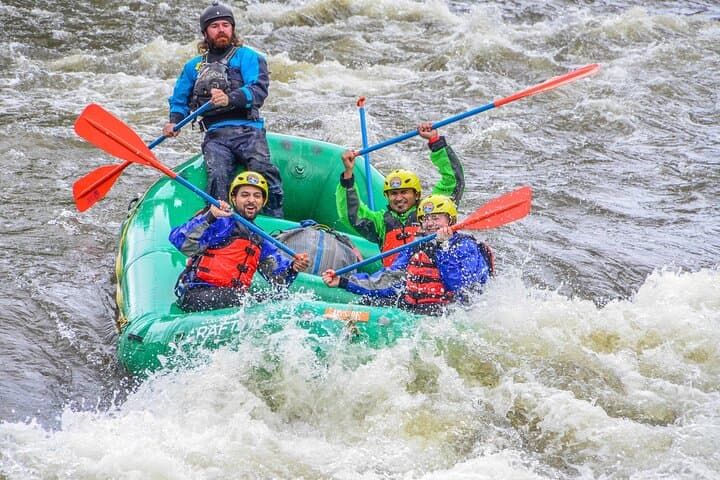
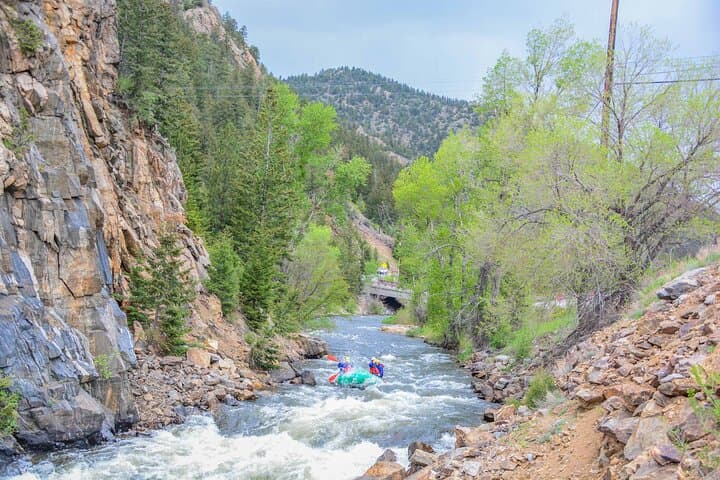
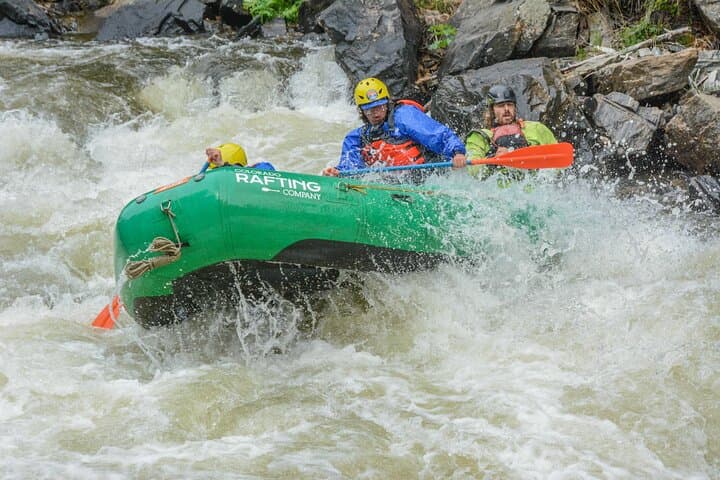
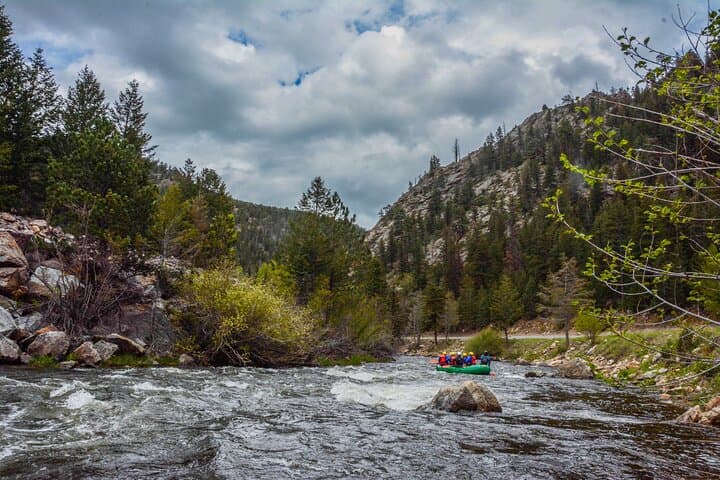
The canyon tightens, water hisses over boulders and the raft jerks forward — Clear Creek doesn’t give you time to acclimate. This Advanced Gold Rush run drops more than 100 feet per mile across a jagged five-mile stretch, throwing continuous class IV–V rapids like Beaver Falls, Guide Ejector, Double Knife and Corkscrew at anyone bold enough to take a stroke.
The canyon tightens, water hisses over boulders and the raft jerks forward — Clear Creek doesn’t give you time to acclimate. This Advanced Gold Rush run drops more than 100 feet per mile across a jagged five-mile stretch, throwing continuous class IV–V rapids like Beaver Falls, Guide Ejector, Double Knife and Corkscrew at anyone bold enough to take a stroke.
The river runs through the cradle of Colorado’s 1859 gold rush; Idaho Springs, a short drive away, still shows rusted mine timbers and stone foundations that remind you people chased this water as much as you now chase its rapids. Geologically, Clear Creek carves a narrow canyon of Precambrian and Paleozoic rock, producing steep gradient drops and tight hydraulics that create the technical waves and holes this section is known for.
Culturally, the corridor balances high-adrenaline sport with mining-era tourism — expect to see historic mills, occasional hikers, and anglers on calmer stretches. Guides will brief you on line calls, ferrying, and how to punch eddies; wetsuits and safety gear are included, but the trip requires prior whitewater experience and strong swimming skills.
Practical edge: this run is seasonal and water-level dependent (best in high snowmelt, typically June–July), minimum age is 16, and operators reserve the right to refuse participation for safety. Hydrate before you arrive, wear closed-toe water shoes, and plan logistics around the Dumont meeting point. If you meet the physical and technical requirements, the Gold Rush section delivers punchy, continuous whitewater and a direct connection to Colorado’s mining past.