THE ADVENTURE COLLECTIVE® · Independent discovery and booking for outdoor travel

Two guided cenote dives in Tulum for advanced divers: a deep descent into El Pit and cavern exploration at Dos Ojos. Expect haloclines, stalactite galleries, and guided routes kept within visual exits.
Two guided cenote dives in Tulum for advanced divers: a deep descent into El Pit and cavern exploration at Dos Ojos. Expect haloclines, stalactite galleries, and guided routes kept within visual exits.
You surface beneath a slatted roof of jungle light and feel the air cool after a long fin kick — the cenote swallows sound and pushes only the hush of dripping limestone toward you. The first plunge drops into El Pit, where a sulfur veil hugs the basin around 25 meters and a sharp halocline bends light like a moving seam. Later, Dos Ojos opens into vaulted caverns threaded with stalactites, bat galleries and shafts of sunlight that slice through clear water.
Verified experiences and guided adventures in the surrounding area.
Operated by La Calypso Dive Center · Tulum, Quintana Roo
You surface beneath a slatted roof of jungle light and feel the air cool after a long fin kick — the cenote swallows sound and pushes only the hush of dripping limestone toward you. The first plunge drops into El Pit, where a sulfur veil hugs the basin around 25 meters and a sharp halocline bends light like a moving seam. Later, Dos Ojos opens into vaulted caverns threaded with stalactites, bat galleries and shafts of sunlight that slice through clear water.
These sinkholes are collapsed sections of the Yucatán’s porous limestone, part of an enormous underground river system the Maya relied on for freshwater and ritual offerings. Geologically young and fragile, the passages carry freshwater over dense saltwater, producing the halocline effects that draw divers worldwide.
Expect controlled, guided cavern dives rather than full cave penetration: routes stay within visual contact of exits and natural light. Guides provide 5 mm wetsuits, lights and scuba gear; divers must present Advanced (Level 2) or equivalent certification and recent logged dives. The itinerary typically runs about five hours including surface intervals and transfers from the dive center.
Practical notes: check medical clearance for asthma or heart conditions, avoid diving within 24 hours of flying, and brief your buddy on line reels and light redundancy. Protect the formations by keeping hands off speleothems and using reef-safe, non-oily sunscreens before entering surface water. With proper training and attentiveness, these cenotes deliver dramatic lights, fossils, and a rare chance to move through a submerged limestone cathedral.
challenging.
5 hours.
Moderate to fit: you should be comfortable with repetitive heavy gear handling, buoyancy control, and multiple dives in a day.
Yes. Advanced Open Water or equivalent (deep/cavern endorsement) is required and must be shown at check-in.
El Pit reaches around 25 meters where the sulfur layer and halocline are prominent; cavern depths vary but are kept within guided visual-exit limits.
Yes. Transport from the dive center to the cenotes and cenote entrance fees are included in the tour price.
No. This outing is structured for certified advanced divers; operators do not accommodate Open Water-only participants on the deep or cavern dives.
Cenotes on the Yucatán were primary freshwater sources for the Maya and also served as ritual sites; many nearby caverns contain archaeological and paleontological deposits.
Operators enforce no-touch rules and limited group sizes; avoid sunscreens and lotions before entering water and follow guide briefings to minimize impact.
La Calypso Dive Center operates guided outdoor trips and adventures with an emphasis on safety, stewardship, and memorable experiences.
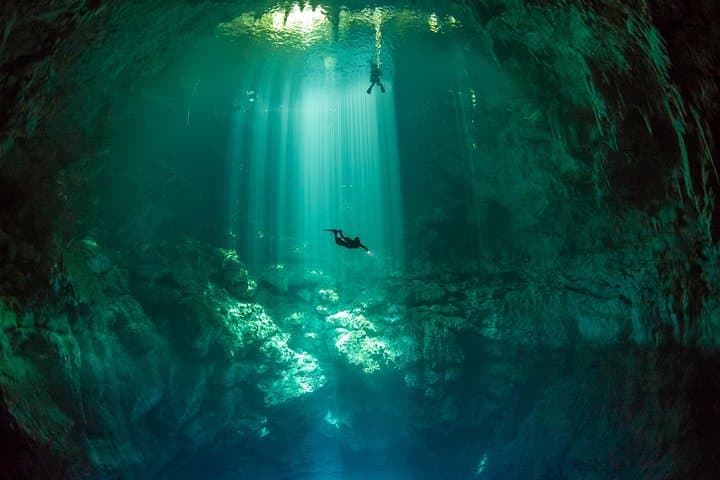
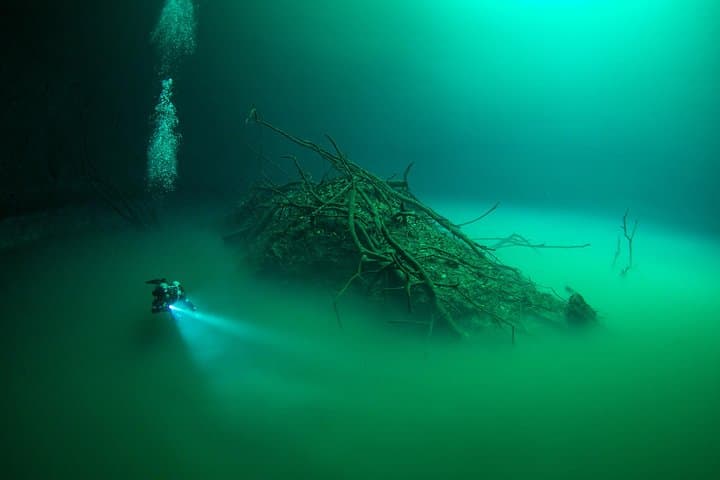
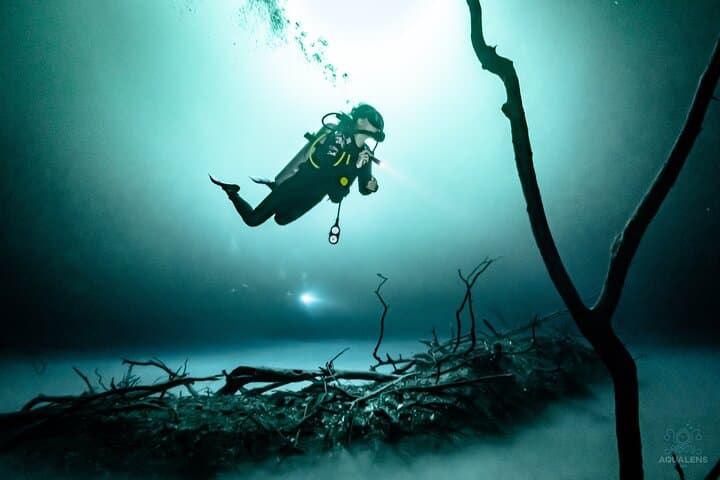
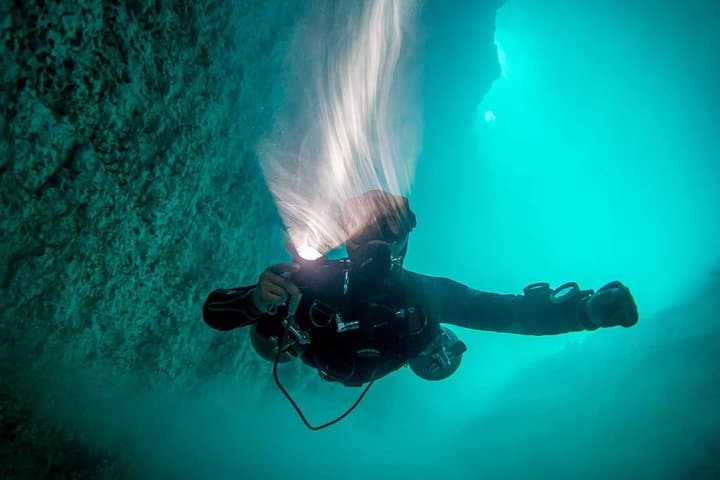
You surface beneath a slatted roof of jungle light and feel the air cool after a long fin kick — the cenote swallows sound and pushes only the hush of dripping limestone toward you. The first plunge drops into El Pit, where a sulfur veil hugs the basin around 25 meters and a sharp halocline bends light like a moving seam. Later, Dos Ojos opens into vaulted caverns threaded with stalactites, bat galleries and shafts of sunlight that slice through clear water.
You surface beneath a slatted roof of jungle light and feel the air cool after a long fin kick — the cenote swallows sound and pushes only the hush of dripping limestone toward you. The first plunge drops into El Pit, where a sulfur veil hugs the basin around 25 meters and a sharp halocline bends light like a moving seam. Later, Dos Ojos opens into vaulted caverns threaded with stalactites, bat galleries and shafts of sunlight that slice through clear water.
These sinkholes are collapsed sections of the Yucatán’s porous limestone, part of an enormous underground river system the Maya relied on for freshwater and ritual offerings. Geologically young and fragile, the passages carry freshwater over dense saltwater, producing the halocline effects that draw divers worldwide.
Expect controlled, guided cavern dives rather than full cave penetration: routes stay within visual contact of exits and natural light. Guides provide 5 mm wetsuits, lights and scuba gear; divers must present Advanced (Level 2) or equivalent certification and recent logged dives. The itinerary typically runs about five hours including surface intervals and transfers from the dive center.
Practical notes: check medical clearance for asthma or heart conditions, avoid diving within 24 hours of flying, and brief your buddy on line reels and light redundancy. Protect the formations by keeping hands off speleothems and using reef-safe, non-oily sunscreens before entering surface water. With proper training and attentiveness, these cenotes deliver dramatic lights, fossils, and a rare chance to move through a submerged limestone cathedral.