THE ADVENTURE COLLECTIVE® · Independent discovery and booking for outdoor travel

An adults-only catamaran cruise from southern Tenerife that pairs island coast scenery with a focused chance to see pilot whales and bottlenose dolphins. The two-hour outing includes lunch, drinks and snorkel kit—ideal for travelers who want wildlife viewing without large crowds.
An adults-only catamaran cruise from southern Tenerife that pairs island coast scenery with a focused chance to see pilot whales and bottlenose dolphins. The two-hour outing includes lunch, drinks and snorkel kit—ideal for travelers who want wildlife viewing without large crowds.
The catamaran cuts a clean line across the Atlantic, cool spray kissing sun-warmed skin as Tenerife’s southern cliffs melt into the horizon.
Verified experiences and guided adventures in the surrounding area.
Operated by Destination Services Spain · Los Cristianos, Santa Cruz de Tenerife
The catamaran cuts a clean line across the Atlantic, cool spray kissing sun-warmed skin as Tenerife’s southern cliffs melt into the horizon.
On an adults-only Freebird cruise, passengers exchange the bustle of the marina for shaded deck space, a modest crowd, and the steady hope of spotting pilot whales and bottlenose dolphins that frequent these nutrient-rich waters. The island’s coastline here is volcanic — black rock shelves, sea-carved coves and cliffs formed by successive eruptions and erosion — and the boat often follows the deep water channel just off the shelf where marine life concentrates.
Tenerife’s maritime story mixes Canarian fishing traditions with modern ecotourism; historically small-scale whaling gave way to conservation-minded watching and research. Culturally the south is shaped by tourism infrastructure, but local boat crews maintain knowledge of seasonal movements, feeding grounds and calmer coves for swimming.
Practically, the trip is short and accessible: plan for two hours aboard a partially shaded catamaran, with drinks, lunch, snorkel gear and towels provided. Expect stops for photo opportunities and a possible swim if conditions allow. Seas can be calm or choppy depending on wind; morning and late-afternoon sailings increase sighting chances.
Bring sun protection, secure cameras, and a light layer for the breeze. Listen to crew safety briefings for gangplank boarding and swimming procedures — the ocean is lively, and respectful distance keeps both animals and guests safe.
easy.
2 hours.
Suitable for most travelers who can walk a short gangplank and stand for periods; swimming ability recommended for swim stops.
Yes, the tour is for adults only—check the operator’s age policy when booking; typically participants must be 18 or older.
Pilot whales and bottlenose dolphins are the most frequently observed species in these waters, though sightings are never guaranteed.
Yes, the itinerary often includes a swim stop when sea conditions are safe; snorkel gear and towels are provided but swimming ability is required.
Transport is listed as an inclusion for some departures—confirm your pickup point during booking, as options and availability vary.
Tenerife’s southern coast was shaped by volcanic activity and traditional fishing communities; in the 20th century local whaling declined and whale watching developed into a regulated tourism and research activity.
Operators in Tenerife follow wildlife-watching guidelines—keep distance, avoid chasing animals and use licensed boats; guests should not feed or attempt to touch marine life.
Destination Services Spain operates guided outdoor trips and adventures with an emphasis on safety, stewardship, and memorable experiences.

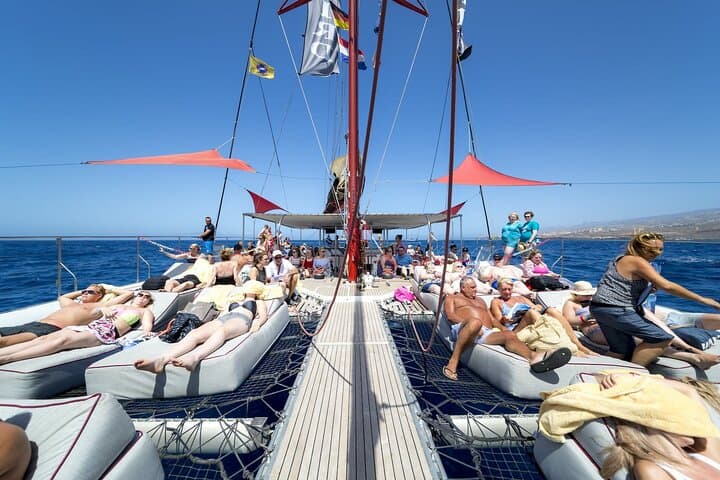


The catamaran cuts a clean line across the Atlantic, cool spray kissing sun-warmed skin as Tenerife’s southern cliffs melt into the horizon.
The catamaran cuts a clean line across the Atlantic, cool spray kissing sun-warmed skin as Tenerife’s southern cliffs melt into the horizon.
On an adults-only Freebird cruise, passengers exchange the bustle of the marina for shaded deck space, a modest crowd, and the steady hope of spotting pilot whales and bottlenose dolphins that frequent these nutrient-rich waters. The island’s coastline here is volcanic — black rock shelves, sea-carved coves and cliffs formed by successive eruptions and erosion — and the boat often follows the deep water channel just off the shelf where marine life concentrates.
Tenerife’s maritime story mixes Canarian fishing traditions with modern ecotourism; historically small-scale whaling gave way to conservation-minded watching and research. Culturally the south is shaped by tourism infrastructure, but local boat crews maintain knowledge of seasonal movements, feeding grounds and calmer coves for swimming.
Practically, the trip is short and accessible: plan for two hours aboard a partially shaded catamaran, with drinks, lunch, snorkel gear and towels provided. Expect stops for photo opportunities and a possible swim if conditions allow. Seas can be calm or choppy depending on wind; morning and late-afternoon sailings increase sighting chances.
Bring sun protection, secure cameras, and a light layer for the breeze. Listen to crew safety briefings for gangplank boarding and swimming procedures — the ocean is lively, and respectful distance keeps both animals and guests safe.