THE ADVENTURE COLLECTIVE® · Independent discovery and booking for outdoor travel

A high-energy half-day from Darwin that pairs an air-conditioned Croc Bus transfer with a short river cruise to watch saltwater crocodiles breach the Adelaide River. Ideal for photographers and first-time Top End visitors, the tour combines wildlife viewing with local history at Fogg Dam.
A high-energy half-day from Darwin that pairs an air-conditioned Croc Bus transfer with a short river cruise to watch saltwater crocodiles breach the Adelaide River. Ideal for photographers and first-time Top End visitors, the tour combines wildlife viewing with local history at Fogg Dam.
The bus hums away from Darwin, air conditioning battling Top End humidity as paper maps and wildlife posters flutter in the rack. Within an hour the landscape opens: flat floodplain, pandanus clumps and dark water channels where crocodiles wait. The Croc Bus delivers visitors to the riverbank for a short, high-adrenaline cruise where saltwater crocodiles use timing and raw power to launch themselves clear of the water for a baited catch.
Verified experiences and guided adventures in the surrounding area.
Operated by The Croc Bus · Adelaide River, Northern Territory
The bus hums away from Darwin, air conditioning battling Top End humidity as paper maps and wildlife posters flutter in the rack. Within an hour the landscape opens: flat floodplain, pandanus clumps and dark water channels where crocodiles wait. The Croc Bus delivers visitors to the riverbank for a short, high-adrenaline cruise where saltwater crocodiles use timing and raw power to launch themselves clear of the water for a baited catch.
This stretch of the Adelaide River carries geological memory—ancient tidal scours cut into soft sediments—while the region’s human history is stamped by WWII supply routes and present-day Aboriginal connections to country. Fogg Dam, passed en route, is a low-lying wetland mosaic and one of the Top End’s best birdwatching sites, shaped by wet-season inundation and dry-season concentration.
Expect practical logistics: the advertised half-day runs about four hours door-to-door from Darwin with air-conditioned coach transfers, a guided river cruise, and a short stop at the oversized boxing-croc statue near the highway. Wildlife viewing is most reliable in the cooler morning or late afternoon; the river cruise is safe and operated to keep distance from animals. Bring sun protection, a camera with a zoom lens, and a light waterproof layer — sudden showers happen. Follow crew directions closely around crocodiles: no leaning over rails or throwing food.
For photographers and first-time croc-watchers this tour compresses big Top End encounters into a morning or afternoon, pairing easy access with clear, expert commentary and an opportunity to see wetland birds, wallabies and the raw power of saltwater crocs in their element.
easy.
4 hours.
Suitable for most fitness levels; involves short boat boarding and light walking on flat surfaces
The tour runs roughly four hours with pickup points in Darwin; check your booking for exact pickup time and location.
The vessels operate at a safe distance and are crewed by experienced guides; never attempt to touch or feed crocodiles and follow all safety instructions.
Yes—tour info notes infants must sit on laps; the activity is family-friendly but close supervision is required near water.
The Croc Bus typically has open or low windows to reduce reflections for photography, but bring a polarizing filter and a zoom for best results.
Adelaide River was an important WWII staging area and the corridor still bears markers of military history alongside longstanding Aboriginal connection to the floodplain.
The Top End balances tourism with crocodile management and wetland protection; follow ranger signage, avoid littering and never disturb nesting birds or reptiles.
The Croc Bus operates guided outdoor trips and adventures with an emphasis on safety, stewardship, and memorable experiences.
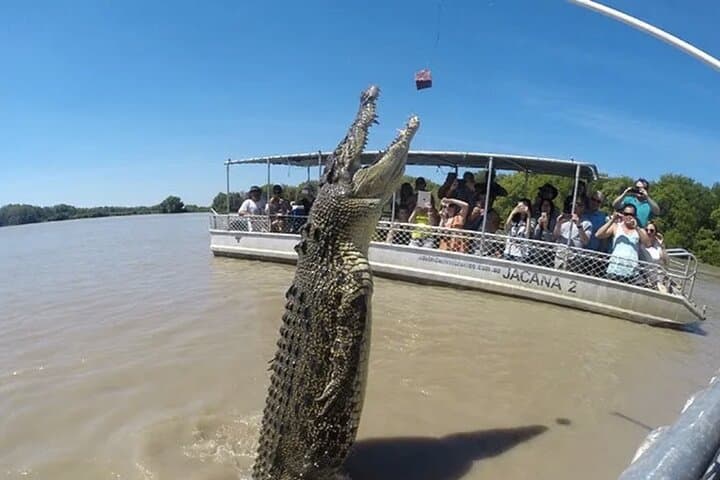
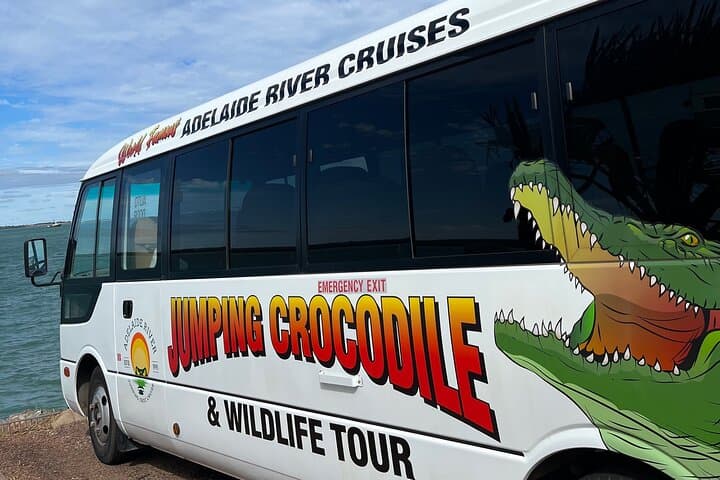
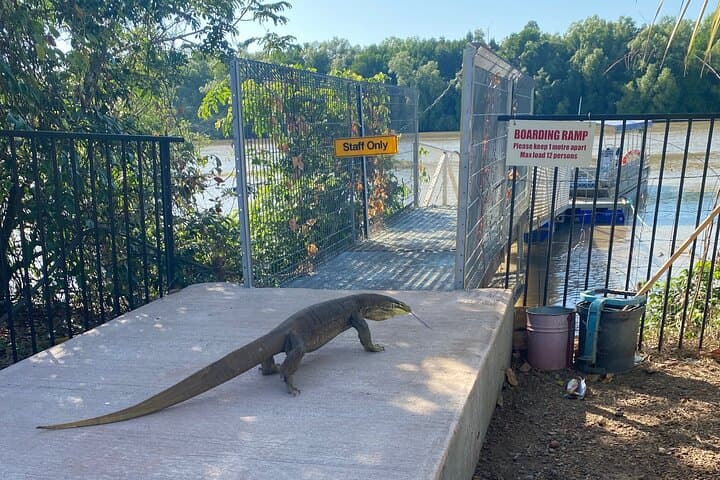
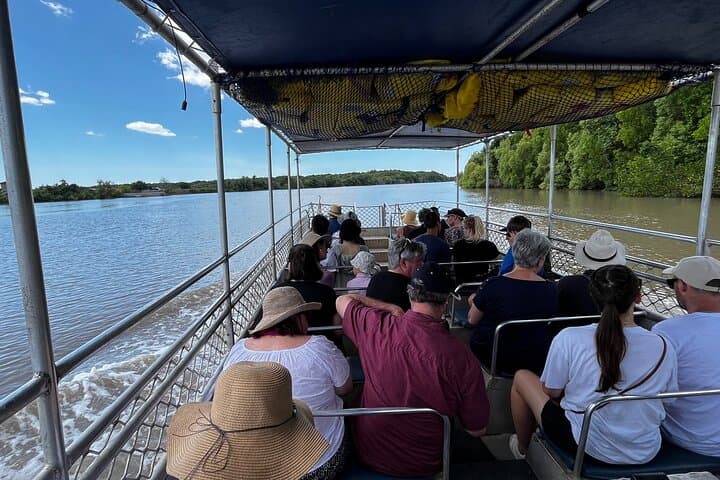
The bus hums away from Darwin, air conditioning battling Top End humidity as paper maps and wildlife posters flutter in the rack. Within an hour the landscape opens: flat floodplain, pandanus clumps and dark water channels where crocodiles wait. The Croc Bus delivers visitors to the riverbank for a short, high-adrenaline cruise where saltwater crocodiles use timing and raw power to launch themselves clear of the water for a baited catch.
The bus hums away from Darwin, air conditioning battling Top End humidity as paper maps and wildlife posters flutter in the rack. Within an hour the landscape opens: flat floodplain, pandanus clumps and dark water channels where crocodiles wait. The Croc Bus delivers visitors to the riverbank for a short, high-adrenaline cruise where saltwater crocodiles use timing and raw power to launch themselves clear of the water for a baited catch.
This stretch of the Adelaide River carries geological memory—ancient tidal scours cut into soft sediments—while the region’s human history is stamped by WWII supply routes and present-day Aboriginal connections to country. Fogg Dam, passed en route, is a low-lying wetland mosaic and one of the Top End’s best birdwatching sites, shaped by wet-season inundation and dry-season concentration.
Expect practical logistics: the advertised half-day runs about four hours door-to-door from Darwin with air-conditioned coach transfers, a guided river cruise, and a short stop at the oversized boxing-croc statue near the highway. Wildlife viewing is most reliable in the cooler morning or late afternoon; the river cruise is safe and operated to keep distance from animals. Bring sun protection, a camera with a zoom lens, and a light waterproof layer — sudden showers happen. Follow crew directions closely around crocodiles: no leaning over rails or throwing food.
For photographers and first-time croc-watchers this tour compresses big Top End encounters into a morning or afternoon, pairing easy access with clear, expert commentary and an opportunity to see wetland birds, wallabies and the raw power of saltwater crocs in their element.