THE ADVENTURE COLLECTIVE® · Independent discovery and booking for outdoor travel

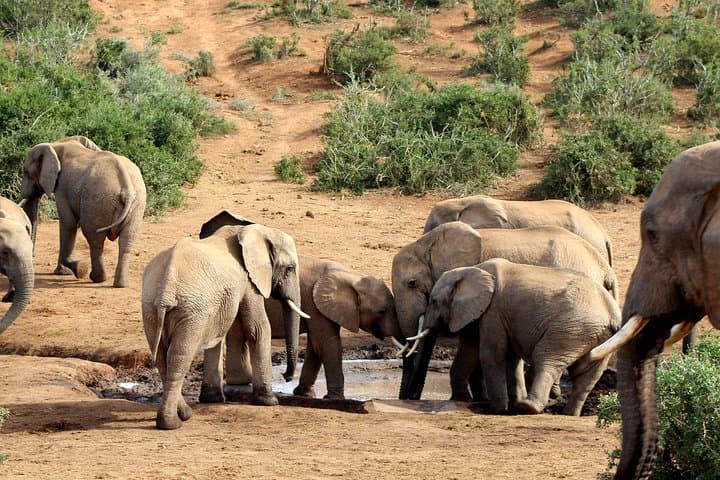
Spend a full day in Addo Elephant National Park with expert guides and air-conditioned 4x4 transport. See one of the densest elephant populations on earth and the only national park conserving the “Big 7.”
Spend a full day in Addo Elephant National Park with expert guides and air-conditioned 4x4 transport. See one of the densest elephant populations on earth and the only national park conserving the “Big 7.”
Dust lifts along the 4x4 track as the vehicle eases into the wide, sun-baked spaces of Addo. Acacia scrub hisses at the wind; distant thunderheads build over the Baviaanskloof ridgeline. Guide, eyes trained on movement and spoor, points—an elephant bull loosens a mop of grass with a trunk that seems to measure the air itself.
Verified experiences and guided adventures in the surrounding area.
Operated by Afroventures Tours & Safaris · Addo, Eastern Cape
Dust lifts along the 4x4 track as the vehicle eases into the wide, sun-baked spaces of Addo. Acacia scrub hisses at the wind; distant thunderheads build over the Baviaanskloof ridgeline. Guide, eyes trained on movement and spoor, points—an elephant bull loosens a mop of grass with a trunk that seems to measure the air itself.
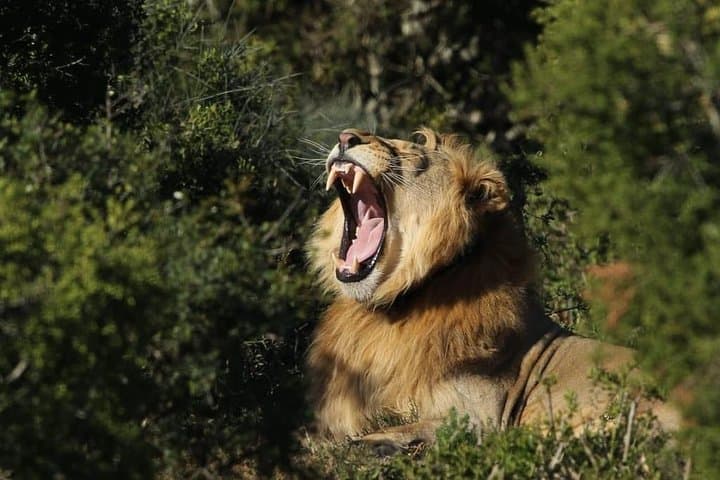
Addo, proclaimed in 1931 to save eleven remaining elephants, has grown into South Africa’s third-largest park and one of the few places protecting the “Big 7” — elephant, black rhino, lion, leopard, buffalo, great white shark and southern right whale in the adjacent Algoa Bay. Underlain by Cape Fold Belt geology and patches of Karoo shale, the terrain alternates between coastal dune thickets and inland lowland valleys where salt pans and clay soils shape the vegetation.
Culturally, this is Xhosa country; nearby towns show a blend of rural communities and Port Elizabeth's colonial history. Local guides bring that context to sightings, linking animal behavior to seasonal forage and water patterns.
Practically, expect a full nine-hour day in an air-conditioned 4x4 with park fees and lunch included. Roads are mostly graded gravel with short, rough stretches; time in vehicle is balanced with open-vehicle game viewing. Bring sun protection, binoculars, a camera with a telephoto lens, water and a light layer for coastal breezes. The park is malaria-free, but animal encounters are wild—follow guide instructions and keep a respectful distance.
This safari is equal parts patient observation and photographic opportunity: a day designed for steady eyes, steady breathing, and the slow reveal of one of Africa’s densest elephant populations.
easy.
9 hours.
Suitable for most fitness levels; you’ll spend most of the day seated with short, guided stops for walking
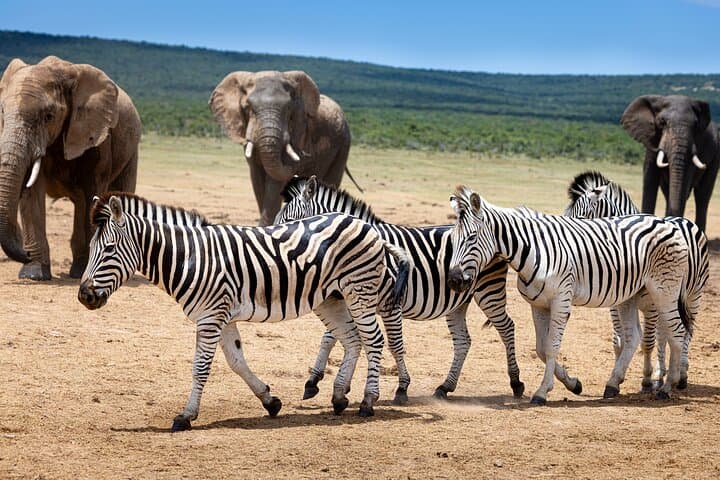
Expect high probability of elephants, buffalo, and various antelope; lions, leopards and black rhino are present but more elusive — sightings depend on season and patience.
No — Addo Elephant National Park is in a malaria-free region, though standard insect precautions are advisable in summer evenings.
Yes — this all-inclusive tour covers national park fees, professional guiding, transport in air-conditioned 4x4s, lunch, and hotel pickup/drop-off as listed.
Partial — the tour is conducted from vehicles and includes short, relatively flat stops; contact the operator about specific accessibility needs and vehicle options.
Established in 1931 to save a remnant elephant population, Addo has since expanded to protect coastal and marine environments as well as inland species.
The park balances high-volume tourism with targeted conservation programs for endangered black rhino and local species; visitors are asked to minimize disturbance and avoid feeding wildlife.
Afroventures Tours & Safaris operates guided outdoor trips and adventures with an emphasis on safety, stewardship, and memorable experiences.
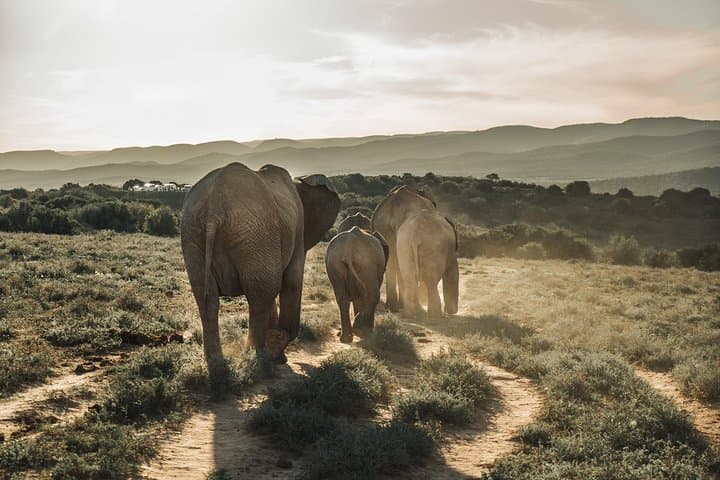
Dust lifts along the 4x4 track as the vehicle eases into the wide, sun-baked spaces of Addo. Acacia scrub hisses at the wind; distant thunderheads build over the Baviaanskloof ridgeline. Guide, eyes trained on movement and spoor, points—an elephant bull loosens a mop of grass with a trunk that seems to measure the air itself.
Dust lifts along the 4x4 track as the vehicle eases into the wide, sun-baked spaces of Addo. Acacia scrub hisses at the wind; distant thunderheads build over the Baviaanskloof ridgeline. Guide, eyes trained on movement and spoor, points—an elephant bull loosens a mop of grass with a trunk that seems to measure the air itself.
Addo, proclaimed in 1931 to save eleven remaining elephants, has grown into South Africa’s third-largest park and one of the few places protecting the “Big 7” — elephant, black rhino, lion, leopard, buffalo, great white shark and southern right whale in the adjacent Algoa Bay. Underlain by Cape Fold Belt geology and patches of Karoo shale, the terrain alternates between coastal dune thickets and inland lowland valleys where salt pans and clay soils shape the vegetation.
Culturally, this is Xhosa country; nearby towns show a blend of rural communities and Port Elizabeth's colonial history. Local guides bring that context to sightings, linking animal behavior to seasonal forage and water patterns.
Practically, expect a full nine-hour day in an air-conditioned 4x4 with park fees and lunch included. Roads are mostly graded gravel with short, rough stretches; time in vehicle is balanced with open-vehicle game viewing. Bring sun protection, binoculars, a camera with a telephoto lens, water and a light layer for coastal breezes. The park is malaria-free, but animal encounters are wild—follow guide instructions and keep a respectful distance.
This safari is equal parts patient observation and photographic opportunity: a day designed for steady eyes, steady breathing, and the slow reveal of one of Africa’s densest elephant populations.