THE ADVENTURE COLLECTIVE® · Independent discovery and booking for outdoor travel

This harbour-synced day safari from Port Elizabeth delivers focused wildlife viewing in Addo Elephant National Park—elephants, lions, and coastal dunes—plus expert local guiding and stress-free transfers timed for cruise passengers. Packed with landscape context and practical tips, it’s a single-day introduction to one of South Africa’s most accessible reserves.
This harbour-synced day safari from Port Elizabeth delivers focused wildlife viewing in Addo Elephant National Park—elephants, lions, and coastal dunes—plus expert local guiding and stress-free transfers timed for cruise passengers. Packed with landscape context and practical tips, it’s a single-day introduction to one of South Africa’s most accessible reserves.
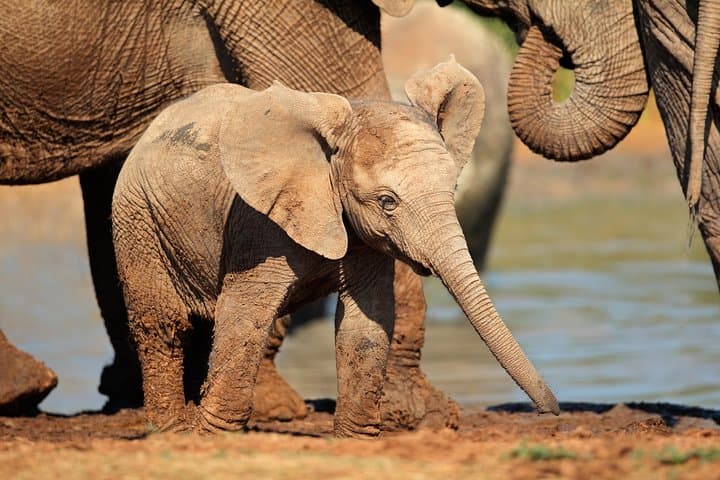
Sun warms the vehicle as it leaves the port behind and gravel replaces pavement. The bush closes in, a continent of low acacia and thicket broken by pale dust tracks; somewhere ahead a family of elephants moves like slow weather toward a watering hole. This shore-excursion takes you from Port Elizabeth’s cruise terminal into Addo Elephant National Park for a focused, guide-led day of wildlife viewing and landscape study.
Verified experiences and guided adventures in the surrounding area.
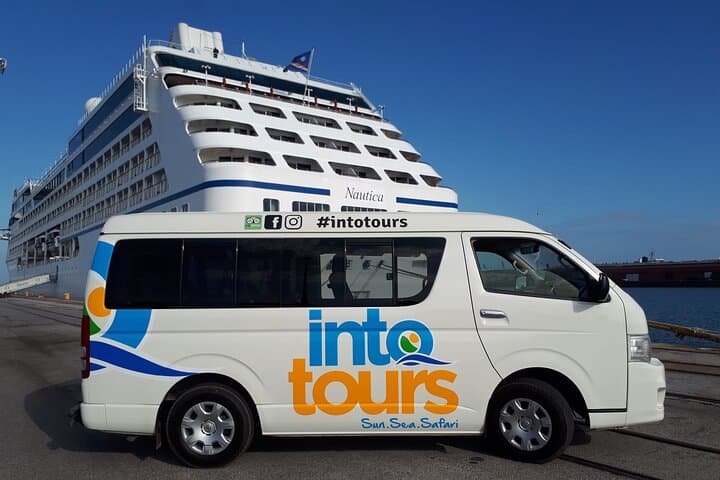
Operated by Into Tours · Gqeberha (Port Elizabeth), Eastern Cape
Sun warms the vehicle as it leaves the port behind and gravel replaces pavement. The bush closes in, a continent of low acacia and thicket broken by pale dust tracks; somewhere ahead a family of elephants moves like slow weather toward a watering hole. This shore-excursion takes you from Port Elizabeth’s cruise terminal into Addo Elephant National Park for a focused, guide-led day of wildlife viewing and landscape study.
Addo was set aside in 1931 to protect the region’s dwindling elephant population and has since expanded to include coastal dunes and a marine section. You’ll travel across Cape Fold outcrops, red acidic soils and patches of coastal sands where geology and ocean-driven processes meet. The park sits within Xhosa cultural country and 19th-century colonial routes—local guides often weave that human history into animal stories.
The itinerary is wildlife-led: long, patient stops at watering holes, frequent brief drives to follow fresh spoor, and scheduled breaks at the main camp for restroom and curio-shop visits. Expect dense bush, open plains, rolling hills and occasional coastal views; birdlife is abundant and large mammals include elephant, lion, zebra and antelope.
Practical notes: wear closed shoes for short walks, sun protection, and layers for changing coastal temperatures. Bring binoculars and a charged camera; bottled water is provided but extra hydration is wise. Vehicles are closed and air-conditioned with harbour-synced pick-up/drop-off—ideal for cruise passengers with tight schedules. Follow your guide’s safety brief: do not exit the vehicle except in designated areas and keep respectful distances from wildlife.
easy.
8 hours.
Suitable for most fitness levels; mostly seated game drives with brief, gentle walks at camp
Travel time is roughly 35–60 minutes each way from the harbour depending on traffic and exact pickup point; the full tour runs about eight hours.
Prepaid park entrance fees are included so you can skip queues and maximise time inside Addo.
Yes—specialized infant seats are available and the tour is suitable for all fitness levels, but children must remain under adult supervision at all times.
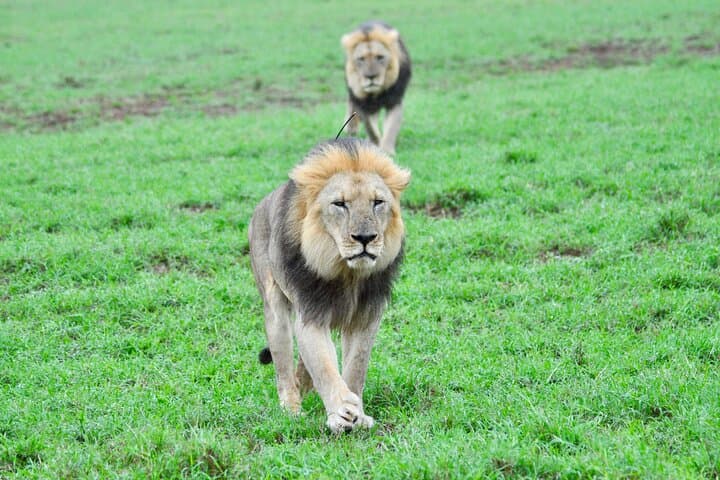
Elephants are commonly encountered, but wildlife sightings cannot be guaranteed; lions are present in the park but sightings depend on animal movement and timing.
Created in 1931 to protect surviving elephant herds, Addo has grown from a small reserve into a multi-habitat park supporting both terrestrial and marine conservation.
Park management focuses on elephant population recovery, alien vegetation control, and habitat connectivity; visitors are asked to follow strict no-feeding and no-littering rules to minimise impact.
Into Tours operates guided outdoor trips and adventures with an emphasis on safety, stewardship, and memorable experiences.
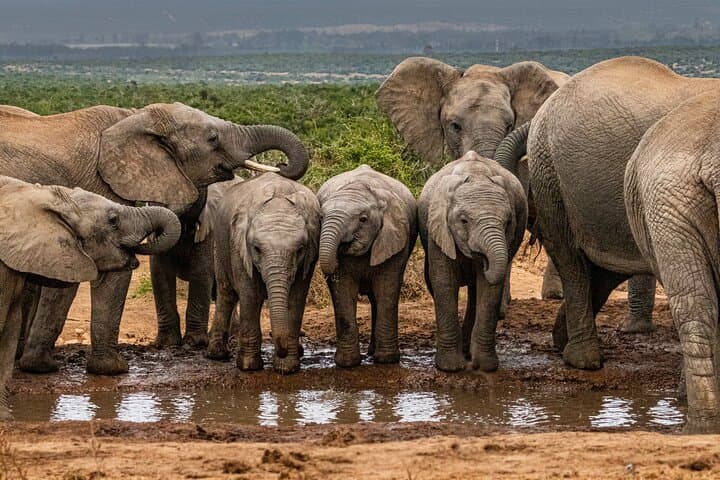
Sun warms the vehicle as it leaves the port behind and gravel replaces pavement. The bush closes in, a continent of low acacia and thicket broken by pale dust tracks; somewhere ahead a family of elephants moves like slow weather toward a watering hole. This shore-excursion takes you from Port Elizabeth’s cruise terminal into Addo Elephant National Park for a focused, guide-led day of wildlife viewing and landscape study.
Sun warms the vehicle as it leaves the port behind and gravel replaces pavement. The bush closes in, a continent of low acacia and thicket broken by pale dust tracks; somewhere ahead a family of elephants moves like slow weather toward a watering hole. This shore-excursion takes you from Port Elizabeth’s cruise terminal into Addo Elephant National Park for a focused, guide-led day of wildlife viewing and landscape study.
Addo was set aside in 1931 to protect the region’s dwindling elephant population and has since expanded to include coastal dunes and a marine section. You’ll travel across Cape Fold outcrops, red acidic soils and patches of coastal sands where geology and ocean-driven processes meet. The park sits within Xhosa cultural country and 19th-century colonial routes—local guides often weave that human history into animal stories.
The itinerary is wildlife-led: long, patient stops at watering holes, frequent brief drives to follow fresh spoor, and scheduled breaks at the main camp for restroom and curio-shop visits. Expect dense bush, open plains, rolling hills and occasional coastal views; birdlife is abundant and large mammals include elephant, lion, zebra and antelope.
Practical notes: wear closed shoes for short walks, sun protection, and layers for changing coastal temperatures. Bring binoculars and a charged camera; bottled water is provided but extra hydration is wise. Vehicles are closed and air-conditioned with harbour-synced pick-up/drop-off—ideal for cruise passengers with tight schedules. Follow your guide’s safety brief: do not exit the vehicle except in designated areas and keep respectful distances from wildlife.