THE ADVENTURE COLLECTIVE® · Independent discovery and booking for outdoor travel

Explore two of Gujarat’s most striking stepwells on a private day tour from Ahmedabad. Walk carved galleries at Adalaj and descend the monumental terraces of Rani ki Vav while learning the history and hydraulic ingenuity behind these living monuments.
Explore two of Gujarat’s most striking stepwells on a private day tour from Ahmedabad. Walk carved galleries at Adalaj and descend the monumental terraces of Rani ki Vav while learning the history and hydraulic ingenuity behind these living monuments.
You step out of the car into a pocket of cool shadow—stone stairs dropping into silence, light carving lace-like patterns across carved pillars. The first descent at Adalaj reveals an intimate public chamber that once moderated heat and collected monsoon water for village life; voices carry differently here, as if the well itself listens.
Verified experiences and guided adventures in the surrounding area.
Operated by Agora Voyages Pvt. Ltd. · Ahmedabad, Gujarat
You step out of the car into a pocket of cool shadow—stone stairs dropping into silence, light carving lace-like patterns across carved pillars. The first descent at Adalaj reveals an intimate public chamber that once moderated heat and collected monsoon water for village life; voices carry differently here, as if the well itself listens.
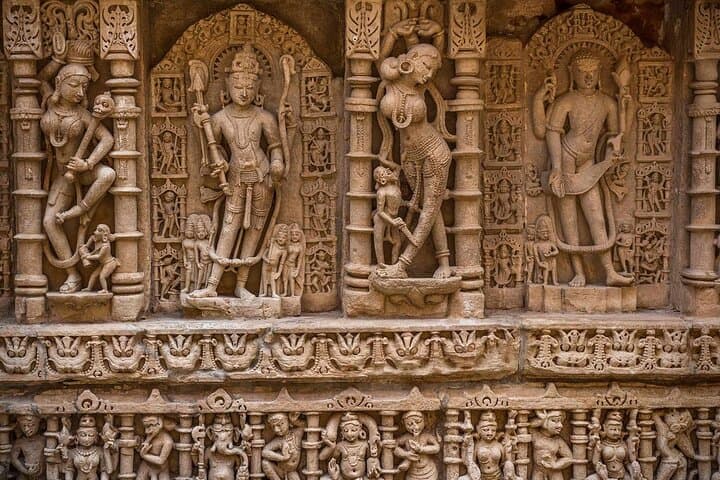
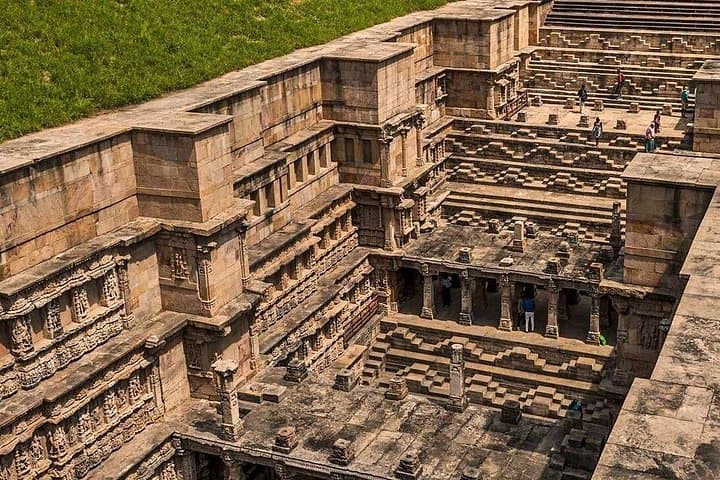
The route continues north across low, weathered plains to Patan, where Rani ki Vav opens like an inverted temple: a thousand sculptures lining descending terraces, each niche a frozen vignette of gods, dancers and daily life. Both sites are rooted in Gujarat’s medieval era—Adalaj owes its present form to a 15th-century reconstruction under Queen Rudabai, while Rani ki Vav dates to the 11th century and reflects Maru-Gurjara architectural craft.
Geology matters here: semi-arid alluvial plain soils and a pronounced monsoon created the need for deep stepwells and influenced their brick-and-stone construction. Culturally, stepwells were civic infrastructure—social, religious and hydraulic—and remain active places for local storytelling.
Practical guidance: wear grippy shoes for carved stone steps and bring a sun hat—the sun is harsh between late morning and mid-afternoon. Expect several flights of steps and short walks on uneven ground; the tour includes drives of up to 1.5 hours between sites and a midday lunch stop in Patan. Cameras are welcome but avoid touching delicate carvings. Carry water and modest clothing for entry into heritage sites. Timing your visit for early morning or late afternoon reduces crowds and reveals better side-light on the sculptures.
easy.
6–9 hours.
Light walking ability; must be comfortable climbing multiple flights of uneven stone steps.
Adalaj is roughly a 30–60 minute drive from central Ahmedabad; Patan (Rani ki Vav) is about 1.5–2 hours from Adalaj depending on traffic.
Entrance fees may be included only if specified when booking—confirm with the operator or guide before travel.
Yes—physical demands are low, but both sites involve many steps; assistance may be required for those with mobility issues.
Yes, there is a lunch stop in Patan with local restaurants; bringing snacks is recommended if you have dietary restrictions.
Stepwells evolved as combined water-management and social spaces in medieval Gujarat; Rani ki Vav is an 11th-century memorial commissioned during the Chaulukya period while Adalaj’s present structure dates to the 15th century.
Rani ki Vav is a UNESCO World Heritage Site with active conservation; visitors should avoid touching carvings and follow site signage to minimize wear.
Agora Voyages Pvt. Ltd. operates guided outdoor trips and adventures with an emphasis on safety, stewardship, and memorable experiences.
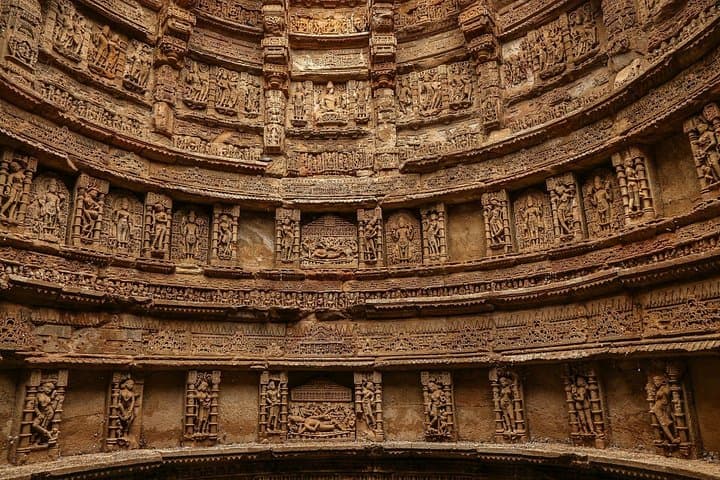
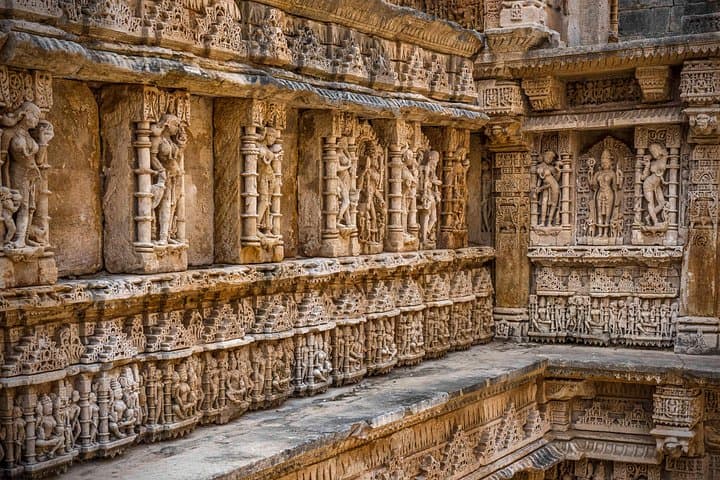
You step out of the car into a pocket of cool shadow—stone stairs dropping into silence, light carving lace-like patterns across carved pillars. The first descent at Adalaj reveals an intimate public chamber that once moderated heat and collected monsoon water for village life; voices carry differently here, as if the well itself listens.
You step out of the car into a pocket of cool shadow—stone stairs dropping into silence, light carving lace-like patterns across carved pillars. The first descent at Adalaj reveals an intimate public chamber that once moderated heat and collected monsoon water for village life; voices carry differently here, as if the well itself listens.
The route continues north across low, weathered plains to Patan, where Rani ki Vav opens like an inverted temple: a thousand sculptures lining descending terraces, each niche a frozen vignette of gods, dancers and daily life. Both sites are rooted in Gujarat’s medieval era—Adalaj owes its present form to a 15th-century reconstruction under Queen Rudabai, while Rani ki Vav dates to the 11th century and reflects Maru-Gurjara architectural craft.
Geology matters here: semi-arid alluvial plain soils and a pronounced monsoon created the need for deep stepwells and influenced their brick-and-stone construction. Culturally, stepwells were civic infrastructure—social, religious and hydraulic—and remain active places for local storytelling.
Practical guidance: wear grippy shoes for carved stone steps and bring a sun hat—the sun is harsh between late morning and mid-afternoon. Expect several flights of steps and short walks on uneven ground; the tour includes drives of up to 1.5 hours between sites and a midday lunch stop in Patan. Cameras are welcome but avoid touching delicate carvings. Carry water and modest clothing for entry into heritage sites. Timing your visit for early morning or late afternoon reduces crowds and reveals better side-light on the sculptures.