THE ADVENTURE COLLECTIVE® · Independent discovery and booking for outdoor travel

Drive the High Atlas to Erg Chebbi on a three-day loop between Fes and Marrakech. Expect canyon walks, palm oases, a camel sunset, and two nights — one in a desert camp — that let the Sahara do most of the talking.
Drive the High Atlas to Erg Chebbi on a three-day loop between Fes and Marrakech. Expect canyon walks, palm oases, a camel sunset, and two nights — one in a desert camp — that let the Sahara do most of the talking.
You step from the air-conditioned van into a language of sand: ridges catch the light, wind-carved faces of Erg Chebbi shifting with every breath of wind. Camels wait like patient vessels; the desert pulls the daylong road behind you into a thin ribbon.
Verified experiences and guided adventures in the surrounding area.
Operated by CHRIF TRANS & TRAVEL · Merzouga, Drâa-Tafilalet
You step from the air-conditioned van into a language of sand: ridges catch the light, wind-carved faces of Erg Chebbi shifting with every breath of wind. Camels wait like patient vessels; the desert pulls the daylong road behind you into a thin ribbon.
This three-day route threads Fes and Marrakech through the High Atlas and the Anti-Atlas, crossing Tizi n’Tichka (2,260 m) and skimming the palm-lined Ziz Valley. Geology here reads as layers — fractured limestone gorges, red-palmed oases, and the vast aeolian dunes of Erg Chebbi formed by Saharan winds. Culture is equally layered: cedar forests near Azrou harbor Barbary macaques, ksour and kasbahs like Ait Ben Haddou mark trans-Saharan trade routes, and Ouarzazate’s film studios underline the region’s modern mythology.
Expect long driving stretches broken by short hikes in Todra and Dades Gorges, a late-afternoon camel trek to a desert camp, and mornings of dune walking at sunrise. Nights in Berber-style tents are cold after sundown; the dunes hold heat by day and let it go fast. Practical notes: bring sun protection, a warm layer for night, and a refillable water bottle. Footwear should handle sand and stony paths; a small daypack keeps essentials handy during short walks and village stops.
The trip rewards patience: quiet dune edges for sunrise, Gnawa music in Khamlia, and canyon walls that lean in to tell the story of moving water and shifting stone. Travel with a guide, respect fragile desert flora and local customs, and let the landscape set your pace.
easy.
3 days (approx. 72 hours).
Suitable for travelers with basic mobility; involves short walks, dune climbs, and a camel ride.
This tour typically starts in Fes and ends in Marrakech, with pickups arranged in Fes and drop-offs in Marrakech as part of the multi-day itinerary.
You spend one night in a tented desert camp near Erg Chebbi—tents are basic but equipped for sleeping; hotels are used elsewhere on the route.
Camel treks are low-impact—riding is slow and guided, but mounting can be awkward for those with limited mobility; short walks in sand are optional alternatives.
Private air-conditioned transport and most meals listed by the operator are included; check the booking details for specifics and dietary requests.
The route follows historic trans-Saharan corridors; Ait Ben Haddou is a UNESCO ksar that guarded caravan routes and later served as a film set for major movies.
Dune ecosystems are fragile—avoid driving on undisturbed sand, pack out waste, and support local guides who practice low-impact camping.
CHRIF TRANS & TRAVEL operates guided outdoor trips and adventures with an emphasis on safety, stewardship, and memorable experiences.
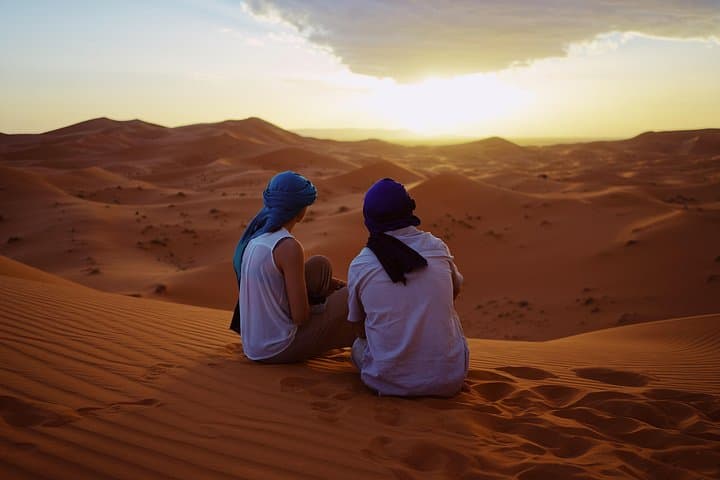
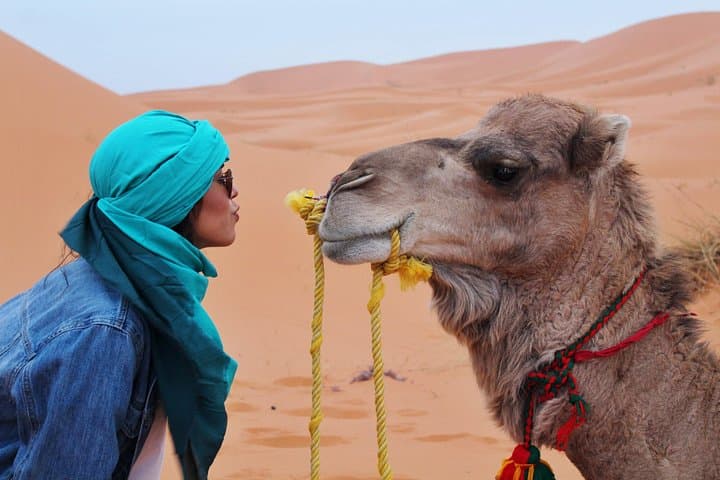
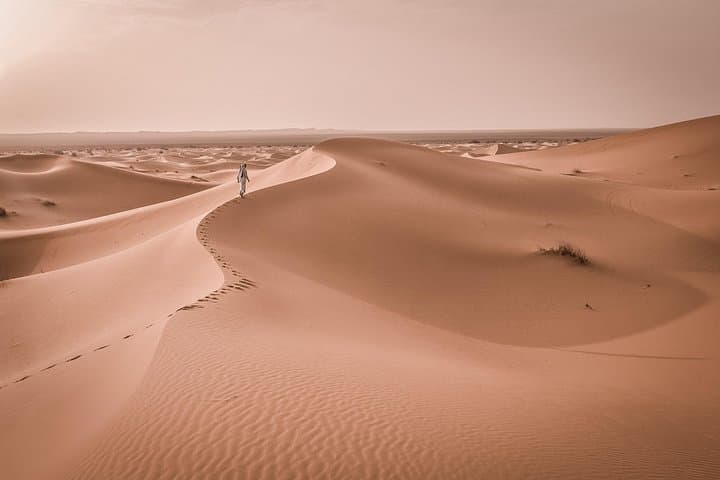
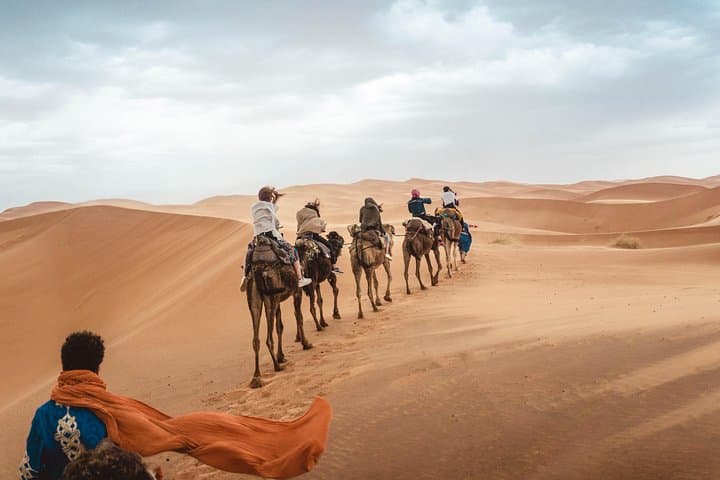
You step from the air-conditioned van into a language of sand: ridges catch the light, wind-carved faces of Erg Chebbi shifting with every breath of wind. Camels wait like patient vessels; the desert pulls the daylong road behind you into a thin ribbon.
You step from the air-conditioned van into a language of sand: ridges catch the light, wind-carved faces of Erg Chebbi shifting with every breath of wind. Camels wait like patient vessels; the desert pulls the daylong road behind you into a thin ribbon.
This three-day route threads Fes and Marrakech through the High Atlas and the Anti-Atlas, crossing Tizi n’Tichka (2,260 m) and skimming the palm-lined Ziz Valley. Geology here reads as layers — fractured limestone gorges, red-palmed oases, and the vast aeolian dunes of Erg Chebbi formed by Saharan winds. Culture is equally layered: cedar forests near Azrou harbor Barbary macaques, ksour and kasbahs like Ait Ben Haddou mark trans-Saharan trade routes, and Ouarzazate’s film studios underline the region’s modern mythology.
Expect long driving stretches broken by short hikes in Todra and Dades Gorges, a late-afternoon camel trek to a desert camp, and mornings of dune walking at sunrise. Nights in Berber-style tents are cold after sundown; the dunes hold heat by day and let it go fast. Practical notes: bring sun protection, a warm layer for night, and a refillable water bottle. Footwear should handle sand and stony paths; a small daypack keeps essentials handy during short walks and village stops.
The trip rewards patience: quiet dune edges for sunrise, Gnawa music in Khamlia, and canyon walls that lean in to tell the story of moving water and shifting stone. Travel with a guide, respect fragile desert flora and local customs, and let the landscape set your pace.