THE ADVENTURE COLLECTIVE® · Independent discovery and booking for outdoor travel

Climb the storied marble of the Acropolis with timed Parthenon entry and an optional audio guide. This concise guide explains what to expect, how to prepare, and how to get the most from a self‑guided visit to Athens’ ancient summit.
Climb the storied marble of the Acropolis with timed Parthenon entry and an optional audio guide. This concise guide explains what to expect, how to prepare, and how to get the most from a self‑guided visit to Athens’ ancient summit.
You crest a stair of worn marble and the city opens below—flat roofs, rusted antennas, the blue of the Aegean on the far horizon. The Acropolis sits compact and dominant at roughly 156 meters above sea level; up here the Parthenon’s columns catch light differently each hour, and the wind seems to dare you to stay and listen.
Verified experiences and guided adventures in the surrounding area.
Operated by My Travelons Ltd · Athens, Attica
You crest a stair of worn marble and the city opens below—flat roofs, rusted antennas, the blue of the Aegean on the far horizon. The Acropolis sits compact and dominant at roughly 156 meters above sea level; up here the Parthenon’s columns catch light differently each hour, and the wind seems to dare you to stay and listen.
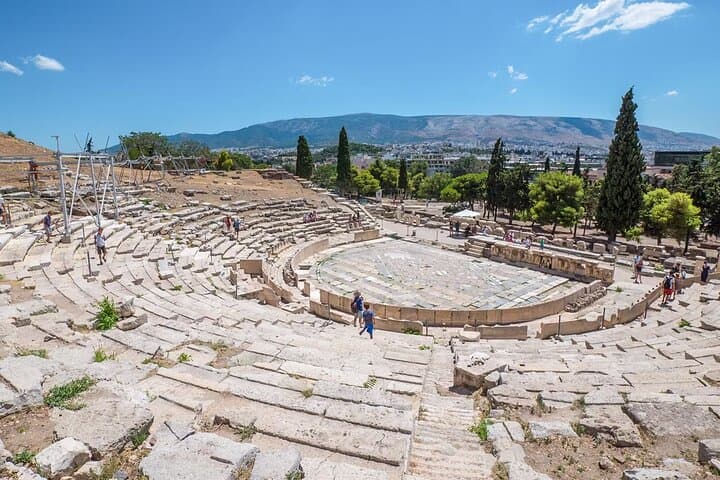
The hill was the religious and civic heart of classical Athens. The Parthenon, built under Pericles in the mid-5th century BCE, celebrated Athena and Athenian power; nearby the Theater of Dionysus staged the plays that shaped Western drama. Geologically the site is a limestone outcrop scarred by centuries of quarrying and repair—marble fragments and stepped terraces tell a working-story as much as a ceremonial one.
Culturally, the Acropolis is both archaeological site and living symbol: neighborhood vendors below in Plaka, the Acropolis Museum’s glass walkway, and ongoing conservation projects that reveal construction techniques and ancient repairs.
Practical guide: plan 1–3 hours for a self-guided visit with audio; the hill is a compact 1 km circuit with uneven marble surfaces and steep stairs. Arrive early or late afternoon to avoid peak crowds and mid-day heat. Wear sturdy shoes with good traction, carry water, and respect barriers—many fragments are fragile and under restoration. Public transit drops you within a short walk; timed entry helps manage queues. With an audio guide you control pace and context—bring a charged phone or standalone device and allow time for the museum if you upgrade. The Acropolis rewards close attention: take slow turns around the Parthenon to see carving details and the city folding outward from its stones.
easy.
1–4 hours.
Basic walking fitness is sufficient; expect short steep sections and many stairs.
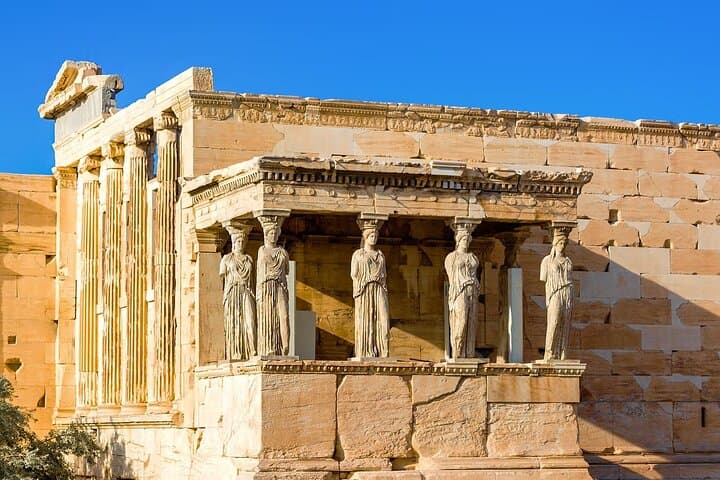
Museum entry is optional—choose the upgrade if you want access to original sculptures and the Caryatids after your hill visit.
Yes—optional historian-crafted audio guides are typically offered in several major languages for a self-paced tour.
The site has uneven terrain and stairs; there is limited accessibility and some parts require assistance—check current accessibility services and routes before booking.
Allow 1–3 hours for the hilltop circuit and 1–2 additional hours if you include the Acropolis Museum.
The Parthenon was completed around 432 BCE during Athens’ Golden Age under Pericles and served as a temple to Athena and a symbol of civic identity.
Ongoing restoration uses anastylosis (reassembling original pieces) and modern documentation; visitors should avoid touching exposed masonry to limit wear.
My Travelons Ltd operates guided outdoor trips and adventures with an emphasis on safety, stewardship, and memorable experiences.
You crest a stair of worn marble and the city opens below—flat roofs, rusted antennas, the blue of the Aegean on the far horizon. The Acropolis sits compact and dominant at roughly 156 meters above sea level; up here the Parthenon’s columns catch light differently each hour, and the wind seems to dare you to stay and listen.
You crest a stair of worn marble and the city opens below—flat roofs, rusted antennas, the blue of the Aegean on the far horizon. The Acropolis sits compact and dominant at roughly 156 meters above sea level; up here the Parthenon’s columns catch light differently each hour, and the wind seems to dare you to stay and listen.
The hill was the religious and civic heart of classical Athens. The Parthenon, built under Pericles in the mid-5th century BCE, celebrated Athena and Athenian power; nearby the Theater of Dionysus staged the plays that shaped Western drama. Geologically the site is a limestone outcrop scarred by centuries of quarrying and repair—marble fragments and stepped terraces tell a working-story as much as a ceremonial one.
Culturally, the Acropolis is both archaeological site and living symbol: neighborhood vendors below in Plaka, the Acropolis Museum’s glass walkway, and ongoing conservation projects that reveal construction techniques and ancient repairs.
Practical guide: plan 1–3 hours for a self-guided visit with audio; the hill is a compact 1 km circuit with uneven marble surfaces and steep stairs. Arrive early or late afternoon to avoid peak crowds and mid-day heat. Wear sturdy shoes with good traction, carry water, and respect barriers—many fragments are fragile and under restoration. Public transit drops you within a short walk; timed entry helps manage queues. With an audio guide you control pace and context—bring a charged phone or standalone device and allow time for the museum if you upgrade. The Acropolis rewards close attention: take slow turns around the Parthenon to see carving details and the city folding outward from its stones.