THE ADVENTURE COLLECTIVE® · Independent discovery and booking for outdoor travel

Timed entry to the Acropolis and access to the Acropolis Museum let you explore classical Athens at your own pace with an included audio guide. Plan for uneven steps, sun exposure, and conservation areas while enjoying direct connections between the ruins and museum artifacts.
Timed entry to the Acropolis and access to the Acropolis Museum let you explore classical Athens at your own pace with an included audio guide. Plan for uneven steps, sun exposure, and conservation areas while enjoying direct connections between the ruins and museum artifacts.
You emerge onto the Acropolis slope as the city hums below and the Parthenon looms ahead—marble columns catching sunlight, wind nudging you along ancient steps. The hill keeps its own tempo: slow, reverent, occasionally brisk when a tour group moves through. The audio guide lets you set that pace, pausing at friezes and stairways to hear context while keeping your hands free to steady on worn stone.
Verified experiences and guided adventures in the surrounding area.
You emerge onto the Acropolis slope as the city hums below and the Parthenon looms ahead—marble columns catching sunlight, wind nudging you along ancient steps. The hill keeps its own tempo: slow, reverent, occasionally brisk when a tour group moves through. The audio guide lets you set that pace, pausing at friezes and stairways to hear context while keeping your hands free to steady on worn stone.
This rocky outcrop has hosted temples since the Mycenaean era; the fifth-century BCE Parthenon is the architectural centerpiece of classical Athens. Geologically, the Acropolis is a limestone and schist cap rising above the Plaka quarter, its surfaces scoured by centuries of weather and restoration. The nearby Acropolis Museum houses sculptures and finds removed from the slopes for preservation, giving an indoor counterpoint to the open-air ruins.
Culturally, visiting is both archaeological study and urban ritual—locals walk past on their way to work, students photograph ruins between classes. Modern conservation efforts mean sections may be fenced or under scaffolding; your entry supports ongoing protection.
Practical guidance: book a timed ticket and arrive early for softer light and thinner crowds. Wear sturdy shoes—steps are uneven—and carry a refillable water bottle: shade is limited. Allow 1–4 hours to pair the site with the museum; the audio guide makes it easy to connect fragments in the gallery with their original positions on the rock. Expect security checks, bag restrictions, and intermittent restoration work—then stand on the Parthenon’s threshold and let the stones finish the story.
moderate.
1–4 hours.
Light to moderate fitness; able to climb uneven stone steps and walk on inclines
Yes—this ticket provides timed entry to the Acropolis site and access to the Acropolis Museum as described, typically on the same day depending on your booking slot.
Plan 1–2 hours for the Acropolis hill and 1–2 hours for the museum; a total visit of 2–4 hours lets you move at a measured pace with the audio guide.
Parts of the Acropolis are uneven and involve steps; the museum has accessibility features, but check specific mobility services and alternative routes before booking.
Audio guides commonly offer multiple languages including English; confirm language availability when booking or at pickup in the museum.
The Acropolis has been a religious and civic center since antiquity; the fifth-century BCE Parthenon was built under Pericles and sculpted by Phidias and his workshop.
Ongoing restoration and protection projects limit access to fragile areas; visitors are asked to follow marked paths and avoid touching exposed sculpture.
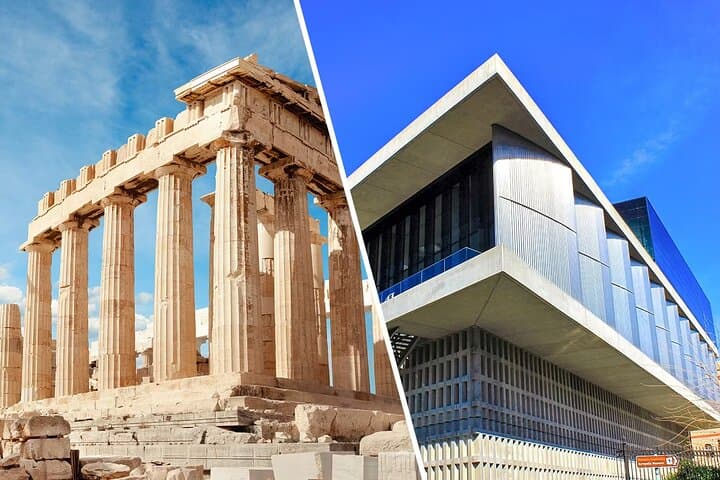
You emerge onto the Acropolis slope as the city hums below and the Parthenon looms ahead—marble columns catching sunlight, wind nudging you along ancient steps. The hill keeps its own tempo: slow, reverent, occasionally brisk when a tour group moves through. The audio guide lets you set that pace, pausing at friezes and stairways to hear context while keeping your hands free to steady on worn stone.
You emerge onto the Acropolis slope as the city hums below and the Parthenon looms ahead—marble columns catching sunlight, wind nudging you along ancient steps. The hill keeps its own tempo: slow, reverent, occasionally brisk when a tour group moves through. The audio guide lets you set that pace, pausing at friezes and stairways to hear context while keeping your hands free to steady on worn stone.
This rocky outcrop has hosted temples since the Mycenaean era; the fifth-century BCE Parthenon is the architectural centerpiece of classical Athens. Geologically, the Acropolis is a limestone and schist cap rising above the Plaka quarter, its surfaces scoured by centuries of weather and restoration. The nearby Acropolis Museum houses sculptures and finds removed from the slopes for preservation, giving an indoor counterpoint to the open-air ruins.
Culturally, visiting is both archaeological study and urban ritual—locals walk past on their way to work, students photograph ruins between classes. Modern conservation efforts mean sections may be fenced or under scaffolding; your entry supports ongoing protection.
Practical guidance: book a timed ticket and arrive early for softer light and thinner crowds. Wear sturdy shoes—steps are uneven—and carry a refillable water bottle: shade is limited. Allow 1–4 hours to pair the site with the museum; the audio guide makes it easy to connect fragments in the gallery with their original positions on the rock. Expect security checks, bag restrictions, and intermittent restoration work—then stand on the Parthenon’s threshold and let the stones finish the story.