THE ADVENTURE COLLECTIVE® · Independent discovery and booking for outdoor travel

Walk the layered streets of Acre and descend the steepest cable car to Rosh Hanikra’s sea-carved grottoes on this full-day coastal tour. Expect historic Crusader halls, Ottoman markets, dramatic white cliffs and moderately paced walking across uneven stone.
Walk the layered streets of Acre and descend the steepest cable car to Rosh Hanikra’s sea-carved grottoes on this full-day coastal tour. Expect historic Crusader halls, Ottoman markets, dramatic white cliffs and moderately paced walking across uneven stone.
The morning light breaks on the eastern wall of Acre as you step from an air-conditioned van into a city that still argues with history. Stone alleyways breathe salt and spice; vendors call softly while seagulls wheel over the old port. Later the coast changes—white chalk cliffs rise, wind pushing sea spray through the fissures at Rosh Hanikra, and the cable car drops you down like a small machine into a grotto carved by persistent waves.
Verified experiences and guided adventures in the surrounding area.
Operated by Avi Mashiach · Acre (Akko), Haifa District
The morning light breaks on the eastern wall of Acre as you step from an air-conditioned van into a city that still argues with history. Stone alleyways breathe salt and spice; vendors call softly while seagulls wheel over the old port. Later the coast changes—white chalk cliffs rise, wind pushing sea spray through the fissures at Rosh Hanikra, and the cable car drops you down like a small machine into a grotto carved by persistent waves.
Acre (Akko) is a layered city: Bronze Age foundations, Crusader halls, Ottoman bazaars and the 18th-century Al-Jazzar Mosque stand within sight of one another. Geologically, Rosh Hanikra is a seam of soft chalk and hard limestone where the eastern Mediterranean has attacked weaknesses to create tunnels and caverns—the sea continues to shape the caves you’ll enter. The area is threaded with local fishing culture and wartime transport history; the abandoned railway tunnel nearby hints at the British Mandate era.
Practical guidance: expect roughly a 10-hour day with moderate walking on uneven stone and steps. Comfortable, grippy footwear and sun protection are essential; bring a light layer for cliff-top winds and a refillable bottle—operators typically include bottled water and entrance fees, but confirm cable-car access when you book. Photography is rewarding: aim for morning light in Acre and late afternoon for the grottoes when the sea reflects deeper blues.
Plan travel time from Haifa or Tel Aviv, allow flexibility for market browsing, and keep maps or offline directions—cell coverage can be spotty in narrow alleys. Respect protected marine life and stay on marked paths in the grottoes to preserve fragile formations.
moderate.
10 hours.
Moderate fitness: able to walk 3–5 miles over uneven cobbles and climb stairs without assistance.
The tour lists entrance fees as included and typically covers access to main sites; confirm with the operator whether the Rosh Hanikra cable car ticket is explicitly included when you book.
Plan for moderate walking—several hours of exploring Acre’s alleys and stairs plus short walks and steps at Rosh Hanikra; comfortable shoes are recommended.
The operator notes stroller access and infant seats are available, but some areas include uneven steps and steep cable car access—parents should assess mobility and comfort with confined cable car cabins.
The tour typically provides private transport; independently, Acre is about 90–100 minutes from Tel Aviv by car and 30–40 minutes from Haifa, depending on traffic.
Acre has been a fortified port for millennia, with visible Crusader halls and Ottoman fortifications; Napoleon’s failed 1799 siege is part of the city’s storied past.
The grottoes and coastal cliffs are geologically fragile—stay on marked paths, avoid touching formations and minimize plastic waste to protect marine and cliff habitats.
Avi Mashiach operates guided outdoor trips and adventures with an emphasis on safety, stewardship, and memorable experiences.

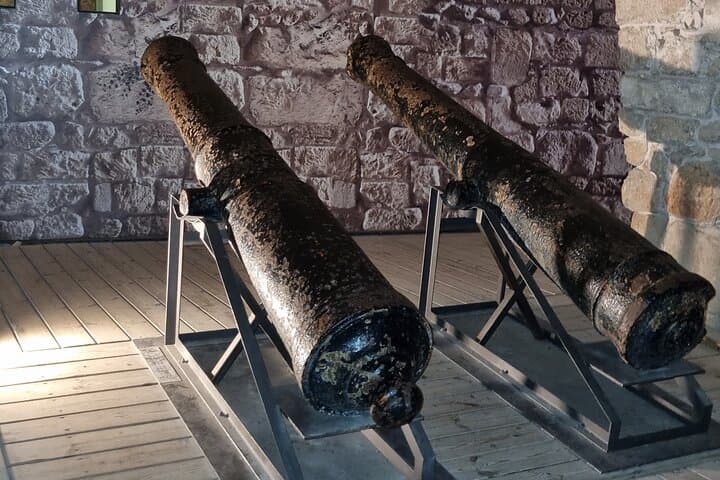


The morning light breaks on the eastern wall of Acre as you step from an air-conditioned van into a city that still argues with history. Stone alleyways breathe salt and spice; vendors call softly while seagulls wheel over the old port. Later the coast changes—white chalk cliffs rise, wind pushing sea spray through the fissures at Rosh Hanikra, and the cable car drops you down like a small machine into a grotto carved by persistent waves.
The morning light breaks on the eastern wall of Acre as you step from an air-conditioned van into a city that still argues with history. Stone alleyways breathe salt and spice; vendors call softly while seagulls wheel over the old port. Later the coast changes—white chalk cliffs rise, wind pushing sea spray through the fissures at Rosh Hanikra, and the cable car drops you down like a small machine into a grotto carved by persistent waves.
Acre (Akko) is a layered city: Bronze Age foundations, Crusader halls, Ottoman bazaars and the 18th-century Al-Jazzar Mosque stand within sight of one another. Geologically, Rosh Hanikra is a seam of soft chalk and hard limestone where the eastern Mediterranean has attacked weaknesses to create tunnels and caverns—the sea continues to shape the caves you’ll enter. The area is threaded with local fishing culture and wartime transport history; the abandoned railway tunnel nearby hints at the British Mandate era.
Practical guidance: expect roughly a 10-hour day with moderate walking on uneven stone and steps. Comfortable, grippy footwear and sun protection are essential; bring a light layer for cliff-top winds and a refillable bottle—operators typically include bottled water and entrance fees, but confirm cable-car access when you book. Photography is rewarding: aim for morning light in Acre and late afternoon for the grottoes when the sea reflects deeper blues.
Plan travel time from Haifa or Tel Aviv, allow flexibility for market browsing, and keep maps or offline directions—cell coverage can be spotty in narrow alleys. Respect protected marine life and stay on marked paths in the grottoes to preserve fragile formations.