THE ADVENTURE COLLECTIVE® · Independent discovery and booking for outdoor travel

A rigorous 12-day push from Mendoza to the summit of Aconcagua via the Normal Route. This non-technical but high-altitude expedition demands careful acclimatization, solid fitness, and respect for mountain weather.
A rigorous 12-day push from Mendoza to the summit of Aconcagua via the Normal Route. This non-technical but high-altitude expedition demands careful acclimatization, solid fitness, and respect for mountain weather.
You stand at the edge of the high Andes, wind pushing dust and cold across a bowl of glacial moraine while the north face of Aconcagua cuts the skyline. The climb begins in the dry, bright air of Penitentes and moves through Quebrada de los Horcones toward the wide, exposed camps of Plaza de Mulas—each camp a measured step higher into thinner air and sharper light.
Verified experiences and guided adventures in the surrounding area.
Operated by Peru Expeditions Tours · Mendoza, Mendoza
You stand at the edge of the high Andes, wind pushing dust and cold across a bowl of glacial moraine while the north face of Aconcagua cuts the skyline. The climb begins in the dry, bright air of Penitentes and moves through Quebrada de los Horcones toward the wide, exposed camps of Plaza de Mulas—each camp a measured step higher into thinner air and sharper light.
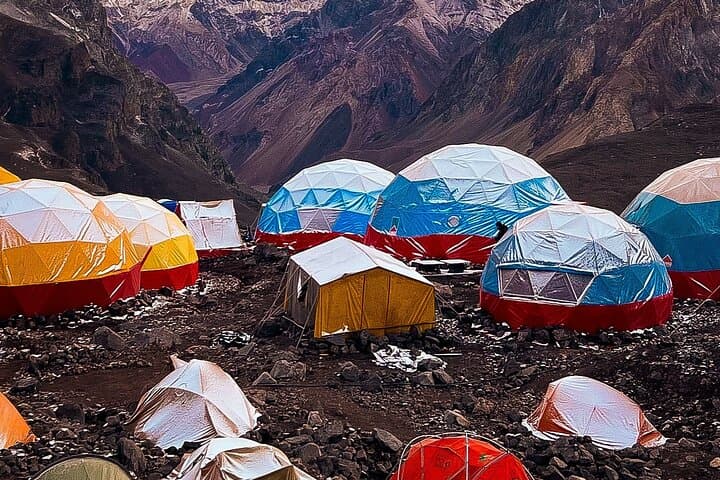
Aconcagua (6,962 m) is the tallest peak in the Americas, a product of Andean uplift and persistent aridity that sculpts bare rock and scree. The Normal Route is non-technical but brutally honest: long approaches, sustained altitude, and nights in four-season tents. The mountain sits inside Aconcagua Provincial Park, near Mendoza, a region with a strong mule-train and climbing culture and a wine-producing lowland that supports the logistics for expeditions.
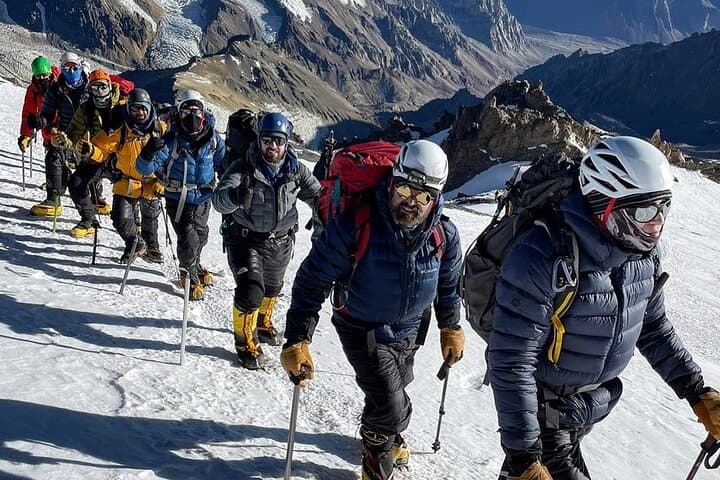
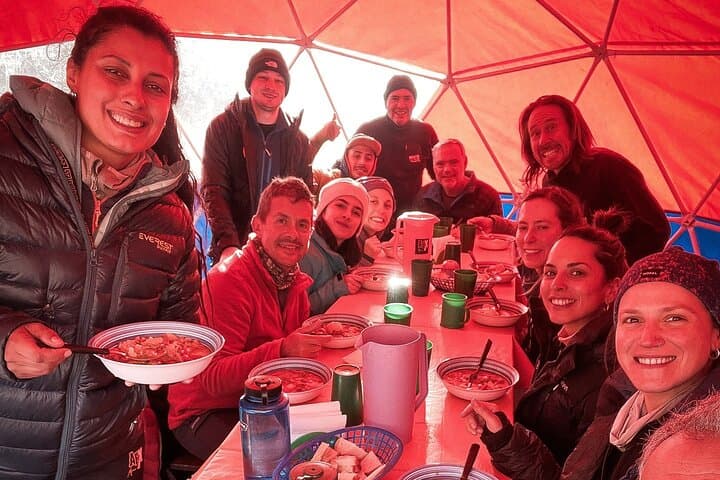
Expect long hiking days: initial drives to Penitentes, a 4–5 hour trek to Confluencia, then ascents to Plaza de Mulas and high camps (Nido de Cóndores, Colera) before a summit push. Acclimatization hikes (e.g., Cerro Bonete) are built into the itinerary; the trip includes porters, cooked meals, and medical checks.
Practical edge: train your aerobic base, practice walking with a loaded pack, and sleep and eat for altitude. Layered insulation, reliable mountaineering boots, and nightly hydration matter more than speed. Start early on summit day and be prepared to turn back—weather and oxygen are the final arbiters. With realistic expectations and disciplined pacing, the Normal Route is a logistical climb—an endurance puzzle rewarded by one of the widest alpine panoramas on the continent.
difficult.
12 days.
Excellent aerobic fitness with prior high‑altitude trekking experience; prepare with multi‑hour hikes carrying 12–18 kg
No technical rock-climbing skills are required, but familiarity with crampons, ice axe use, and high-altitude trekking is strongly recommended.
The austral summer (November–February) is the established climbing season for the Normal Route due to more stable weather and park access.
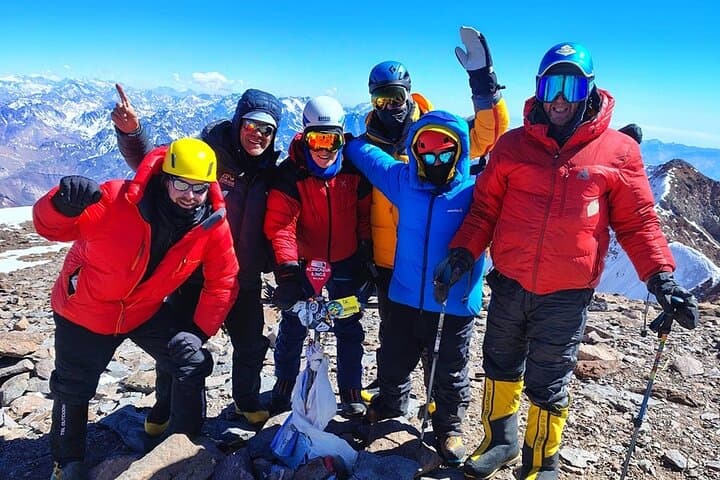
Summit day is long and altitude-intense—expect 8–12 hours up and several hours down; pacing and oxygenation matter more than speed.
Expedition typically includes park permits, transport, camping, cooked meals, guides, and mule support; confirm specifics with the operator before booking.
Mountaineering on Aconcagua dates to the 19th century; the Normal Route follows trails used historically by mule caravans transporting supplies to high camps.
Aconcagua Provincial Park regulates permits and camp locations—minimize impact by packing out waste and using established latrine systems.
Peru Expeditions Tours operates guided outdoor trips and adventures with an emphasis on safety, stewardship, and memorable experiences.
You stand at the edge of the high Andes, wind pushing dust and cold across a bowl of glacial moraine while the north face of Aconcagua cuts the skyline. The climb begins in the dry, bright air of Penitentes and moves through Quebrada de los Horcones toward the wide, exposed camps of Plaza de Mulas—each camp a measured step higher into thinner air and sharper light.
You stand at the edge of the high Andes, wind pushing dust and cold across a bowl of glacial moraine while the north face of Aconcagua cuts the skyline. The climb begins in the dry, bright air of Penitentes and moves through Quebrada de los Horcones toward the wide, exposed camps of Plaza de Mulas—each camp a measured step higher into thinner air and sharper light.
Aconcagua (6,962 m) is the tallest peak in the Americas, a product of Andean uplift and persistent aridity that sculpts bare rock and scree. The Normal Route is non-technical but brutally honest: long approaches, sustained altitude, and nights in four-season tents. The mountain sits inside Aconcagua Provincial Park, near Mendoza, a region with a strong mule-train and climbing culture and a wine-producing lowland that supports the logistics for expeditions.
Expect long hiking days: initial drives to Penitentes, a 4–5 hour trek to Confluencia, then ascents to Plaza de Mulas and high camps (Nido de Cóndores, Colera) before a summit push. Acclimatization hikes (e.g., Cerro Bonete) are built into the itinerary; the trip includes porters, cooked meals, and medical checks.
Practical edge: train your aerobic base, practice walking with a loaded pack, and sleep and eat for altitude. Layered insulation, reliable mountaineering boots, and nightly hydration matter more than speed. Start early on summit day and be prepared to turn back—weather and oxygen are the final arbiters. With realistic expectations and disciplined pacing, the Normal Route is a logistical climb—an endurance puzzle rewarded by one of the widest alpine panoramas on the continent.