THE ADVENTURE COLLECTIVE® · Independent discovery and booking for outdoor travel

Explore Accra on a 4–7 hour city tour that pairs Makola Market and colonial landmarks with hands-on drumming and dance lessons. Expect flat walking streets, cultural history, and practical tips for bargaining and sun protection.
Explore Accra on a 4–7 hour city tour that pairs Makola Market and colonial landmarks with hands-on drumming and dance lessons. Expect flat walking streets, cultural history, and practical tips for bargaining and sun protection.
You step out into Accra’s heat and noise with a rhythm already in the air: vendors calling, cars threading through crowds, and the Gulf of Guinea pushing a warm breeze down the street. The tour moves at a walking pace through Makola Market’s tight alleys, past stalls of fabric and produce, then opens onto broad Independence spaces and the white stone of colonial-era buildings.
Verified experiences and guided adventures in the surrounding area.
Operated by Pridor Plus Tours · Accra, Greater Accra Region
You step out into Accra’s heat and noise with a rhythm already in the air: vendors calling, cars threading through crowds, and the Gulf of Guinea pushing a warm breeze down the street. The tour moves at a walking pace through Makola Market’s tight alleys, past stalls of fabric and produce, then opens onto broad Independence spaces and the white stone of colonial-era buildings.
The route threads Ghana’s modern history with its coastal geology — a low-lying coastal plain of laterite and sand — and cultural checkpoints like the Du Bois Centre, where Pan-African history is on display. Christianborg Castle and memorials for 1948’s protests offer a sober counterpoint to the market’s urgent commerce and the showy pulse of Ga community life in Jamestown.
Half the day is hands-on: instructors teach basic kpanlogo rhythms and a few dance steps, turning observation into practice. The rest is walking and short museum visits; terrain is paved city streets with occasional steps and uneven curbs, so expect flat but sometimes congested routes.
Practical guidance: the tour runs 4–7 hours with roughly 3–6 km of walking and minimal elevation gain. Bring sun protection, closed-toe shoes for market alleys, and small cash for haggling. Bottled water and WiFi are provided on the vehicle, and many sites charge modest entry fees — confirm what’s included when booking. Move deliberately, listen to the drums, and leave space for the city’s constant, human energy.
moderate.
4–7 hours.
Suitable for people with moderate fitness; involves several hours of walking on flat but busy streets.
Private pickup is typically available from central Accra hotels; confirm your pickup point at booking and share any special requirements.
Some site admissions on the itinerary are included, but policies can vary — verify which entrances are covered when you confirm your reservation.
Yes — children can participate in drumming and dancing, but the operator advises moderate fitness and supervision in crowded market areas.
Tours are generally led in English; request another language in advance but availability may be limited.
Accra’s built environment reflects layers of Ga coastal settlements, European forts from the colonial period, and key sites tied to Ghana’s independence movement in the mid-20th century.
Rapid urban growth strains waste management and shoreline habitats; choose local guides, avoid single-use plastics, and support community-led conservation efforts.
Pridor Plus Tours operates guided outdoor trips and adventures with an emphasis on safety, stewardship, and memorable experiences.


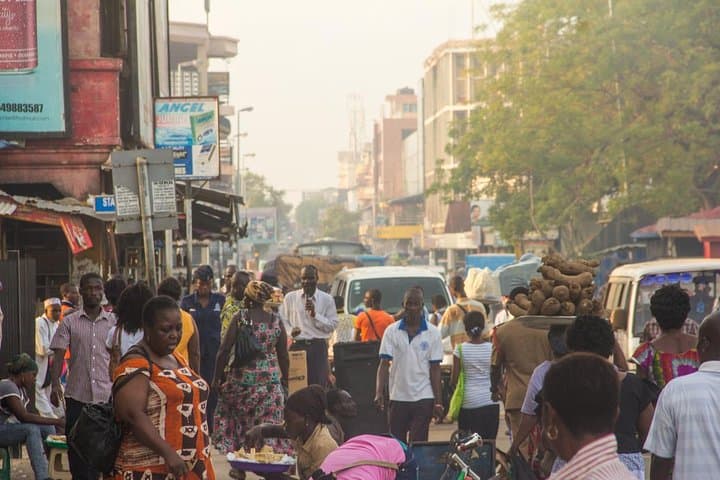
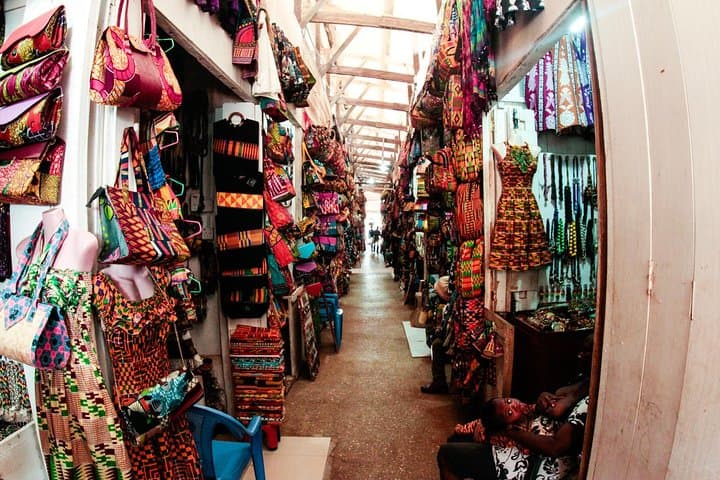
You step out into Accra’s heat and noise with a rhythm already in the air: vendors calling, cars threading through crowds, and the Gulf of Guinea pushing a warm breeze down the street. The tour moves at a walking pace through Makola Market’s tight alleys, past stalls of fabric and produce, then opens onto broad Independence spaces and the white stone of colonial-era buildings.
You step out into Accra’s heat and noise with a rhythm already in the air: vendors calling, cars threading through crowds, and the Gulf of Guinea pushing a warm breeze down the street. The tour moves at a walking pace through Makola Market’s tight alleys, past stalls of fabric and produce, then opens onto broad Independence spaces and the white stone of colonial-era buildings.
The route threads Ghana’s modern history with its coastal geology — a low-lying coastal plain of laterite and sand — and cultural checkpoints like the Du Bois Centre, where Pan-African history is on display. Christianborg Castle and memorials for 1948’s protests offer a sober counterpoint to the market’s urgent commerce and the showy pulse of Ga community life in Jamestown.
Half the day is hands-on: instructors teach basic kpanlogo rhythms and a few dance steps, turning observation into practice. The rest is walking and short museum visits; terrain is paved city streets with occasional steps and uneven curbs, so expect flat but sometimes congested routes.
Practical guidance: the tour runs 4–7 hours with roughly 3–6 km of walking and minimal elevation gain. Bring sun protection, closed-toe shoes for market alleys, and small cash for haggling. Bottled water and WiFi are provided on the vehicle, and many sites charge modest entry fees — confirm what’s included when booking. Move deliberately, listen to the drums, and leave space for the city’s constant, human energy.