THE ADVENTURE COLLECTIVE® · Independent discovery and booking for outdoor travel

Experience Madeira’s laurel forest without barriers on a half‑day wheelchair tour along the Caminho das Queimadas. This accessible route follows an engineered levada, ending at traditional Santana houses and woodland viewpoints.
Experience Madeira’s laurel forest without barriers on a half‑day wheelchair tour along the Caminho das Queimadas. This accessible route follows an engineered levada, ending at traditional Santana houses and woodland viewpoints.
A narrow track of stone and moss opens into a cool wash of green as the levada water hums alongside the trail. On this half‑day, visitors roll beneath the high canopy of the Laurissilva — a humid, primeval forest that gives the island its distinct breath. The off‑road chair negotiates packed earth and carved rock; the world narrows to the sound of water daring you forward and the scent of damp laurel in the air.
Verified experiences and guided adventures in the surrounding area.
Operated by Madeira Acessivel By Wheelchair · Santana, Madeira
A narrow track of stone and moss opens into a cool wash of green as the levada water hums alongside the trail. On this half‑day, visitors roll beneath the high canopy of the Laurissilva — a humid, primeval forest that gives the island its distinct breath. The off‑road chair negotiates packed earth and carved rock; the world narrows to the sound of water daring you forward and the scent of damp laurel in the air.
The route follows the levada corridor between Queimadas and nearby forestry parks in Santana. Madeira’s levadas date from the 16th century, civil engineering born of urgent need to channel mountain water to cultivated terraces; today they are maintenance paths that double as walking trails. Geologically, the path skirts volcanic ridges and old lava terraces; you’ll see native Laurissilva trees mixed with introduced species planted during agricultural expansion. Culturally, the thatched Santana houses at Casa de Abrigo das Queimadas speak to islander building techniques and a tradition of mountain shepherding.
Practically, this tour is designed for reduced mobility: operators use off‑road wheelchairs and ramps to traverse uneven steps and forest trails. Expect 4–5 hours including transportation from Funchal, slow pacing for rests and photo stops, and a snack option. Terrain can be wet and uneven; closed, grippy shoes and a waterproof layer are recommended. Plan for changing microclimates — sun and drizzle can arrive within a single hour — and give yourself extra time to move deliberately through narrow sections. The experience is sensory and steady: nature invites touch, sound, and close observation rather than speed.
easy.
4–5 hours.
Suitable for people with reduced mobility and general fitness; minimal walking required if using provided equipment
The tour uses an off‑road wheelchair and selects accessible sections of the levada; not all levada trails are fully accessible, so this route focuses on reachable segments and forestry park stops.
Most departures originate from Funchal or nearby accommodations; confirm pickup point and any transit needs with the operator when booking.
You can, but the company strongly recommends using their off‑road equipment due to terrain and battery limitations; discuss your specific chair beforehand.
Wear closed, non‑slip shoes, layered clothing, and bring sun protection, a waterproof shell, and any personal mobility aids; bottled water is usually provided.
The levadas were built from the 16th century to irrigate plantations; the paths now link remote settlements and reveal Madeira’s agricultural past.
The Laurissilva is a UNESCO site; staying on maintained paths and respecting closures helps protect endemic plants and fragile soil.
Madeira Acessivel By Wheelchair operates guided outdoor trips and adventures with an emphasis on safety, stewardship, and memorable experiences.


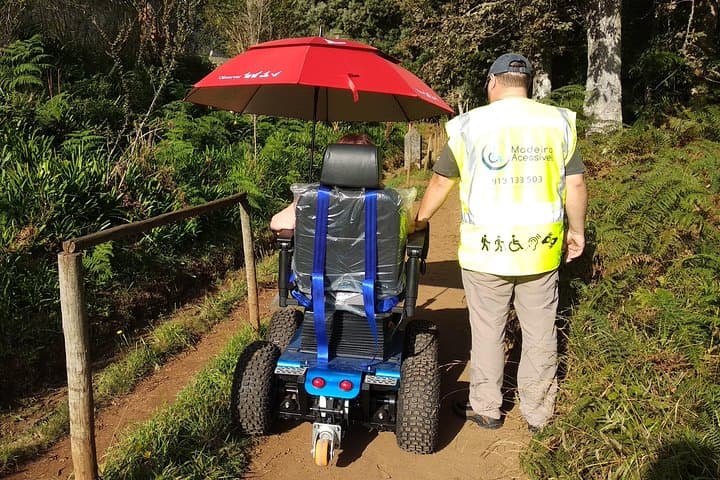
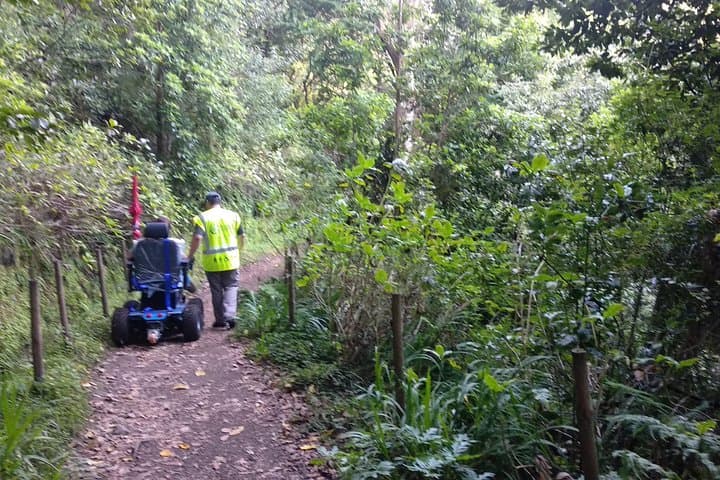
A narrow track of stone and moss opens into a cool wash of green as the levada water hums alongside the trail. On this half‑day, visitors roll beneath the high canopy of the Laurissilva — a humid, primeval forest that gives the island its distinct breath. The off‑road chair negotiates packed earth and carved rock; the world narrows to the sound of water daring you forward and the scent of damp laurel in the air.
A narrow track of stone and moss opens into a cool wash of green as the levada water hums alongside the trail. On this half‑day, visitors roll beneath the high canopy of the Laurissilva — a humid, primeval forest that gives the island its distinct breath. The off‑road chair negotiates packed earth and carved rock; the world narrows to the sound of water daring you forward and the scent of damp laurel in the air.
The route follows the levada corridor between Queimadas and nearby forestry parks in Santana. Madeira’s levadas date from the 16th century, civil engineering born of urgent need to channel mountain water to cultivated terraces; today they are maintenance paths that double as walking trails. Geologically, the path skirts volcanic ridges and old lava terraces; you’ll see native Laurissilva trees mixed with introduced species planted during agricultural expansion. Culturally, the thatched Santana houses at Casa de Abrigo das Queimadas speak to islander building techniques and a tradition of mountain shepherding.
Practically, this tour is designed for reduced mobility: operators use off‑road wheelchairs and ramps to traverse uneven steps and forest trails. Expect 4–5 hours including transportation from Funchal, slow pacing for rests and photo stops, and a snack option. Terrain can be wet and uneven; closed, grippy shoes and a waterproof layer are recommended. Plan for changing microclimates — sun and drizzle can arrive within a single hour — and give yourself extra time to move deliberately through narrow sections. The experience is sensory and steady: nature invites touch, sound, and close observation rather than speed.