THE ADVENTURE COLLECTIVE® · Independent discovery and booking for outdoor travel

Travel from Tokyo to Hakone in a wheelchair-accessible private vehicle and spend a flexible day visiting Owakudani’s steaming vents, the Hakone Ropeway, Lake Ashinoko viewpoints and top art museums. This accessible transfer pairs door-to-door convenience with customizable stops and an English-speaking driver.
Travel from Tokyo to Hakone in a wheelchair-accessible private vehicle and spend a flexible day visiting Owakudani’s steaming vents, the Hakone Ropeway, Lake Ashinoko viewpoints and top art museums. This accessible transfer pairs door-to-door convenience with customizable stops and an English-speaking driver.
A low, rumbling engine and the gentle click of a ramp set the tone more than a sightseeing spiel. Departing Tokyo’s 23 wards, a private accessible vehicle eases onto the expressway and the city’s edges thin into cedar-fringed hills. By the time the car climbs into Hakone, steam seeps from the valley and a sulfur-scented air greets travelers at Owakudani — a landscape that feels alive, almost dare-you-to-approach.
Verified experiences and guided adventures in the surrounding area.
Operated by Japan Guide Agency · Hakone, Kanagawa
A low, rumbling engine and the gentle click of a ramp set the tone more than a sightseeing spiel. Departing Tokyo’s 23 wards, a private accessible vehicle eases onto the expressway and the city’s edges thin into cedar-fringed hills. By the time the car climbs into Hakone, steam seeps from the valley and a sulfur-scented air greets travelers at Owakudani — a landscape that feels alive, almost dare-you-to-approach.
Hakone is shaped by fire and water. The caldera that holds Lake Ashinoko formed after a violent eruption about 3,000 years ago; today the lake’s still surface frames Mount Fuji on clear days. Owakudani’s fumaroles and black-shelled eggs are a direct line to that geothermal past — local folklore insists the boiled eggs add years to your life, and the scent alone is a reminder of the volcano’s presence.
But Hakone is more than geology. It’s a measured mix of Edo-period histories, Shinto shrines, and 20th-century collectors who cut galleries into the hills. Museums like POLA and Okada sit among hundred-year-old beeches, their modern galleries deliberately low to keep the forest in charge. The Hakone Ropeway stitches these elements together: cabin windows frame sulfur vents one minute, Lake Ashi and Fuji the next.
This private, barrier-free transfer is built around ease. An English-speaking driver provides door-to-door service, and the itinerary can be customized to three or four sites from a long list that includes Owakudani, the Ropeway, Lake Ashinoko viewpoints, and a handful of museums and gardens. Expect roughly 70 minutes of travel each way from central Tokyo and an eight-hour day to move through Hakone’s thin mountain air.
Practical notes: plan museum visits mid-morning or mid-afternoon to avoid the ropeway queue at Owakudani; Fuji visibility peaks in early morning and late afternoon, so timing matters. The vehicle accommodates wheelchairs and service animals; however, not every small temple or garden has step-free access, so discuss specific mobility needs when you book. Bring layers — mountain weather shifts quickly — and carry cash for small museum admissions and on-site food items like the black eggs.
For travelers who prioritize accessibility without surrendering independence, this transfer unpacks Hakone in a way public transit often cannot: seamless transport, local insight from drivers, and the flexibility to choose art, nature, or geothermal spectacle as the day’s focus.
easy.
8 hours.
Suitable for travelers of mixed fitness and mobility levels due to door-to-door vehicle support; some walking on uneven surfaces may be required at sights.
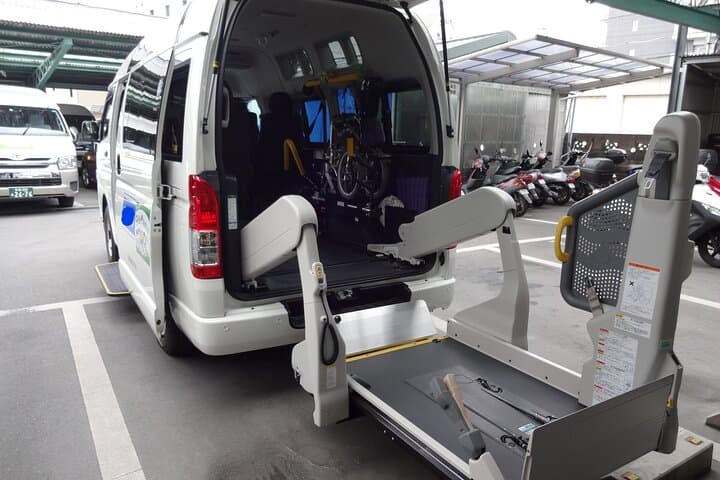
Yes — the private vehicle is equipped for wheelchair boarding and securement; confirm wheelchair dimensions and any transfer needs when you book.
Yes — the tour is customizable for three to four sites from the provided list; tell the operator your priorities when booking.
Admissions vary — some museums accept walk-ups but timed-entry exhibits or popular weekends benefit from advance booking.
Service animals are permitted and specialized infant seats are available, though car seat availability is limited — request them ahead of time.
Access can be restricted; the driver will propose alternative stops such as the Hakone Botanical Garden or an art museum if Owakudani is closed.
Tipping is not customary in Japan; a polite thank-you or a small gift is appreciated but not required.
Hakone has served as a strategic post on the old Tokaido route and later became a destination for hot-spring resorts and collectors who established several museums in the 20th century.
Many museums and parks are managed to minimize impact on ancient beech forests and wetlands; visitors are asked to stay on paths and avoid feeding wildlife.
Japan Guide Agency operates guided outdoor trips and adventures with an emphasis on safety, stewardship, and memorable experiences.
A low, rumbling engine and the gentle click of a ramp set the tone more than a sightseeing spiel. Departing Tokyo’s 23 wards, a private accessible vehicle eases onto the expressway and the city’s edges thin into cedar-fringed hills. By the time the car climbs into Hakone, steam seeps from the valley and a sulfur-scented air greets travelers at Owakudani — a landscape that feels alive, almost dare-you-to-approach.
A low, rumbling engine and the gentle click of a ramp set the tone more than a sightseeing spiel. Departing Tokyo’s 23 wards, a private accessible vehicle eases onto the expressway and the city’s edges thin into cedar-fringed hills. By the time the car climbs into Hakone, steam seeps from the valley and a sulfur-scented air greets travelers at Owakudani — a landscape that feels alive, almost dare-you-to-approach.
Hakone is shaped by fire and water. The caldera that holds Lake Ashinoko formed after a violent eruption about 3,000 years ago; today the lake’s still surface frames Mount Fuji on clear days. Owakudani’s fumaroles and black-shelled eggs are a direct line to that geothermal past — local folklore insists the boiled eggs add years to your life, and the scent alone is a reminder of the volcano’s presence.
But Hakone is more than geology. It’s a measured mix of Edo-period histories, Shinto shrines, and 20th-century collectors who cut galleries into the hills. Museums like POLA and Okada sit among hundred-year-old beeches, their modern galleries deliberately low to keep the forest in charge. The Hakone Ropeway stitches these elements together: cabin windows frame sulfur vents one minute, Lake Ashi and Fuji the next.
This private, barrier-free transfer is built around ease. An English-speaking driver provides door-to-door service, and the itinerary can be customized to three or four sites from a long list that includes Owakudani, the Ropeway, Lake Ashinoko viewpoints, and a handful of museums and gardens. Expect roughly 70 minutes of travel each way from central Tokyo and an eight-hour day to move through Hakone’s thin mountain air.
Practical notes: plan museum visits mid-morning or mid-afternoon to avoid the ropeway queue at Owakudani; Fuji visibility peaks in early morning and late afternoon, so timing matters. The vehicle accommodates wheelchairs and service animals; however, not every small temple or garden has step-free access, so discuss specific mobility needs when you book. Bring layers — mountain weather shifts quickly — and carry cash for small museum admissions and on-site food items like the black eggs.
For travelers who prioritize accessibility without surrendering independence, this transfer unpacks Hakone in a way public transit often cannot: seamless transport, local insight from drivers, and the flexibility to choose art, nature, or geothermal spectacle as the day’s focus.