THE ADVENTURE COLLECTIVE® · Independent discovery and booking for outdoor travel

This full-day accessible tour across eastern Madeira links Santana’s traditional houses, coastal fortlets and the Whale Museum with adaptive off-road chairs and wheelchair-friendly transport. Expect multiple viewpoints, short on-site transfers, and a paced itinerary suited to varied mobility needs.
This full-day accessible tour across eastern Madeira links Santana’s traditional houses, coastal fortlets and the Whale Museum with adaptive off-road chairs and wheelchair-friendly transport. Expect multiple viewpoints, short on-site transfers, and a paced itinerary suited to varied mobility needs.
Morning light breaks over the Atlantic as an air-conditioned van eases away from Funchal toward Madeira’s eastern spine. The road climbs and the sea unfurls left and right; wind-swept cliffs and cultivated terraces frame a day that’s paced for mobility devices rather than hikers. Off-road adaptive chairs handle firm dirt and compact gravel while staff lower ramps and steady transitions.
Verified experiences and guided adventures in the surrounding area.
Operated by Madeira Acessivel By Wheelchair · Funchal, Madeira
Morning light breaks over the Atlantic as an air-conditioned van eases away from Funchal toward Madeira’s eastern spine. The road climbs and the sea unfurls left and right; wind-swept cliffs and cultivated terraces frame a day that’s paced for mobility devices rather than hikers. Off-road adaptive chairs handle firm dirt and compact gravel while staff lower ramps and steady transitions.
The itinerary threads cultural stops and natural overlooks: traditional triangular Santana houses and their market stalls, the Faial fortlet turned terrace with 18th-century masonry, and the Whale Museum in Caniçal, which traces Madeira’s whaling past and contemporary cetacean research. Geology here is volcanic — basalt cliffs carved by the sea, laurisilva remnants clinging to ravines, and the eastern Ponta peninsula exposed to raw Atlantic swell.
Visitors sense the island’s layered history in built features and local production: sugarcane mills and small distilleries that shaped coastal economies, and lookout points that once watched for ships and invaders. Guides adapt routes depending on equipment: some viewpoints require short, firm inclines; others have ramps or elevators.
Practical edge: plan for 6–7 hours with multiple short stops, carry snacks and water provided on board, and confirm the type of wheelchair you’ll use. Battery range, sturdy closed shoes, and a lightweight rain layer matter more than speed — weather can flip from sun to squall in an hour. This full-day eastern circuit makes Madeira accessible without losing the island’s elemental drama: the sea daring you to look farther, the cliffs pushing the eye outward.
easy.
6–7 hours.
Suitable for people of all fitness levels; participants should be able to transfer with assistance if needed and tolerate several short mobility transitions.
The tour is designed for wheelchairs with wheelchair-accessible transport and ramps; access at some sites may be limited for larger electric chairs—confirm the chair type when booking.
Some locations restrict large electric chairs due to gravel or narrow paths; operators can advise which stops are accessible based on your equipment.
Bottled water is included; snacks may be available for purchase or provided as an optional extra—check the booking details for meal inclusions.
Pickup and drop-off are offered; you’ll be asked to provide a pickup point when booking to coordinate accessible vehicle routing.
Madeira’s eastern coast was shaped by maritime trade and whaling; the Whale Museum in Caniçal preserves 20th-century whaling artifacts while regional mills record traditional distillation and agriculture.
Cetacean research on Madeira emphasizes non-invasive study and responsible viewing; visitors should stay on designated paths and avoid disturbing delicate laurisilva remnants.
Madeira Acessivel By Wheelchair operates guided outdoor trips and adventures with an emphasis on safety, stewardship, and memorable experiences.
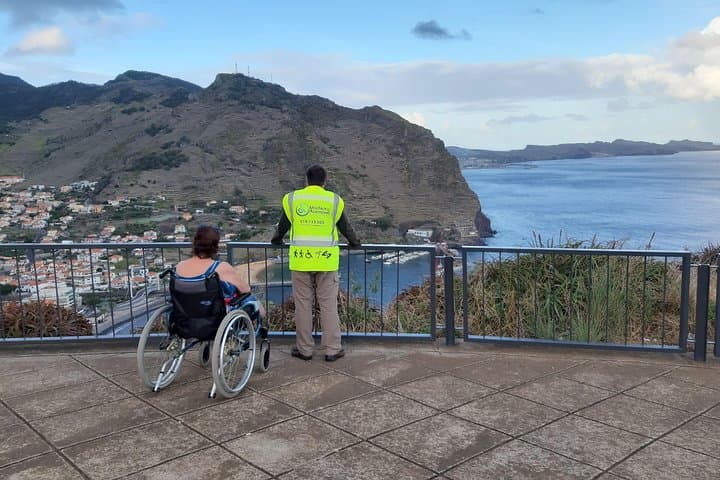
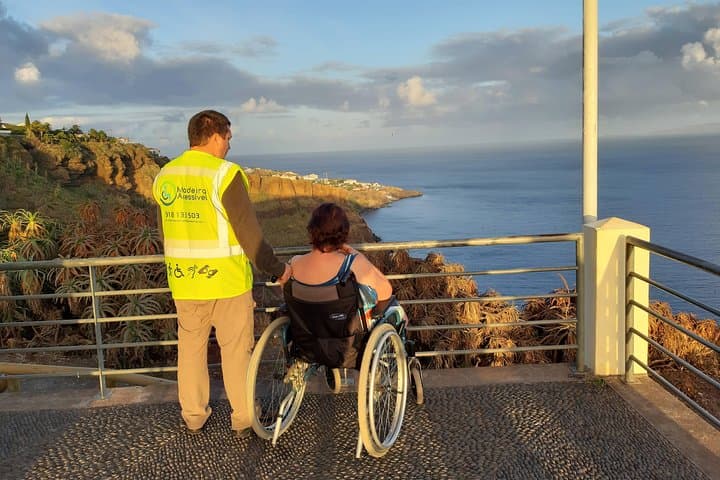
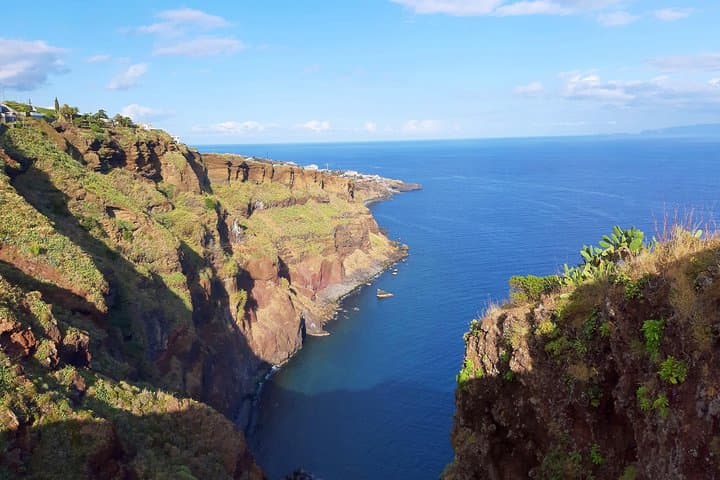
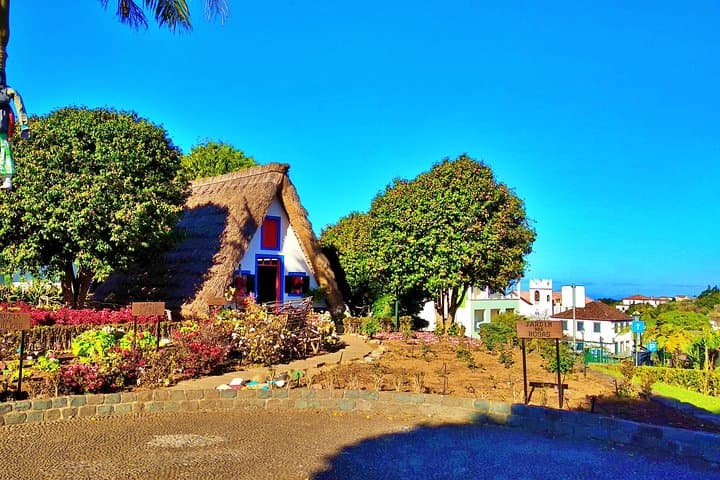
Morning light breaks over the Atlantic as an air-conditioned van eases away from Funchal toward Madeira’s eastern spine. The road climbs and the sea unfurls left and right; wind-swept cliffs and cultivated terraces frame a day that’s paced for mobility devices rather than hikers. Off-road adaptive chairs handle firm dirt and compact gravel while staff lower ramps and steady transitions.
Morning light breaks over the Atlantic as an air-conditioned van eases away from Funchal toward Madeira’s eastern spine. The road climbs and the sea unfurls left and right; wind-swept cliffs and cultivated terraces frame a day that’s paced for mobility devices rather than hikers. Off-road adaptive chairs handle firm dirt and compact gravel while staff lower ramps and steady transitions.
The itinerary threads cultural stops and natural overlooks: traditional triangular Santana houses and their market stalls, the Faial fortlet turned terrace with 18th-century masonry, and the Whale Museum in Caniçal, which traces Madeira’s whaling past and contemporary cetacean research. Geology here is volcanic — basalt cliffs carved by the sea, laurisilva remnants clinging to ravines, and the eastern Ponta peninsula exposed to raw Atlantic swell.
Visitors sense the island’s layered history in built features and local production: sugarcane mills and small distilleries that shaped coastal economies, and lookout points that once watched for ships and invaders. Guides adapt routes depending on equipment: some viewpoints require short, firm inclines; others have ramps or elevators.
Practical edge: plan for 6–7 hours with multiple short stops, carry snacks and water provided on board, and confirm the type of wheelchair you’ll use. Battery range, sturdy closed shoes, and a lightweight rain layer matter more than speed — weather can flip from sun to squall in an hour. This full-day eastern circuit makes Madeira accessible without losing the island’s elemental drama: the sea daring you to look farther, the cliffs pushing the eye outward.