THE ADVENTURE COLLECTIVE® · Independent discovery and booking for outdoor travel

A private, wheelchair-friendly shore excursion from Livorno that reaches Portovenere, Corniglia, Vernazza and a photo stop in Pisa’s Campo dei Miracoli. Expect panoramic drives, short level walks, optional ferry views, and expert local navigation.
A private, wheelchair-friendly shore excursion from Livorno that reaches Portovenere, Corniglia, Vernazza and a photo stop in Pisa’s Campo dei Miracoli. Expect panoramic drives, short level walks, optional ferry views, and expert local navigation.
You step from the ship into sun-warmed air and the driver eases the door of an air-conditioned van open for you—today the Ligurian coast stretches wide, cliffs dropping into glittering water, villages clinging like colored jewels. The route follows a panoramic road that teases views of terraced vineyards and seawalls, then pauses so you can feel the sea from nearby quays without negotiating steep stairways.
Verified experiences and guided adventures in the surrounding area.
Operated by Dreaming Tuscany Tours · Livorno, Tuscany
You step from the ship into sun-warmed air and the driver eases the door of an air-conditioned van open for you—today the Ligurian coast stretches wide, cliffs dropping into glittering water, villages clinging like colored jewels. The route follows a panoramic road that teases views of terraced vineyards and seawalls, then pauses so you can feel the sea from nearby quays without negotiating steep stairways.
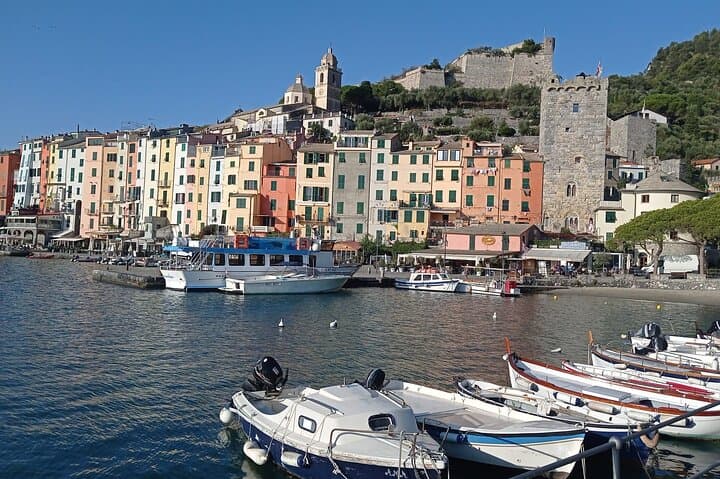
Portovenere’s 13th-century church perches on a rocky promontory; its black-and-white stonework and narrow lanes recall Genoese maritime power. Corniglia sits higher, a medieval hamlet of stone alleys and panoramic terraces that reveal how geology—limestone cliffs and marine terraces—shaped human settlement. Vernazza still smells of fresh seafood and salted ropes; its piazza and tiny harbor are living reminders of fishing traditions that predate mass tourism.
This private excursion trades long hikes for accessible viewpoints, short strolls on level ground, and optional ferry crossings for sea-level panoramas. Drivers are English-speaking and skilled at navigating local vehicle restrictions; ferries provide another perspective but can be subject to sea conditions.
Practical guidance: bring layered clothing for coastal breezes and sun-protective gear, and a collapsible mobility aid if you use one—vehicles can park close but some village surfaces are uneven. Plan for an 8–9 hour day with restroom and seating breaks; taxis and ramps vary by village. If Pisa is on the agenda, expect a short stop focused on photos at the Leaning Tower area rather than a long museum visit.
Accessible travel here means trading steep trails for panoramic access—enough to taste Liguria’s light, stone, and sea without the climb.
easy.
8–9 hours.
Suitable for most fitness levels including travelers with limited mobility; some standing and short walks required.
Yes—vehicles are wheelchair accessible and the itinerary is designed to minimize stairs; note that wheelchairs and scooters must be collapsible for vehicle storage.
Walks are short and generally on level ground or gentle slopes; Corniglia sits above sea level but the stop is arranged for minimal stair use when possible.
Yes—there’s an optional ferry for sea views; it depends on schedules and sea conditions and should be requested in advance if preferred.
Pisa is a brief stop (about 30 minutes) focused on views of the Leaning Tower and Campo dei Miracoli rather than in-depth museum visits.
The Ligurian coast reflects centuries of maritime trade and Genoese influence; Pisa’s cathedral complex grew during the city-state’s medieval maritime power.
Cinque Terre lies within a national park and UNESCO zone—stick to designated paths, minimize single-use plastics, and respect limited-vehicle rules to protect fragile terraces.
Dreaming Tuscany Tours operates guided outdoor trips and adventures with an emphasis on safety, stewardship, and memorable experiences.
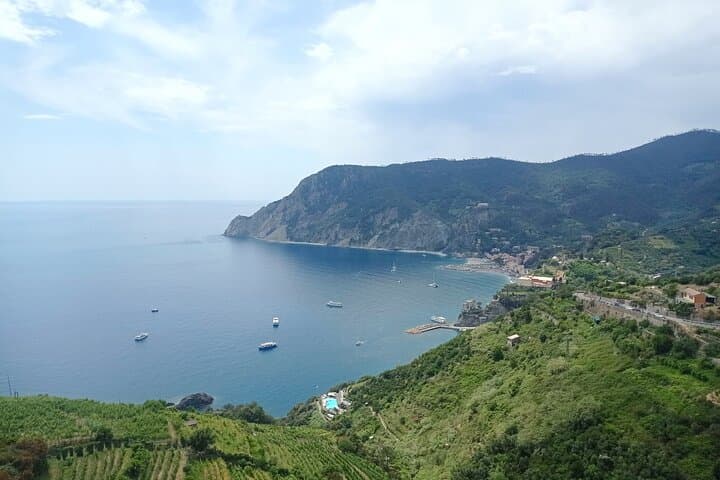
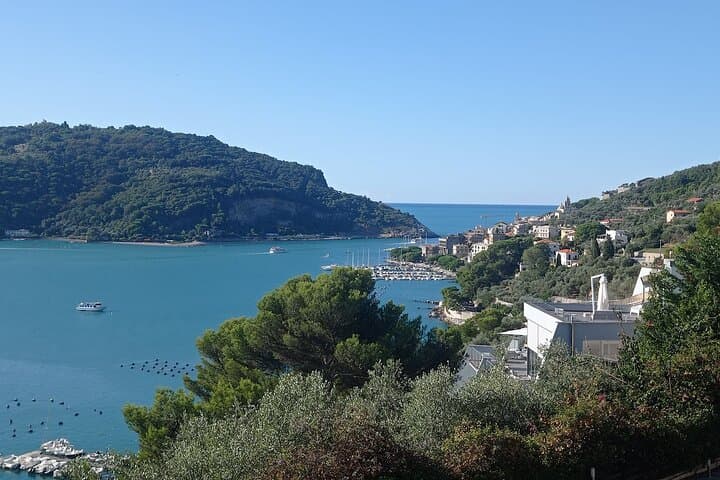
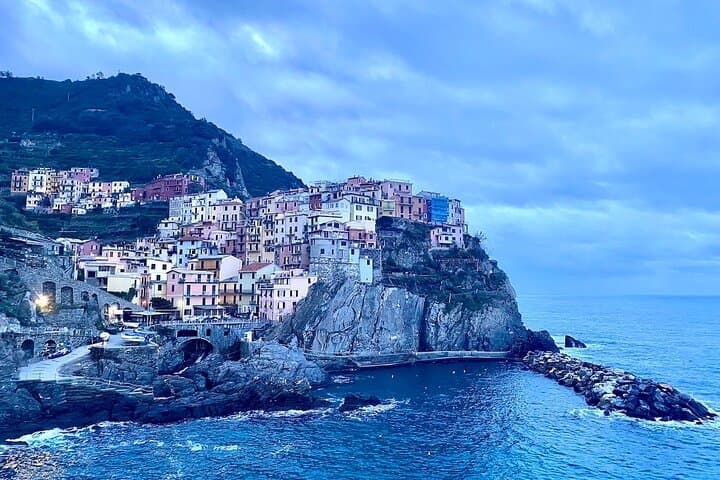
You step from the ship into sun-warmed air and the driver eases the door of an air-conditioned van open for you—today the Ligurian coast stretches wide, cliffs dropping into glittering water, villages clinging like colored jewels. The route follows a panoramic road that teases views of terraced vineyards and seawalls, then pauses so you can feel the sea from nearby quays without negotiating steep stairways.
You step from the ship into sun-warmed air and the driver eases the door of an air-conditioned van open for you—today the Ligurian coast stretches wide, cliffs dropping into glittering water, villages clinging like colored jewels. The route follows a panoramic road that teases views of terraced vineyards and seawalls, then pauses so you can feel the sea from nearby quays without negotiating steep stairways.
Portovenere’s 13th-century church perches on a rocky promontory; its black-and-white stonework and narrow lanes recall Genoese maritime power. Corniglia sits higher, a medieval hamlet of stone alleys and panoramic terraces that reveal how geology—limestone cliffs and marine terraces—shaped human settlement. Vernazza still smells of fresh seafood and salted ropes; its piazza and tiny harbor are living reminders of fishing traditions that predate mass tourism.
This private excursion trades long hikes for accessible viewpoints, short strolls on level ground, and optional ferry crossings for sea-level panoramas. Drivers are English-speaking and skilled at navigating local vehicle restrictions; ferries provide another perspective but can be subject to sea conditions.
Practical guidance: bring layered clothing for coastal breezes and sun-protective gear, and a collapsible mobility aid if you use one—vehicles can park close but some village surfaces are uneven. Plan for an 8–9 hour day with restroom and seating breaks; taxis and ramps vary by village. If Pisa is on the agenda, expect a short stop focused on photos at the Leaning Tower area rather than a long museum visit.
Accessible travel here means trading steep trails for panoramic access—enough to taste Liguria’s light, stone, and sea without the climb.