THE ADVENTURE COLLECTIVE® · Independent discovery and booking for outdoor travel

Leave Luxor for a full‑day guided loop to Abydos and Dendera, seeing Seti I’s finely carved reliefs and the temple of Hathor with its zodiac ceiling. This accessible day trip blends archaeology, clear river valley landscapes and practical travel tips for a long but rewarding cultural day.
Leave Luxor for a full‑day guided loop to Abydos and Dendera, seeing Seti I’s finely carved reliefs and the temple of Hathor with its zodiac ceiling. This accessible day trip blends archaeology, clear river valley landscapes and practical travel tips for a long but rewarding cultural day.
You meet your guide in a hotel lobby in Luxor before dawn; the air tastes faintly of river sand and diesel as an air‑conditioned vehicle eases south along the Nile. The fields and palm clusters slide past, the desert cliffs drawing nearer, and the farther horizon holds the clean lines of mudbrick cemeteries and stone pylons.
Verified experiences and guided adventures in the surrounding area.
Operated by Ramasside Tours · Luxor, Luxor Governorate
You meet your guide in a hotel lobby in Luxor before dawn; the air tastes faintly of river sand and diesel as an air‑conditioned vehicle eases south along the Nile. The fields and palm clusters slide past, the desert cliffs drawing nearer, and the farther horizon holds the clean lines of mudbrick cemeteries and stone pylons.
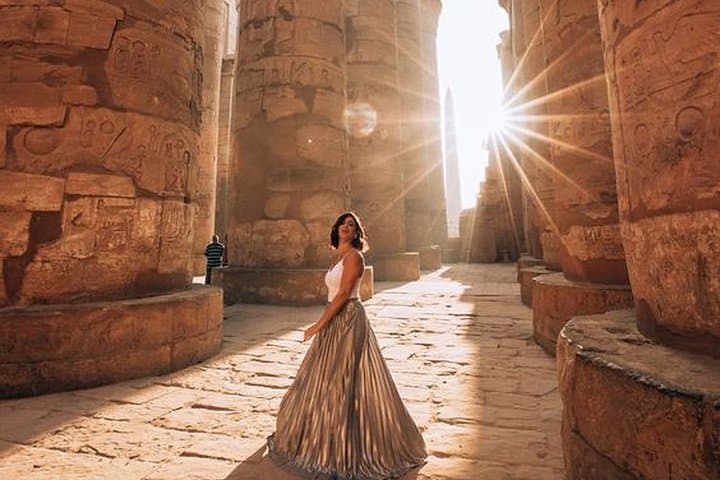
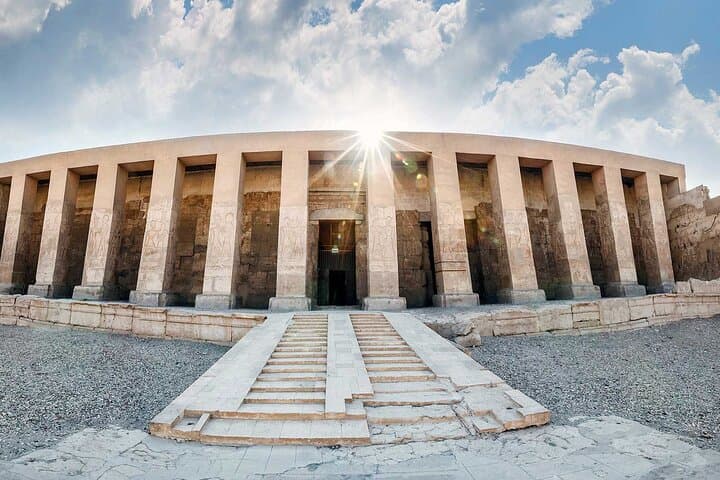
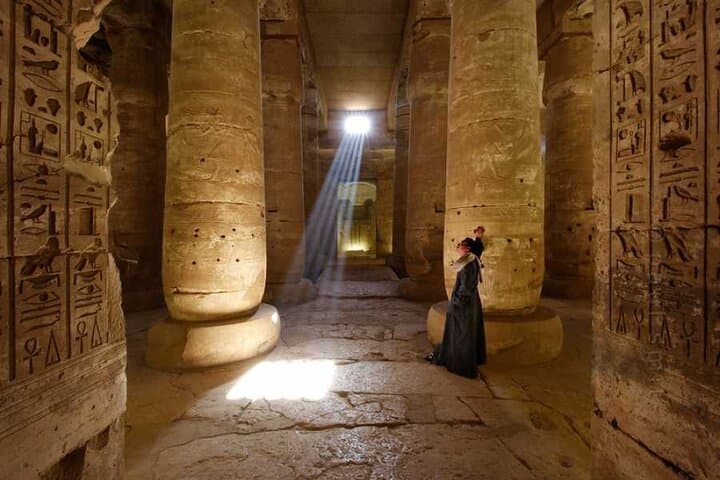
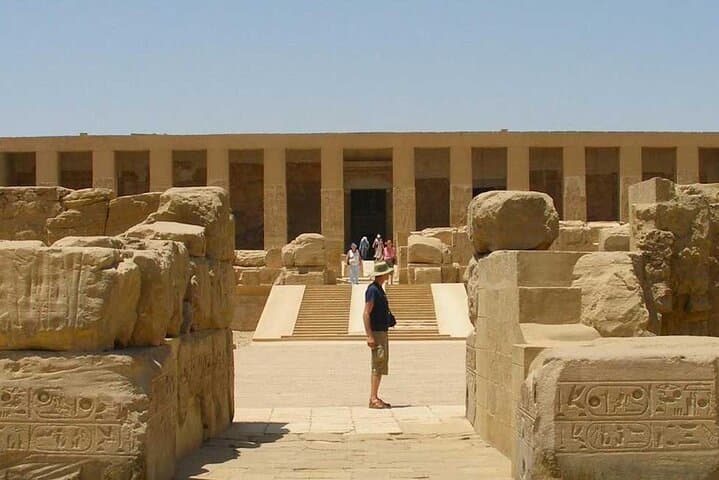
At Abydos the stone speaks in relief—Seti I’s temple preserves some of Egypt’s most finely incised scenes and the famous Abydos King List, a roll call of pharaohs carved into cool limestone. The site is flat underfoot but carries the weight of ritual: the Osiris chapel, painted reliefs and shadowed colonnades that tell funerary and dynastic stories.
Dendera, north of Luxor, contrasts with Hathor’s festival face—bright ceiling paintings, Hathoric capitals and a roof zodiac that point to astronomical knowledge and local cult practice. Both sites sit on the Nile valley’s geology: alluvial plains, shallow bedrock and low desert—easy to traverse but exposed to sun and wind.
Practicalities: the full loop is a six‑to‑seven hour day (including driving), with about two hours at each temple; transport and an Egyptologist guide are typically included. Wear sturdy closed shoes for uneven temple pavements, sun protection and conservative clothing for temple entry. Carry at least 1–2 liters of water, cash for tips and small purchases, and a lightweight layer for early morning or breeze in open ruins. Photography is generally allowed but respect signs and restricted areas. Expect wheelchair‑accessible transport options, short stone ramps or steps at entrances, and a steady pace—this trip rewards curiosity more than sprinting.
moderate.
6–7 hours.
Reasonable mobility and stamina for short walks, standing, and climbing a few steps; moderate fitness recommended.
The tour runs roughly 6–7 hours door‑to‑door, including about two hours at each temple and driving time between sites.
Most organized tours include admission and a qualified Egyptologist guide; confirm on booking if not explicitly listed.
Photography is generally permitted in outdoor areas; always follow signs and guide instructions—some interiors or reliefs may be restricted.
Transport can be made wheelchair accessible and main areas are relatively flat, but some temple thresholds and steps may present challenges—check with the operator for specific arrangements.
Abydos was a major cult center for Osiris with Seti I building a richly decorated temple; Dendera honors Hathor and contains a rare Greco‑Roman zodiac ceiling reflecting ancient astronomy.
These sites are fragile—avoid touching reliefs, stay on marked paths, and support site conservation by following guide directions and local entrance rules.
Ramasside Tours operates guided outdoor trips and adventures with an emphasis on safety, stewardship, and memorable experiences.
You meet your guide in a hotel lobby in Luxor before dawn; the air tastes faintly of river sand and diesel as an air‑conditioned vehicle eases south along the Nile. The fields and palm clusters slide past, the desert cliffs drawing nearer, and the farther horizon holds the clean lines of mudbrick cemeteries and stone pylons.
You meet your guide in a hotel lobby in Luxor before dawn; the air tastes faintly of river sand and diesel as an air‑conditioned vehicle eases south along the Nile. The fields and palm clusters slide past, the desert cliffs drawing nearer, and the farther horizon holds the clean lines of mudbrick cemeteries and stone pylons.
At Abydos the stone speaks in relief—Seti I’s temple preserves some of Egypt’s most finely incised scenes and the famous Abydos King List, a roll call of pharaohs carved into cool limestone. The site is flat underfoot but carries the weight of ritual: the Osiris chapel, painted reliefs and shadowed colonnades that tell funerary and dynastic stories.
Dendera, north of Luxor, contrasts with Hathor’s festival face—bright ceiling paintings, Hathoric capitals and a roof zodiac that point to astronomical knowledge and local cult practice. Both sites sit on the Nile valley’s geology: alluvial plains, shallow bedrock and low desert—easy to traverse but exposed to sun and wind.
Practicalities: the full loop is a six‑to‑seven hour day (including driving), with about two hours at each temple; transport and an Egyptologist guide are typically included. Wear sturdy closed shoes for uneven temple pavements, sun protection and conservative clothing for temple entry. Carry at least 1–2 liters of water, cash for tips and small purchases, and a lightweight layer for early morning or breeze in open ruins. Photography is generally allowed but respect signs and restricted areas. Expect wheelchair‑accessible transport options, short stone ramps or steps at entrances, and a steady pace—this trip rewards curiosity more than sprinting.