THE ADVENTURE COLLECTIVE® · Independent discovery and booking for outdoor travel

Spend a day moving from cultivated greenery at Aburi Botanical Gardens to the thunder and mist of Boti Waterfalls—an accessible day trip from Accra combining short hikes, craft stops, and scenic viewpoints. Expect varied terrain, a 30m twin waterfall, and local cultural encounters.
Spend a day moving from cultivated greenery at Aburi Botanical Gardens to the thunder and mist of Boti Waterfalls—an accessible day trip from Accra combining short hikes, craft stops, and scenic viewpoints. Expect varied terrain, a 30m twin waterfall, and local cultural encounters.
Early light strips across the Akwapim foothills as visitors step into the cool hush of Aburi Botanical Gardens—giant mahoganies and spice-scented understory plants shading a gravel path. The garden opens like a slow exhale; leaves brush, insects flit, and the ridge-breeze nudges travelers toward the next act: waterfalls confronting the valley below.
Verified experiences and guided adventures in the surrounding area.
Operated by Nii Ghana · Aburi, Eastern Region
Early light strips across the Akwapim foothills as visitors step into the cool hush of Aburi Botanical Gardens—giant mahoganies and spice-scented understory plants shading a gravel path. The garden opens like a slow exhale; leaves brush, insects flit, and the ridge-breeze nudges travelers toward the next act: waterfalls confronting the valley below.
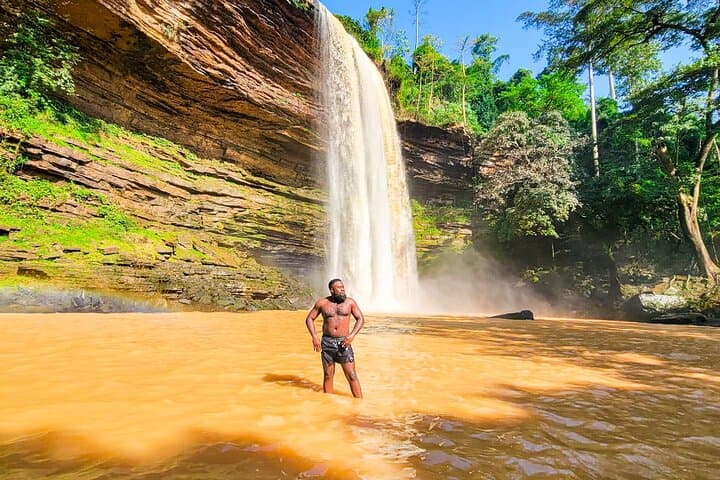
The route moves from curated plantings—nutmeg, curry trees, and introduced ornamentals that trace colonial and post-colonial horticultural practices—to the raw, vertical geology of Boti Waterfalls. The falls split into “male” and “female” streams, dropping roughly 30 meters into a pool that insists on attention; mist dares you closer while the river carves soft channels through sandstone and ancient schist.
Culturally, the day includes a stop in Aburi’s craft village where local carvers and makers continue woodwork and weaving traditions, offering insight into contemporary Ghanaian craft economies.
Practically, expect 5–10 hours of activity with a mix of short garden walks, a 60–90 minute nature hike to Umbrella Rock, and uneven, often slippery forest trails. Bring sturdy shoes with grip, quick-dry clothing, sun protection, and a light rain layer—tropical showers are common. Hydrate before the hike and carry at least 1 liter of water; bottled water is typically provided.
Timing matters: morning visits to Aburi deliver cooler temperatures and clearer views; late afternoon light on the falls is dramatic but trails can be slick. Respect local signage, avoid swimming where advised, and leave no trace—these places endure through local stewardship and low-impact visitation.
moderate.
5–10 hours.
Suitable for travelers with moderate fitness who can handle 60–90 minutes of uneven hiking and short climbs
Drive time is roughly 60–90 minutes depending on traffic and your pickup point in Accra.
Most tours include garden and falls admissions—confirm with your operator; this itinerary notes admission is included.
The hike includes short steep sections and uneven footing; expect about 60–90 minutes round-trip on packed dirt and rock.
Yes, but operators recommend supervising children closely around steep viewpoints and the waterfall pool; infant seats may be available for vehicle transfers.
Aburi Gardens dates to colonial-era botanical programs established in the late 19th century to test economically valuable plants; the area later became a public botanical site and local landmark.
Visitor impact is managed locally—stick to marked trails, pack out waste, and support community-run craft stalls to help local stewardship.
Nii Ghana operates guided outdoor trips and adventures with an emphasis on safety, stewardship, and memorable experiences.



Early light strips across the Akwapim foothills as visitors step into the cool hush of Aburi Botanical Gardens—giant mahoganies and spice-scented understory plants shading a gravel path. The garden opens like a slow exhale; leaves brush, insects flit, and the ridge-breeze nudges travelers toward the next act: waterfalls confronting the valley below.
Early light strips across the Akwapim foothills as visitors step into the cool hush of Aburi Botanical Gardens—giant mahoganies and spice-scented understory plants shading a gravel path. The garden opens like a slow exhale; leaves brush, insects flit, and the ridge-breeze nudges travelers toward the next act: waterfalls confronting the valley below.
The route moves from curated plantings—nutmeg, curry trees, and introduced ornamentals that trace colonial and post-colonial horticultural practices—to the raw, vertical geology of Boti Waterfalls. The falls split into “male” and “female” streams, dropping roughly 30 meters into a pool that insists on attention; mist dares you closer while the river carves soft channels through sandstone and ancient schist.
Culturally, the day includes a stop in Aburi’s craft village where local carvers and makers continue woodwork and weaving traditions, offering insight into contemporary Ghanaian craft economies.
Practically, expect 5–10 hours of activity with a mix of short garden walks, a 60–90 minute nature hike to Umbrella Rock, and uneven, often slippery forest trails. Bring sturdy shoes with grip, quick-dry clothing, sun protection, and a light rain layer—tropical showers are common. Hydrate before the hike and carry at least 1 liter of water; bottled water is typically provided.
Timing matters: morning visits to Aburi deliver cooler temperatures and clearer views; late afternoon light on the falls is dramatic but trails can be slick. Respect local signage, avoid swimming where advised, and leave no trace—these places endure through local stewardship and low-impact visitation.