THE ADVENTURE COLLECTIVE® · Independent discovery and booking for outdoor travel

A private day trip from Aswan that pairs the monumental Abu Simbel temples with the raw engineering lesson of the Unfinished Obelisk. Expect long drives, expansive desert light, and close-up views of ancient stonecraft.
A private day trip from Aswan that pairs the monumental Abu Simbel temples with the raw engineering lesson of the Unfinished Obelisk. Expect long drives, expansive desert light, and close-up views of ancient stonecraft.
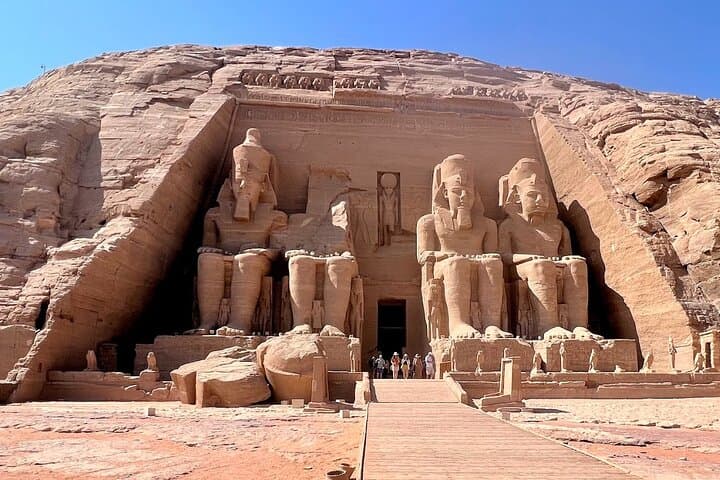
You arrive before the desert heat fully wakes: a flat horizon, wind that carries the dust like a slow-moving tide, and the colossal faces of Ramses II filling the road. Abu Simbel commands the plain; its stone seems to hold the sun at bay while hieroglyphs whisper campaigns and prayers.
Verified experiences and guided adventures in the surrounding area.
Operated by Eyes of Egypt · Aswan, Aswan Governorate
You arrive before the desert heat fully wakes: a flat horizon, wind that carries the dust like a slow-moving tide, and the colossal faces of Ramses II filling the road. Abu Simbel commands the plain; its stone seems to hold the sun at bay while hieroglyphs whisper campaigns and prayers.
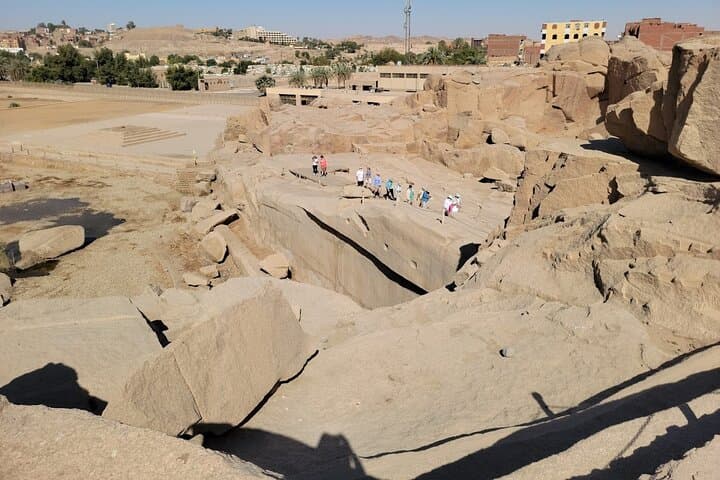
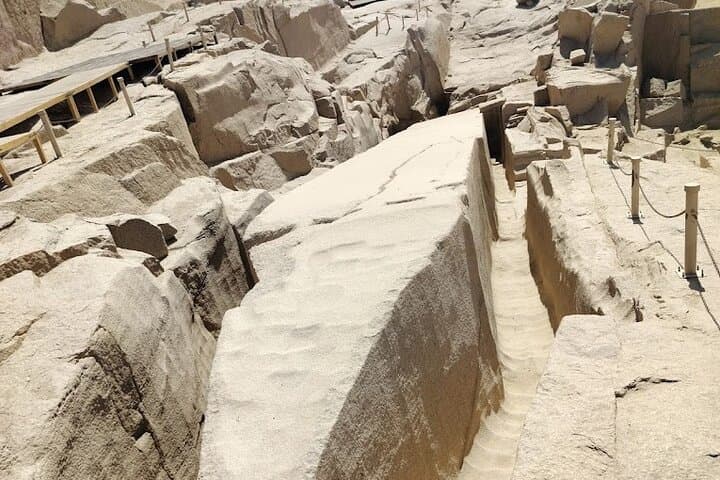
The two temples at Abu Simbel date to the 13th century BC and were saved from inundation in the 1960s by a UNESCO-led relocation—an engineering rescue nearly as dramatic as their original construction. North at the Unfinished Obelisk in Aswan’s ancient granite quarries, a colossal monument lies half-cleaved from the bedrock, its tool marks exposing the methods and limits of pharaonic stonecraft.
Geology here is literal: Nubian sandstone and Aswan granite determined scale, shape, and the very fate of monuments. Culture and craft overlap—royal programing in carved reliefs, funerary symbolism inside the temples, and the quarry’s practical lessons about ancient logistics.
Practically, this private experience is a long but manageable day: expect roughly 3 hours each way by road from Aswan and several hours on-site between the temples and the quarry. Walkways are level but sun-exposed; shade is limited. Carry water, sun protection, and a camera with a wide lens. Timing your visit for early morning or late afternoon softens light and crowds. Respect barriers and avoid touching painted reliefs—these surfaces are fragile after millennia.
Whether you linger over a relief’s tiny chisel mark or pause where Ramses’ gaze meets the horizon, the tour combines close technical insight with the sweep of human ambition—finished and unfinished—set against the patient desert.
moderate.
9–10 hours.
Suitable for travelers who can sit for long drives and comfortably walk short distances on uneven surfaces.
The road trip is about 280 km (175 miles) and typically takes around 3 hours each way with short rest stops.
Some packages include entrance tickets; confirm your booking or reserve the Platinum option to include Abu Simbel and Unfinished Obelisk admissions.
Sites have some accessible features and transport options may be adapted, but terrain includes steps and uneven surfaces—confirm requirements when booking.
Early morning or late afternoon provides softer light and fewer visitors; the temple’s façades are best framed with low-angle sun.
Abu Simbel was carved under Ramses II in the 13th century BC and relocated in the 1960s to avoid submersion after the Aswan High Dam’s creation.
Relocation preserved the temples, but ongoing conservation limits contact with surfaces—stay on paths and follow guide instructions to protect fragile reliefs.
Eyes of Egypt operates guided outdoor trips and adventures with an emphasis on safety, stewardship, and memorable experiences.
You arrive before the desert heat fully wakes: a flat horizon, wind that carries the dust like a slow-moving tide, and the colossal faces of Ramses II filling the road. Abu Simbel commands the plain; its stone seems to hold the sun at bay while hieroglyphs whisper campaigns and prayers.
You arrive before the desert heat fully wakes: a flat horizon, wind that carries the dust like a slow-moving tide, and the colossal faces of Ramses II filling the road. Abu Simbel commands the plain; its stone seems to hold the sun at bay while hieroglyphs whisper campaigns and prayers.
The two temples at Abu Simbel date to the 13th century BC and were saved from inundation in the 1960s by a UNESCO-led relocation—an engineering rescue nearly as dramatic as their original construction. North at the Unfinished Obelisk in Aswan’s ancient granite quarries, a colossal monument lies half-cleaved from the bedrock, its tool marks exposing the methods and limits of pharaonic stonecraft.
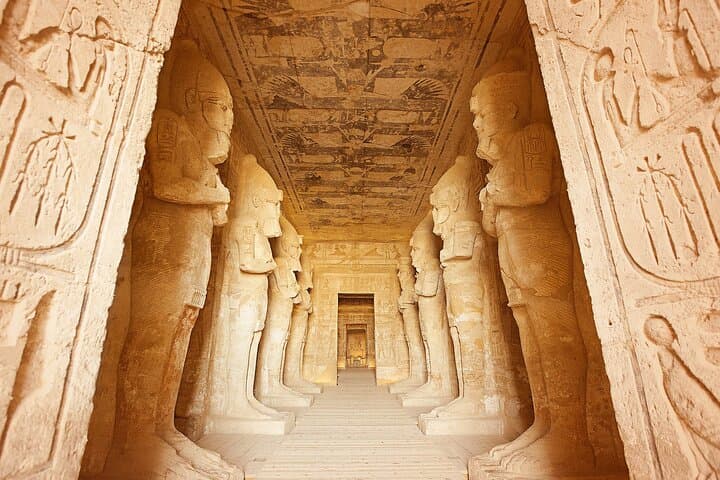
Geology here is literal: Nubian sandstone and Aswan granite determined scale, shape, and the very fate of monuments. Culture and craft overlap—royal programing in carved reliefs, funerary symbolism inside the temples, and the quarry’s practical lessons about ancient logistics.
Practically, this private experience is a long but manageable day: expect roughly 3 hours each way by road from Aswan and several hours on-site between the temples and the quarry. Walkways are level but sun-exposed; shade is limited. Carry water, sun protection, and a camera with a wide lens. Timing your visit for early morning or late afternoon softens light and crowds. Respect barriers and avoid touching painted reliefs—these surfaces are fragile after millennia.
Whether you linger over a relief’s tiny chisel mark or pause where Ramses’ gaze meets the horizon, the tour combines close technical insight with the sweep of human ambition—finished and unfinished—set against the patient desert.