THE ADVENTURE COLLECTIVE® · Independent discovery and booking for outdoor travel

Drive south from Luxor for a full-day visit to Abu Simbel’s two temples, then finish with a drop-off in Aswan. This long but rewarding trip combines monumental pharaonic sculpture, dramatic desert geology, and a story of 20th-century preservation.
Drive south from Luxor for a full-day visit to Abu Simbel’s two temples, then finish with a drop-off in Aswan. This long but rewarding trip combines monumental pharaonic sculpture, dramatic desert geology, and a story of 20th-century preservation.
The road flattens into ochre desert and, after hours of straight highway and the occasional date palm, the colossal faces of Ramses II appear like a challenge issued by the sand itself.
Verified experiences and guided adventures in the surrounding area.
Operated by Trip Ventura · Abu Simbel, Aswan Governorate
The road flattens into ochre desert and, after hours of straight highway and the occasional date palm, the colossal faces of Ramses II appear like a challenge issued by the sand itself.
Carved into a sandstone bluff in the 13th century BCE, the twin monuments at Abu Simbel — the Great Temple of Ramses II and the smaller Temple of Hathor dedicated to Nefertari — dominate the shoreline of Lake Nasser. The site’s modern story is as striking: in the 1960s the temples were painstakingly cut from their original cliff and raised on an artificial hill to escape the rising waters of the Aswan High Dam, an engineering rescue that preserved monumental art and shifted the human geography of the southern Nile.
Expect a mix of geology and history: layered sandstone, sculpted colossi, and interiors dimly lit for conservation where hieroglyphic reliefs still assert the pharaoh’s power. Local Nubian culture and the presence of Lake Nasser—an artificial sea that reshaped ecosystems and communities—frame the visit.
Practically, this is a long travel day. Tours pick up in Luxor and drop off in Aswan; budget 10–14 hours door-to-door with several hours of driving. Wear sun-protective clothing, sturdy shoes for uneven temple thresholds, and bring water and a hat. Visits are timed to manage crowds and heat; early morning slots are best for softer light and cooler air. Entry fees and a local guide are typically included, but keep your passport handy for ticket checks. Move respectfully inside the temples: photography rules and conservation limits can change seasonally.
easy.
10–14 hours.
Minimal fitness required—must be able to walk short stretches on uneven surfaces and stand during guided sessions
Expect several hours of driving each way; most departures require a full travel day (roughly 10–14 hours door-to-door when including transfers to/from Aswan).
Yes — the Great Temple of Ramses II and the smaller Temple of Hathor (Nefertari) are the two main monuments typically included on this itinerary.
The site involves walking on uneven stone and steps; it’s generally family-friendly but not ideal for those with severe mobility limitations—check with the operator about specific accessibility needs.
Photography rules can vary; exterior shots are usually permitted but interior photography may be restricted to protect reliefs—follow the guide’s instructions.
Built during Ramses II’s reign and famously relocated in the 1960s to avoid flooding from the Aswan High Dam, Abu Simbel illustrates Egypt’s long chronological layers of power and modern conservation.
Visitor management and restricted interior access protect delicate reliefs; minimize impact by staying on paths, avoiding touching surfaces, and using refillable water bottles.
Trip Ventura operates guided outdoor trips and adventures with an emphasis on safety, stewardship, and memorable experiences.


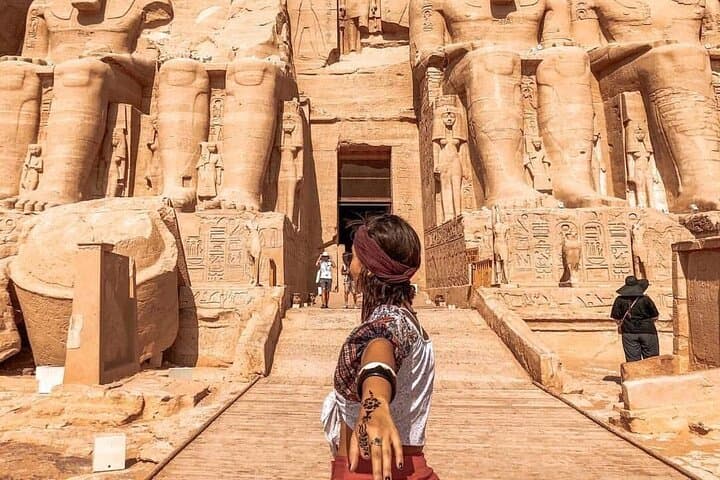
The road flattens into ochre desert and, after hours of straight highway and the occasional date palm, the colossal faces of Ramses II appear like a challenge issued by the sand itself.
The road flattens into ochre desert and, after hours of straight highway and the occasional date palm, the colossal faces of Ramses II appear like a challenge issued by the sand itself.
Carved into a sandstone bluff in the 13th century BCE, the twin monuments at Abu Simbel — the Great Temple of Ramses II and the smaller Temple of Hathor dedicated to Nefertari — dominate the shoreline of Lake Nasser. The site’s modern story is as striking: in the 1960s the temples were painstakingly cut from their original cliff and raised on an artificial hill to escape the rising waters of the Aswan High Dam, an engineering rescue that preserved monumental art and shifted the human geography of the southern Nile.
Expect a mix of geology and history: layered sandstone, sculpted colossi, and interiors dimly lit for conservation where hieroglyphic reliefs still assert the pharaoh’s power. Local Nubian culture and the presence of Lake Nasser—an artificial sea that reshaped ecosystems and communities—frame the visit.
Practically, this is a long travel day. Tours pick up in Luxor and drop off in Aswan; budget 10–14 hours door-to-door with several hours of driving. Wear sun-protective clothing, sturdy shoes for uneven temple thresholds, and bring water and a hat. Visits are timed to manage crowds and heat; early morning slots are best for softer light and cooler air. Entry fees and a local guide are typically included, but keep your passport handy for ticket checks. Move respectfully inside the temples: photography rules and conservation limits can change seasonally.