THE ADVENTURE COLLECTIVE® · Independent discovery and booking for outdoor travel

Compare Egypt’s iconic rock-cut colossi at Abu Simbel with the intimate cliff tombs of Qubbet el-Hawa on this private full-day tour from Aswan. Expect long drives, close-up reliefs, and a quieter, more personal look at ancient elite life.
Compare Egypt’s iconic rock-cut colossi at Abu Simbel with the intimate cliff tombs of Qubbet el-Hawa on this private full-day tour from Aswan. Expect long drives, close-up reliefs, and a quieter, more personal look at ancient elite life.
You leave Aswan before sunrise and the road unfurls southward—red sandstone flats giving way to scrub and sudden Nile ribbon. Three hours later the colossal faces of Ramses II loom from the rock, four seated giants watching the horizon as they have for millennia. The air is dry; the carved reliefs hold a stillness that makes every footstep feel deliberate.
Verified experiences and guided adventures in the surrounding area.
Operated by Eyes of Egypt · Aswan, Aswan Governorate
You leave Aswan before sunrise and the road unfurls southward—red sandstone flats giving way to scrub and sudden Nile ribbon. Three hours later the colossal faces of Ramses II loom from the rock, four seated giants watching the horizon as they have for millennia. The air is dry; the carved reliefs hold a stillness that makes every footstep feel deliberate.
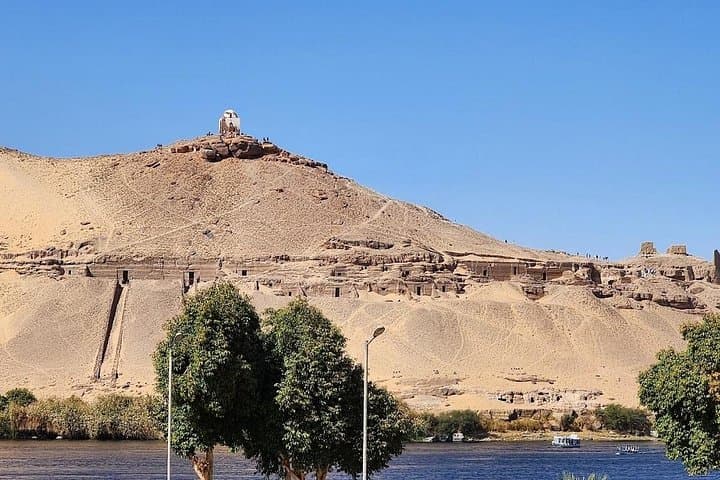
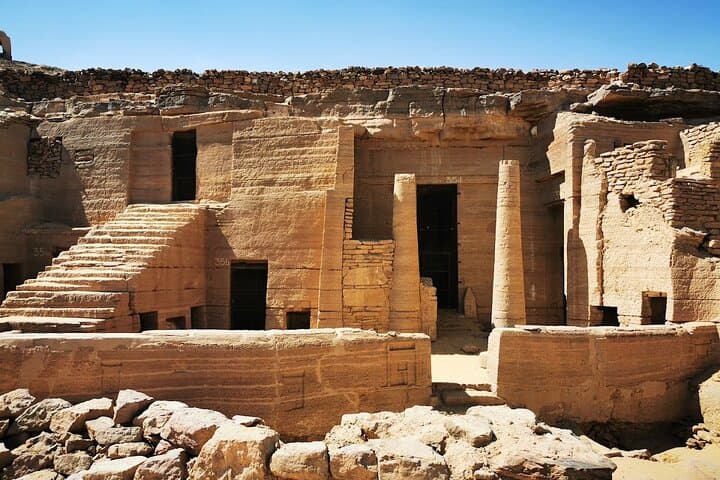
Abu Simbel was carved in the 13th century BC and famously moved in the 1960s to preserve it from rising waters after the Aswan High Dam—an engineering rescue now as much a part of the site’s story as the original builders. Back near Aswan, Qubbet el-Hawa’s cliff tombs offer a quieter counterpoint: intimate painted chambers that record daily life, trade missions and family rites rather than royal spectacle.
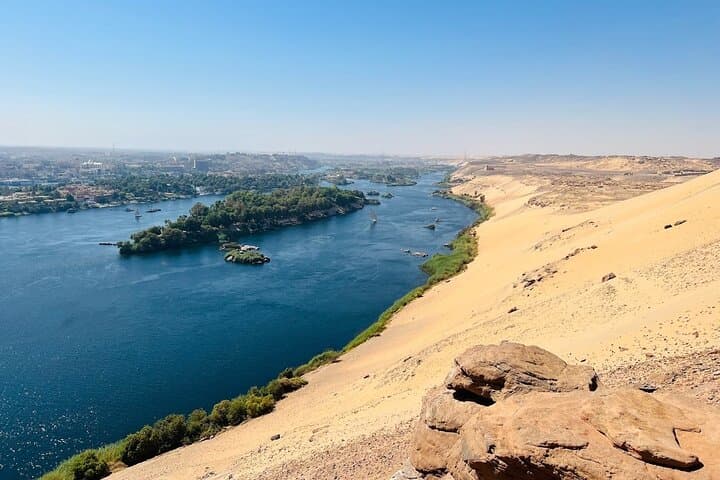
Expect a long but accessible day—about 10–11 hours including two roughly three-hour drives (each direction) covering ~280 km/175 miles. Your private guide can linger on hieroglyphic panels, line up shots of the sunlit colossi, or lead a short climb at Qubbet el-Hawa for sweeping views across the Nile.
Practical notes: carry plenty of water, sun protection, and comfortable shoes for climbing and uneven tomb floors. Entrance tickets can be purchased ahead at major sites; audio or specialist guides add depth if you want detailed epigraphy or conservation context. Travel light, plan for heat in summer, and leave room in your schedule for the slow pleasures—reading a relief, tracing an inscription—because the day is as much about looking closely as it is about seeing grand monuments.
easy.
10–11 hours.
Suitable for most fitness levels; requires standing, short climbs, and walking on uneven surfaces.
The road takes roughly three hours each way, covering about 280 km (175 miles) one-way; the tour schedules rest stops along the route.
This private tour offers optional entrance tickets; confirm at booking whether the ‘Complete Experience’ option with admissions is selected.
The tour is family-friendly and wheelchair-accessible in transport, but tomb interiors include steps and uneven surfaces that may limit access.
Autumn through spring (October–April) offers milder temperatures—summer is very hot and requires stricter sun precautions.
Abu Simbel dates to Ramses II (13th century BC) and was relocated in the 1960s to avoid inundation from the Aswan High Dam; Qubbet el-Hawa served as a cliffside necropolis for elite officials.
Both sites are managed with visitor limits and protective measures—avoid flash photography inside fragile tombs, and stick to marked paths to limit erosion and pigment damage.
Eyes of Egypt operates guided outdoor trips and adventures with an emphasis on safety, stewardship, and memorable experiences.
You leave Aswan before sunrise and the road unfurls southward—red sandstone flats giving way to scrub and sudden Nile ribbon. Three hours later the colossal faces of Ramses II loom from the rock, four seated giants watching the horizon as they have for millennia. The air is dry; the carved reliefs hold a stillness that makes every footstep feel deliberate.
You leave Aswan before sunrise and the road unfurls southward—red sandstone flats giving way to scrub and sudden Nile ribbon. Three hours later the colossal faces of Ramses II loom from the rock, four seated giants watching the horizon as they have for millennia. The air is dry; the carved reliefs hold a stillness that makes every footstep feel deliberate.
Abu Simbel was carved in the 13th century BC and famously moved in the 1960s to preserve it from rising waters after the Aswan High Dam—an engineering rescue now as much a part of the site’s story as the original builders. Back near Aswan, Qubbet el-Hawa’s cliff tombs offer a quieter counterpoint: intimate painted chambers that record daily life, trade missions and family rites rather than royal spectacle.
Expect a long but accessible day—about 10–11 hours including two roughly three-hour drives (each direction) covering ~280 km/175 miles. Your private guide can linger on hieroglyphic panels, line up shots of the sunlit colossi, or lead a short climb at Qubbet el-Hawa for sweeping views across the Nile.
Practical notes: carry plenty of water, sun protection, and comfortable shoes for climbing and uneven tomb floors. Entrance tickets can be purchased ahead at major sites; audio or specialist guides add depth if you want detailed epigraphy or conservation context. Travel light, plan for heat in summer, and leave room in your schedule for the slow pleasures—reading a relief, tracing an inscription—because the day is as much about looking closely as it is about seeing grand monuments.