THE ADVENTURE COLLECTIVE® · Independent discovery and booking for outdoor travel

Fly from Aswan to Abu Simbel for a focused morning at Ramses II’s monumental temples. This private round-trip flight saves travel time and gives you hours to explore the relocated rock-cut monuments before returning to Aswan.
Fly from Aswan to Abu Simbel for a focused morning at Ramses II’s monumental temples. This private round-trip flight saves travel time and gives you hours to explore the relocated rock-cut monuments before returning to Aswan.
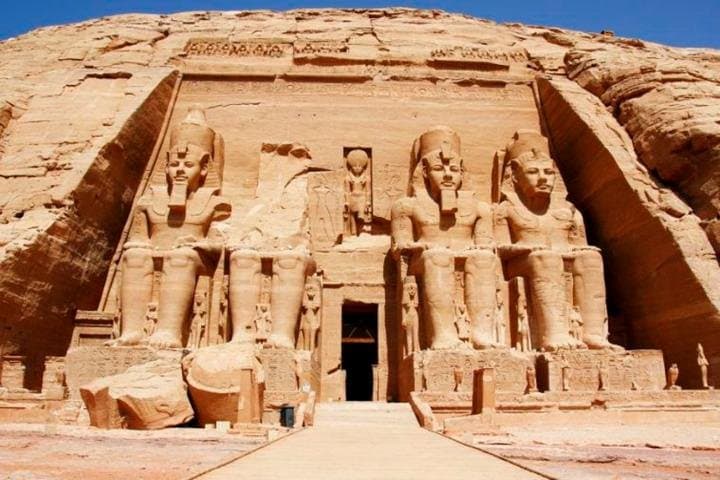
The plane lifts off from Aswan as dawn thins the desert; within an hour the shoreline of Lake Nasser appears and the four giant colossi of Ramses II loom from their sandstone façade like a carved order against the sky. Stepping onto the tarmac, visitors feel the scale of a site moved stone by stone to escape the rising Nile decades ago — an engineered rescue that is itself part of the story.
Verified experiences and guided adventures in the surrounding area.
Operated by This Is Egypt Aswan · Abu Simbel, Aswan Governorate
The plane lifts off from Aswan as dawn thins the desert; within an hour the shoreline of Lake Nasser appears and the four giant colossi of Ramses II loom from their sandstone façade like a carved order against the sky. Stepping onto the tarmac, visitors feel the scale of a site moved stone by stone to escape the rising Nile decades ago — an engineered rescue that is itself part of the story.
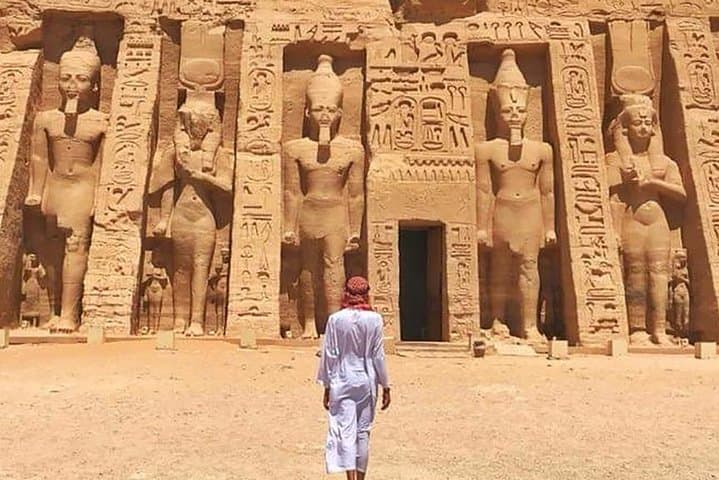
Carved in the 13th century BCE, the Great Temple of Ramses II and the smaller Temple of Nefertari were cut out of the cliff and oriented to catch the sun twice a year. The relocation in the 1960s, a collaboration between Egypt and UNESCO, involved dismantling and reassembling massive blocks on an artificial hill above Lake Nasser; the result preserves both archaeology and a modern tale of conservation. The geology here is hard Nubian sandstone, shaped by wind and water over millennia; the silence around the temples makes inscriptions and bas-reliefs feel immediate and tactile.
Culturally, Abu Simbel was propaganda as much as piety — colossal statues proclaiming royal power, and intimate reliefs reminding visitors of diplomatic victories and royal family ties. Expect bright, desert light, strong reflections off the lake, and compact crowds during peak hours.
Practical guidance: this private flight tour typically runs as a half-day with hotel pickup in Aswan. Entrance fees and the short transfer are included; wear sun protection, bring your passport for formalities, and schedule early-morning flights to avoid heat and the busiest crowds. Allow time for airport security and modest dress at the temple complex; photography is excellent but be mindful of restricted interior spaces.
easy.
6 hours.
Minimal fitness required—short walks on level paved areas and stairs inside temple complexes.
The airborne leg is about 45–60 minutes each way; the full tour is typically a 6-hour window including transfers and time at the temples.
Yes—this private tour includes entrance fees to the Abu Simbel temples as listed by the operator.
Yes; the itinerary is rated easy with brief walks and seating areas, but bring sun protection and allow extra time for mobility needs.
Tripods and professional equipment may be restricted inside certain areas—check with the guide on arrival to avoid confiscation or delays.
Built by Ramses II in the 13th century BCE and relocated block-by-block in the 1960s to save them from flooding after the Aswan High Dam project.
The UNESCO-backed relocation is a landmark conservation success; visitor management and restricted interior access help protect fragile reliefs and pigments.
This Is Egypt Aswan operates guided outdoor trips and adventures with an emphasis on safety, stewardship, and memorable experiences.


The plane lifts off from Aswan as dawn thins the desert; within an hour the shoreline of Lake Nasser appears and the four giant colossi of Ramses II loom from their sandstone façade like a carved order against the sky. Stepping onto the tarmac, visitors feel the scale of a site moved stone by stone to escape the rising Nile decades ago — an engineered rescue that is itself part of the story.
The plane lifts off from Aswan as dawn thins the desert; within an hour the shoreline of Lake Nasser appears and the four giant colossi of Ramses II loom from their sandstone façade like a carved order against the sky. Stepping onto the tarmac, visitors feel the scale of a site moved stone by stone to escape the rising Nile decades ago — an engineered rescue that is itself part of the story.
Carved in the 13th century BCE, the Great Temple of Ramses II and the smaller Temple of Nefertari were cut out of the cliff and oriented to catch the sun twice a year. The relocation in the 1960s, a collaboration between Egypt and UNESCO, involved dismantling and reassembling massive blocks on an artificial hill above Lake Nasser; the result preserves both archaeology and a modern tale of conservation. The geology here is hard Nubian sandstone, shaped by wind and water over millennia; the silence around the temples makes inscriptions and bas-reliefs feel immediate and tactile.
Culturally, Abu Simbel was propaganda as much as piety — colossal statues proclaiming royal power, and intimate reliefs reminding visitors of diplomatic victories and royal family ties. Expect bright, desert light, strong reflections off the lake, and compact crowds during peak hours.
Practical guidance: this private flight tour typically runs as a half-day with hotel pickup in Aswan. Entrance fees and the short transfer are included; wear sun protection, bring your passport for formalities, and schedule early-morning flights to avoid heat and the busiest crowds. Allow time for airport security and modest dress at the temple complex; photography is excellent but be mindful of restricted interior spaces.