THE ADVENTURE COLLECTIVE® · Independent discovery and booking for outdoor travel

Travel from Aswan to Abu Simbel in a small group to see Ramses II’s colossal temples, learn their dramatic relocation story, and enjoy an authentic Nubian lunch. This comfortable day trip blends archaeology, local culture, and a scenic drive along Lake Nasser.
Travel from Aswan to Abu Simbel in a small group to see Ramses II’s colossal temples, learn their dramatic relocation story, and enjoy an authentic Nubian lunch. This comfortable day trip blends archaeology, local culture, and a scenic drive along Lake Nasser.
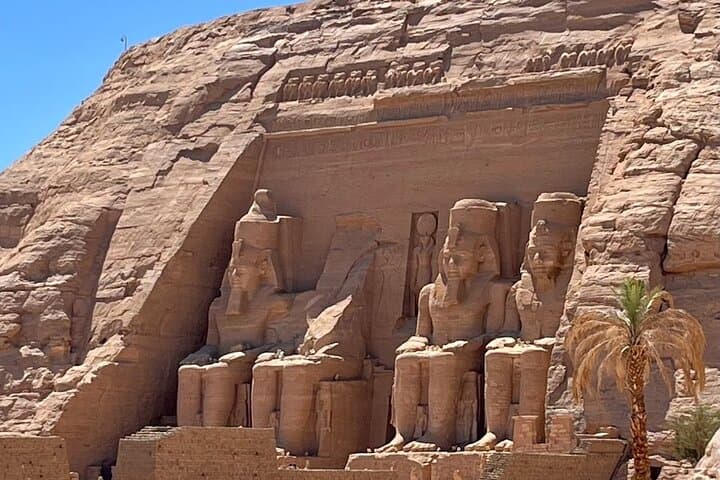
You leave Aswan before dawn and the desert stretches flat and indifferent, the road a ribbon that the sunlight will eventually claim. By the time the colossal faces of Ramses II appear, they feel like an encounter: four seated giants cut into the rock, dust and heat daring you to stand still and look up.
Verified experiences and guided adventures in the surrounding area.
Operated by Eyes of Egypt · Aswan, Aswan Governorate
You leave Aswan before dawn and the desert stretches flat and indifferent, the road a ribbon that the sunlight will eventually claim. By the time the colossal faces of Ramses II appear, they feel like an encounter: four seated giants cut into the rock, dust and heat daring you to stand still and look up.
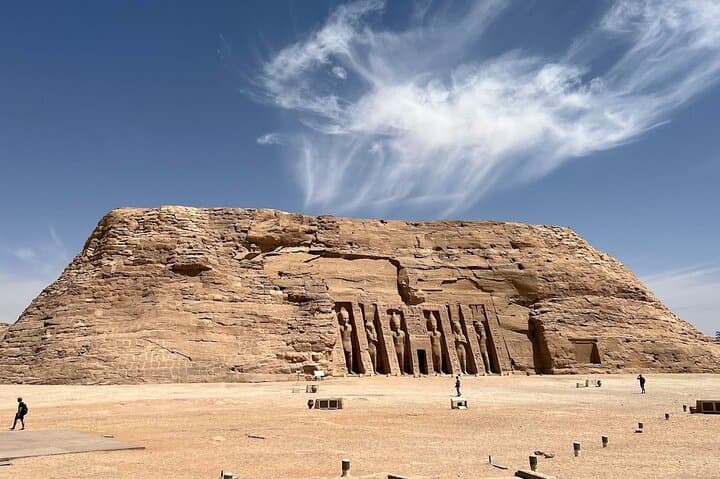
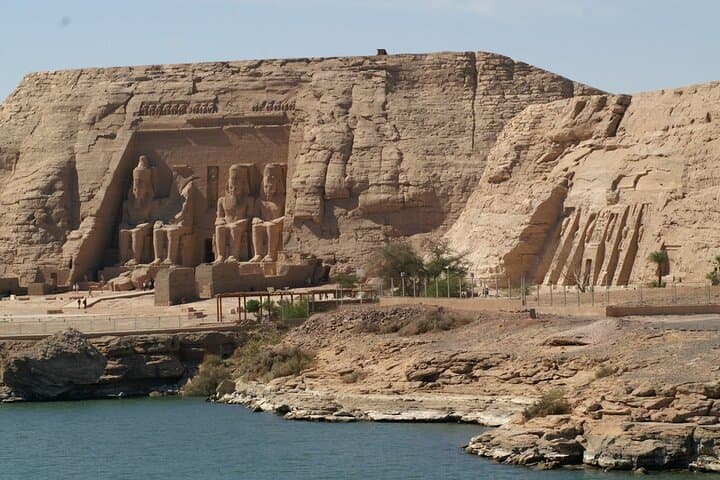
The temples at Abu Simbel are both ancient monument and modern engineering story. Carved in the 13th century BCE, the great temple and the smaller Hathor temple of Nefertari were physically moved in the 1960s to save them from the rising waters of the Aswan High Dam — a UNESCO rescue that left the stone blocks slightly out of place but the spectacle intact. The sandstone cliffs that host the façades are weathered unevenly; the flat plain of Lake Nasser now laps nearby where once the Nile ran.
Culturally, the stop for a Nubian lunch brings the day back to earth: simple rice, stews, and karkadeh (hibiscus) served with hospitable informality, a reminder that southern Egypt still carries active local traditions alongside its pharaonic past.
Practically, expect 3-hour drives each way from Aswan, a 90‑minute guided temple visit, and time for a relaxed lunch. Wear sun protection and comfortable walking shoes; surfaces are mostly flat but include steps into the temples. Bring motion-sickness remedies if long drives unsettle you. Book the full-experience package if you want guided context and time to photograph the solar alignment, and plan visits in cooler months or early morning to avoid peak heat.
easy.
8.5–9 hours.
Suitable for most travelers; ability to walk short distances and stand for guided commentary recommended. Be prepared for long periods seated in transit.
Yes — the itinerary confirms admission for the temples is included in the tour package.
Yes — hotel and Nile cruise pickup and drop-off in Aswan are included in the tour.
The tour and transport are listed as wheelchair accessible, but the temples have steps and uneven surfaces—contact the operator to arrange specific assistance.
Small-group flexibility is offered; you can request more time at the temples or a scenic stop at Lake Nasser when booking or with your guide.
The Abu Simbel temples were relocated in the 1960s under a UNESCO-led effort to save them from flooding caused by the Aswan High Dam.
The relocation is a landmark in heritage conservation; visitors should stick to paths, avoid touching reliefs, and minimize plastic waste to protect the site and Lake Nasser.
Eyes of Egypt operates guided outdoor trips and adventures with an emphasis on safety, stewardship, and memorable experiences.

You leave Aswan before dawn and the desert stretches flat and indifferent, the road a ribbon that the sunlight will eventually claim. By the time the colossal faces of Ramses II appear, they feel like an encounter: four seated giants cut into the rock, dust and heat daring you to stand still and look up.
You leave Aswan before dawn and the desert stretches flat and indifferent, the road a ribbon that the sunlight will eventually claim. By the time the colossal faces of Ramses II appear, they feel like an encounter: four seated giants cut into the rock, dust and heat daring you to stand still and look up.
The temples at Abu Simbel are both ancient monument and modern engineering story. Carved in the 13th century BCE, the great temple and the smaller Hathor temple of Nefertari were physically moved in the 1960s to save them from the rising waters of the Aswan High Dam — a UNESCO rescue that left the stone blocks slightly out of place but the spectacle intact. The sandstone cliffs that host the façades are weathered unevenly; the flat plain of Lake Nasser now laps nearby where once the Nile ran.
Culturally, the stop for a Nubian lunch brings the day back to earth: simple rice, stews, and karkadeh (hibiscus) served with hospitable informality, a reminder that southern Egypt still carries active local traditions alongside its pharaonic past.
Practically, expect 3-hour drives each way from Aswan, a 90‑minute guided temple visit, and time for a relaxed lunch. Wear sun protection and comfortable walking shoes; surfaces are mostly flat but include steps into the temples. Bring motion-sickness remedies if long drives unsettle you. Book the full-experience package if you want guided context and time to photograph the solar alignment, and plan visits in cooler months or early morning to avoid peak heat.