THE ADVENTURE COLLECTIVE® · Independent discovery and booking for outdoor travel

Fly from Aswan for a private morning at Abu Simbel's monumental temples—Ramses II's sun temple and Nefertari's memorial—relocated to escape Lake Nasser. This half-day tour pairs a short flight with an expert Egyptologist guide and hotel transfers.
Fly from Aswan for a private morning at Abu Simbel's monumental temples—Ramses II's sun temple and Nefertari's memorial—relocated to escape Lake Nasser. This half-day tour pairs a short flight with an expert Egyptologist guide and hotel transfers.
You lift off from Aswan at first light and the Nile valley shrinks to a ribbon below as the plane cleaves the desert toward Lake Nasser. In an hour the colossal faces of Ramses II appear etched into the cliff, four seated statues guarding a low plaza that opens onto the water; heat and dust give the sandstone a warmed, tactile presence.
Verified experiences and guided adventures in the surrounding area.
Operated by LUXOR TOUR GUIDE · Abu Simbel, Aswan Governorate
You lift off from Aswan at first light and the Nile valley shrinks to a ribbon below as the plane cleaves the desert toward Lake Nasser. In an hour the colossal faces of Ramses II appear etched into the cliff, four seated statues guarding a low plaza that opens onto the water; heat and dust give the sandstone a warmed, tactile presence.
Built in the 13th century BCE by Ramses II and later dedicated in part to Queen Nefertari, the two rock-cut temples were rediscovered in 1813 and famously relocated in the 1960s when the Aswan High Dam threatened to drown them. The move—led by Egypt, UNESCO and an international team—shifted each temple block by block to higher ground on a structurally engineered hill.
Geologically, the temples are carved from Nubian sandstone; culturally they project imperial power through scale and reliefs, including the Kadesh battle scenes and funerary imagery. A rare solar alignment illuminates the sanctuary twice a year (late Feb and Oct), a detail worth timing your visit around if possible.
Practically: this private flight tour is a half-day commitment—about six hours total including transfers—delivered with multilingual Egyptologists and airport pickups from Aswan. The site is compact and mostly level; expect short paved walks, stairs into inner chambers, and strong sun. Carry sun protection, sturdy shoes, and local currency for admission and souvenirs. Tours are wheelchair-accessible with support, but check in advance for mobility needs. The schedule favors morning departures to avoid midafternoon heat and maximize light for photography.
easy.
6 hours.
Suitable for most fitness levels; involves short walks and some steps into inner chambers
The scheduled flight is about 45–60 minutes each way; total tour time including transfers is roughly six hours.
Not always—many operators list admission as excluded. Confirm at booking; cash or card can be used at the ticket office.
The approach and main plaza are largely accessible and the tour lists wheelchair-accessible transport, but inner chambers have steps—notify the operator of specific needs beforehand.
Twice yearly around February 22 and October 22 the inner sanctuary is lit by the rising sun; plan far in advance if you want to be there for the phenomenon.
Constructed by Ramses II in the 13th century BCE and moved in the 1960s during the creation of Lake Nasser, the temples are key examples of international archaeological rescue work.
Visitor numbers are managed to reduce wear on carved reliefs; carry out trash and follow site rules to protect fragile sandstone surfaces.
LUXOR TOUR GUIDE operates guided outdoor trips and adventures with an emphasis on safety, stewardship, and memorable experiences.
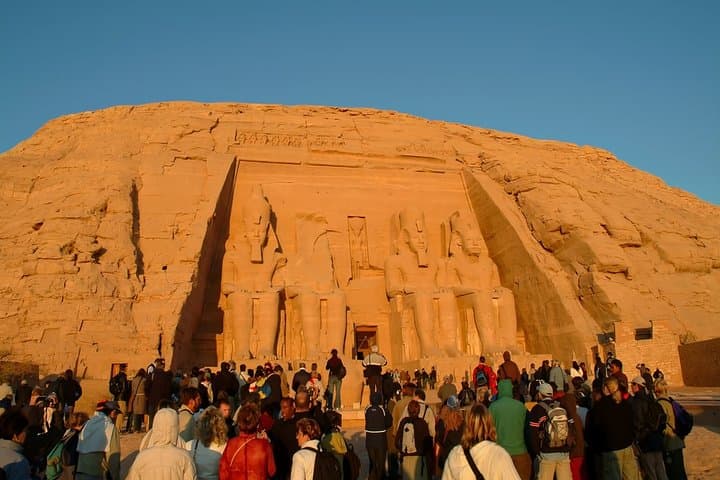
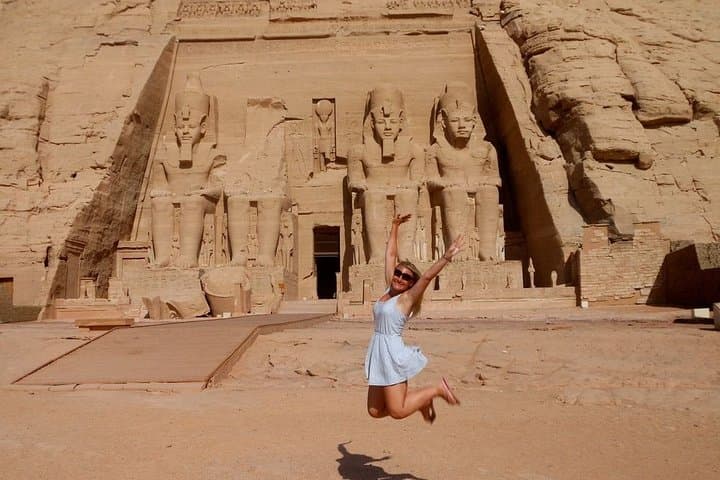
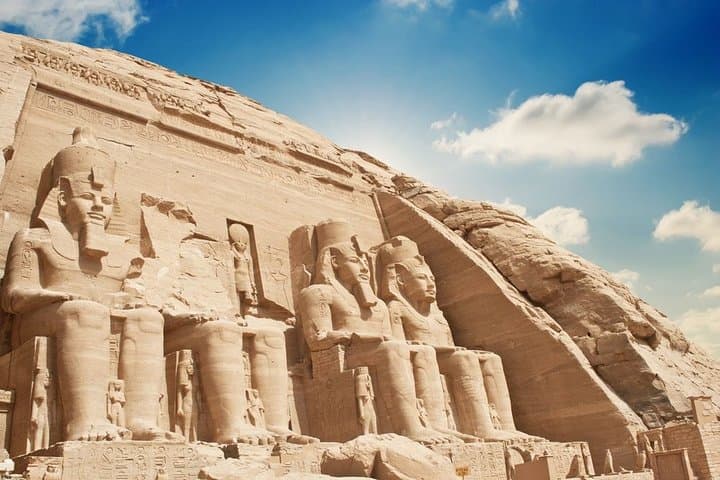
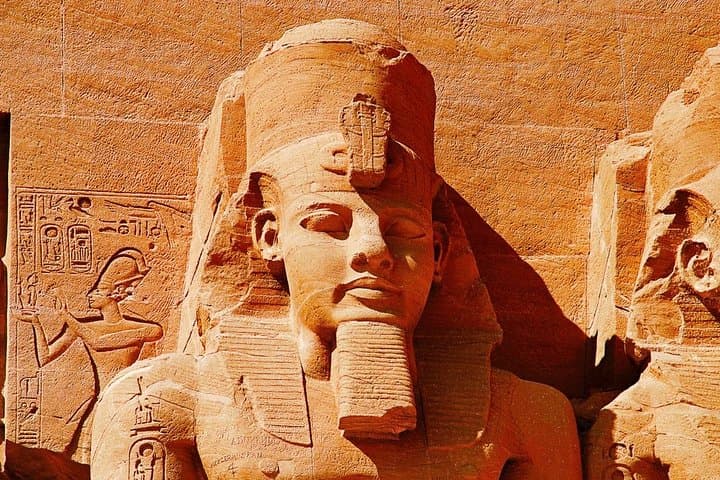
You lift off from Aswan at first light and the Nile valley shrinks to a ribbon below as the plane cleaves the desert toward Lake Nasser. In an hour the colossal faces of Ramses II appear etched into the cliff, four seated statues guarding a low plaza that opens onto the water; heat and dust give the sandstone a warmed, tactile presence.
You lift off from Aswan at first light and the Nile valley shrinks to a ribbon below as the plane cleaves the desert toward Lake Nasser. In an hour the colossal faces of Ramses II appear etched into the cliff, four seated statues guarding a low plaza that opens onto the water; heat and dust give the sandstone a warmed, tactile presence.
Built in the 13th century BCE by Ramses II and later dedicated in part to Queen Nefertari, the two rock-cut temples were rediscovered in 1813 and famously relocated in the 1960s when the Aswan High Dam threatened to drown them. The move—led by Egypt, UNESCO and an international team—shifted each temple block by block to higher ground on a structurally engineered hill.
Geologically, the temples are carved from Nubian sandstone; culturally they project imperial power through scale and reliefs, including the Kadesh battle scenes and funerary imagery. A rare solar alignment illuminates the sanctuary twice a year (late Feb and Oct), a detail worth timing your visit around if possible.
Practically: this private flight tour is a half-day commitment—about six hours total including transfers—delivered with multilingual Egyptologists and airport pickups from Aswan. The site is compact and mostly level; expect short paved walks, stairs into inner chambers, and strong sun. Carry sun protection, sturdy shoes, and local currency for admission and souvenirs. Tours are wheelchair-accessible with support, but check in advance for mobility needs. The schedule favors morning departures to avoid midafternoon heat and maximize light for photography.