THE ADVENTURE COLLECTIVE® · Independent discovery and booking for outdoor travel

Drive across the Egyptian desert to stand beneath Ramses II’s colossal facade. This private day tour from Aswan delivers the relocated Abu Simbel temples, their ancient carvings, and the famed solar alignment—with practical tips for timing, travel, and on-site logistics.
Drive across the Egyptian desert to stand beneath Ramses II’s colossal facade. This private day tour from Aswan delivers the relocated Abu Simbel temples, their ancient carvings, and the famed solar alignment—with practical tips for timing, travel, and on-site logistics.
You arrive before the heat thickens, the desert ahead broad and mute, the road cutting a straight line toward stone giants that seem to wait for the sun.
Verified experiences and guided adventures in the surrounding area.
Operated by Reflections Travel · Abu Simbel, Aswan Governorate
You arrive before the heat thickens, the desert ahead broad and mute, the road cutting a straight line toward stone giants that seem to wait for the sun.
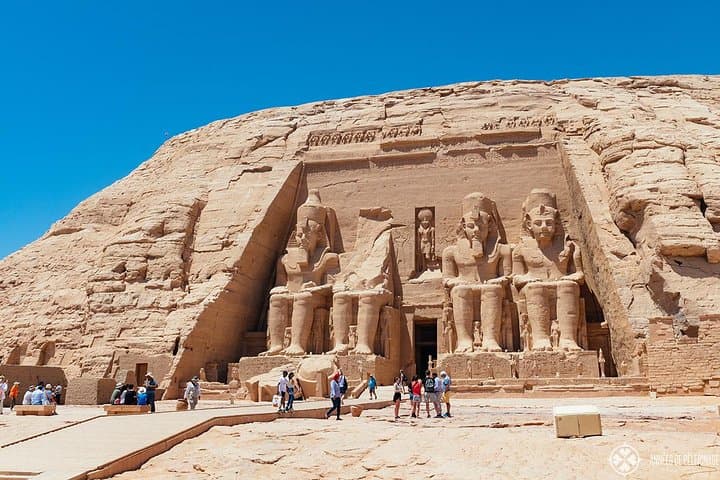
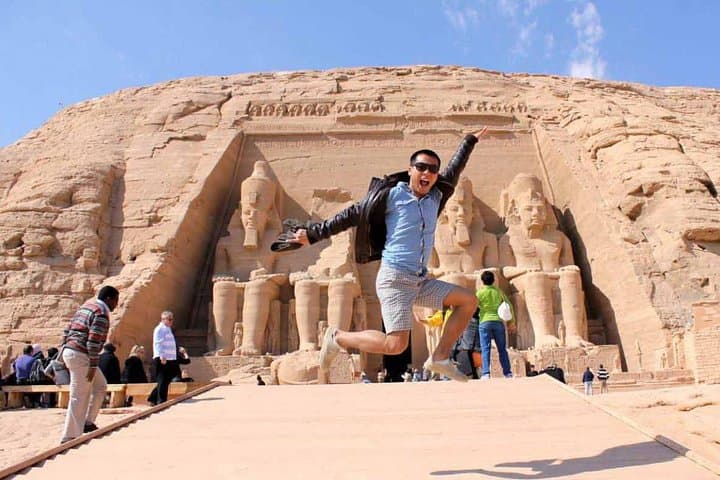
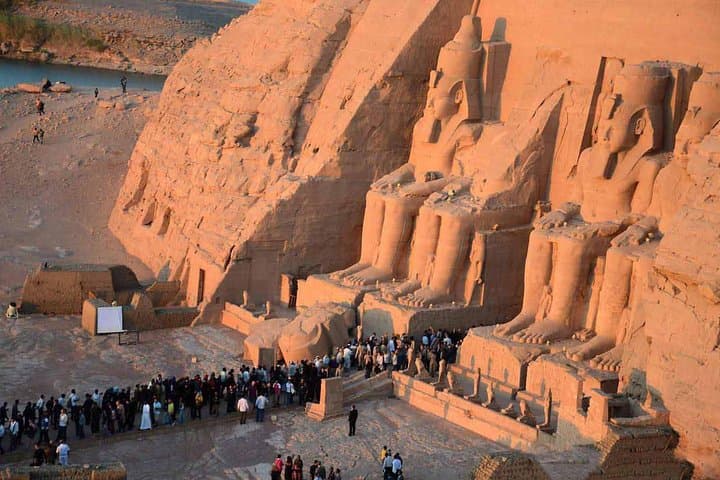
The drive from Aswan to Abu Simbel crosses roughly 280–300 km of open desert; expect 3–4 hours each way along a sealed highway. At the site, two rock-cut temples—Ramses II’s colossal Sun Temple and the smaller Temple of Hathor for Nefertari—rise from the sands. Engineers and UNESCO famously relocated these monuments in the 1960s to save them from the rising waters of Lake Nasser; today the relocated complex sits on an artificial mound overlooking the lake’s western shore.
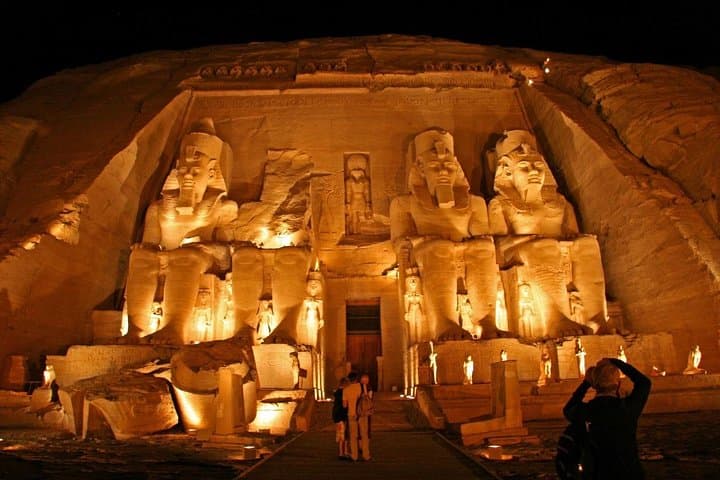
Geology here is simple: sedimentary sandstone and granite outcrops smoothed by wind; the flat terrain means negligible elevation gain but exposed sun and reflected heat. Culturally, the carved colossi and richly inscribed chambers tell stories of imperial power and ritual astronomy—the inner sanctum still receives targeted sunlight in February and October, when rays strike the statues’ faces.
Practical guidance: travel early, carry sun protection and ample water, and plan for three hours on-site to tour both temples and the small onsite museum. The visit is largely low-impact walking across packed stone and paved surfaces, but shade is sparse. Photography is allowed but avoid flash inside delicate chambers. Transfers are by air-conditioned vehicle; confirm pickup times with your operator. With attention to timing and sensible gear, a day-trip by road from Aswan delivers one of Egypt’s most visceral encounters with antiquity.
easy.
8 hours.
Suitable for most fitness levels; requires walking on flat stone and paved surfaces for up to three hours at the site.
Expect roughly 3–4 hours each way on a sealed desert highway—about 280–300 km one way—depending on stops and traffic.
The inner sanctum sunlight alignment occurs predictably each year in February and October; outside those months you’ll still see impressive interior sculpture but not the exact sun strike.
Yes—this private tour includes admission to the Abu Simbel temples and a qualified Egyptologist guide as stated in the inclusions.
Yes—pickup and return from your Aswan hotel or Nile cruise are included; confirm the exact pickup point and time when booking.
The Abu Simbel temples were relocated in the 1960s in a UNESCO-led effort to save them from flooding after the construction of the Aswan High Dam.
The relocation was a major conservation success; visitors should stick to paths, avoid touching stonework, and follow local guide rules to minimize wear.
Reflections Travel operates guided outdoor trips and adventures with an emphasis on safety, stewardship, and memorable experiences.
You arrive before the heat thickens, the desert ahead broad and mute, the road cutting a straight line toward stone giants that seem to wait for the sun.
You arrive before the heat thickens, the desert ahead broad and mute, the road cutting a straight line toward stone giants that seem to wait for the sun.
The drive from Aswan to Abu Simbel crosses roughly 280–300 km of open desert; expect 3–4 hours each way along a sealed highway. At the site, two rock-cut temples—Ramses II’s colossal Sun Temple and the smaller Temple of Hathor for Nefertari—rise from the sands. Engineers and UNESCO famously relocated these monuments in the 1960s to save them from the rising waters of Lake Nasser; today the relocated complex sits on an artificial mound overlooking the lake’s western shore.
Geology here is simple: sedimentary sandstone and granite outcrops smoothed by wind; the flat terrain means negligible elevation gain but exposed sun and reflected heat. Culturally, the carved colossi and richly inscribed chambers tell stories of imperial power and ritual astronomy—the inner sanctum still receives targeted sunlight in February and October, when rays strike the statues’ faces.
Practical guidance: travel early, carry sun protection and ample water, and plan for three hours on-site to tour both temples and the small onsite museum. The visit is largely low-impact walking across packed stone and paved surfaces, but shade is sparse. Photography is allowed but avoid flash inside delicate chambers. Transfers are by air-conditioned vehicle; confirm pickup times with your operator. With attention to timing and sensible gear, a day-trip by road from Aswan delivers one of Egypt’s most visceral encounters with antiquity.