THE ADVENTURE COLLECTIVE® · Independent discovery and booking for outdoor travel

Two immersive days from Cairo visiting Abu Simbel and Luxor with flights, a 4-star hotel stay, and an Egyptologist guide. Expect full days, stone-cut temples, and practical details for seeing Ramses II, Hatshepsut, Karnak and the Valley of the Kings.
Two immersive days from Cairo visiting Abu Simbel and Luxor with flights, a 4-star hotel stay, and an Egyptologist guide. Expect full days, stone-cut temples, and practical details for seeing Ramses II, Hatshepsut, Karnak and the Valley of the Kings.
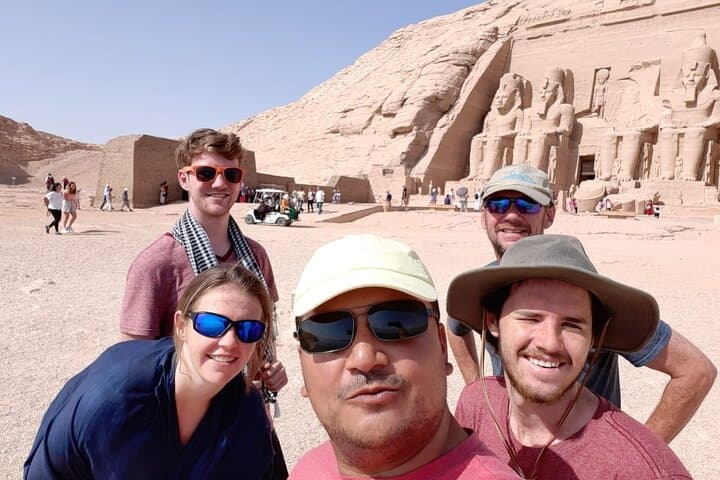
Sunlight slices across ochre cliffs as you step from the small plane into Aswan’s desert air—Ancient Egypt arrives at eye level: colossal seated pharaohs and painted burial chambers waiting to be read. The first day ferries you from Cairo to Aswan, onward to Abu Simbel’s carved sandstone façade where Ramses II and Nefertari loom larger than life; by evening the group rides a train into Luxor and checks into a four-star room on the Nile.
Verified experiences and guided adventures in the surrounding area.
Operated by Egypt Best Holidays · Cairo, Cairo Governorate
Sunlight slices across ochre cliffs as you step from the small plane into Aswan’s desert air—Ancient Egypt arrives at eye level: colossal seated pharaohs and painted burial chambers waiting to be read. The first day ferries you from Cairo to Aswan, onward to Abu Simbel’s carved sandstone façade where Ramses II and Nefertari loom larger than life; by evening the group rides a train into Luxor and checks into a four-star room on the Nile.
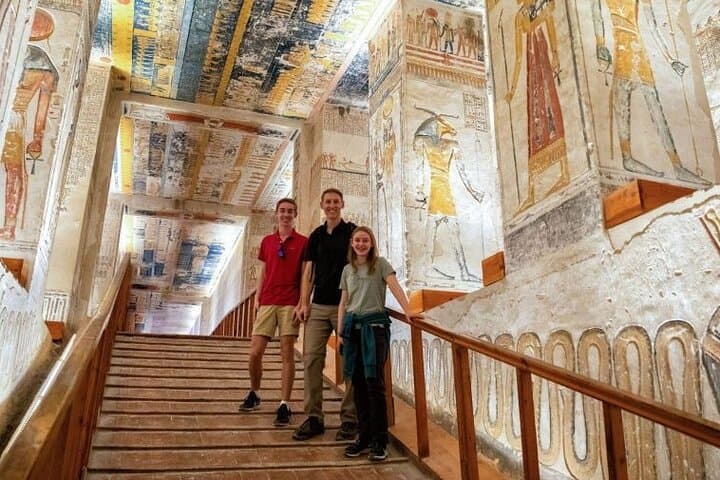
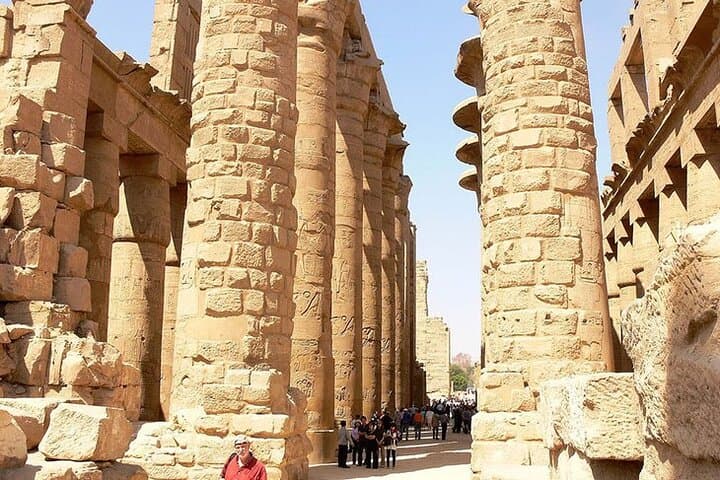
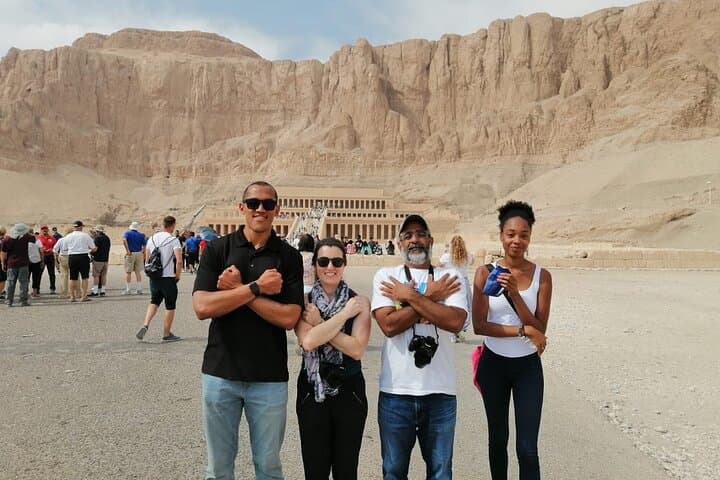
On day two a licensed Egyptologist leads excursions across Luxor’s twin banks: the cliff-lined necropolis of the West Bank and the Valley of the Kings with its painted tombs, Queen Hatshepsut’s terraced mortuary temple, the Colossi of Memnon, and the monumental pylons of Karnak and Luxor Temples on the East Bank. Geology here matters—the temples are carved from Nubian sandstone and sit where the desert plateau meets the Nile floodplain, which shaped both the construction and preservation of the sites.
Practical and local: the program includes domestic flights Cairo–Aswan–Luxor–Cairo, train transfer, entrance fees, breakfast, and guided tours; the Abu Simbel excursion involves long road or transfer segments and timed entries. Expect full days, strong sun, and short walks across uneven stone and sand. Bring passport and photocopies for tickets, sun protection, comfortable walking shoes, and a reusable water bottle. Optional early-morning hot-air balloon rides over Luxor can add a serene aerial view of the river and tombs but should be booked in advance. Wheelchair access is noted for portions of the itinerary, but some tomb interiors have steps and low passages.
easy.
2 days.
Suitable for most fitness levels; involves multiple short walks, stairs and uneven temple floors—basic mobility recommended
Yes—this tour includes the main entrance fees for Abu Simbel, Valley of the Kings, Hatshepsut, Karnak, Luxor Temple and listed sites per the itinerary.
The tour is labeled wheelchair accessible for parts of the itinerary, but some tombs and temple interiors have steps and narrow passages—check specific access needs with the operator in advance.
Yes—an optional early-morning hot-air balloon is offered on day two; it is weather-dependent and often requires advance booking and an additional fee.
You’ll need your passport (details including expiry and nationality are required at booking), and some nationalities must carry visas—verify visa requirements before travel.
Abu Simbel was carved under Ramses II in the 13th century BCE and relocated in the 1960s to prevent Nile inundation from the Aswan High Dam; Luxor (ancient Thebes) was the religious heart of New Kingdom Egypt.
Relocation projects and controlled visitor access protect delicate reliefs and tomb paintings; visitors should avoid touching carved surfaces and use provided walkways to limit erosion.
Egypt Best Holidays operates guided outdoor trips and adventures with an emphasis on safety, stewardship, and memorable experiences.
Sunlight slices across ochre cliffs as you step from the small plane into Aswan’s desert air—Ancient Egypt arrives at eye level: colossal seated pharaohs and painted burial chambers waiting to be read. The first day ferries you from Cairo to Aswan, onward to Abu Simbel’s carved sandstone façade where Ramses II and Nefertari loom larger than life; by evening the group rides a train into Luxor and checks into a four-star room on the Nile.
Sunlight slices across ochre cliffs as you step from the small plane into Aswan’s desert air—Ancient Egypt arrives at eye level: colossal seated pharaohs and painted burial chambers waiting to be read. The first day ferries you from Cairo to Aswan, onward to Abu Simbel’s carved sandstone façade where Ramses II and Nefertari loom larger than life; by evening the group rides a train into Luxor and checks into a four-star room on the Nile.
On day two a licensed Egyptologist leads excursions across Luxor’s twin banks: the cliff-lined necropolis of the West Bank and the Valley of the Kings with its painted tombs, Queen Hatshepsut’s terraced mortuary temple, the Colossi of Memnon, and the monumental pylons of Karnak and Luxor Temples on the East Bank. Geology here matters—the temples are carved from Nubian sandstone and sit where the desert plateau meets the Nile floodplain, which shaped both the construction and preservation of the sites.
Practical and local: the program includes domestic flights Cairo–Aswan–Luxor–Cairo, train transfer, entrance fees, breakfast, and guided tours; the Abu Simbel excursion involves long road or transfer segments and timed entries. Expect full days, strong sun, and short walks across uneven stone and sand. Bring passport and photocopies for tickets, sun protection, comfortable walking shoes, and a reusable water bottle. Optional early-morning hot-air balloon rides over Luxor can add a serene aerial view of the river and tombs but should be booked in advance. Wheelchair access is noted for portions of the itinerary, but some tomb interiors have steps and low passages.