THE ADVENTURE COLLECTIVE® · Independent discovery and booking for outdoor travel

See Abu Simbel’s monumental temples and Luxor’s Karnak, Valley of the Kings and Hatshepsut in a compact private 2-day tour from Cairo. Ideal for travelers who want top archaeological highlights on an efficient schedule.
See Abu Simbel’s monumental temples and Luxor’s Karnak, Valley of the Kings and Hatshepsut in a compact private 2-day tour from Cairo. Ideal for travelers who want top archaeological highlights on an efficient schedule.
You step off the early flight into Aswan and the desert immediately leans in — heat, baked sandstone, and the quiet that only ancient stone can hold. A private bus cuts across the southern reaches of the Nile Valley to Abu Simbel, where four colossal faces stare down the horizon and the carved halls push the weight of history onto your shoulders.
Verified experiences and guided adventures in the surrounding area.
Operated by Dahab Safari Day Tours · Luxor, Luxor Governorate
You step off the early flight into Aswan and the desert immediately leans in — heat, baked sandstone, and the quiet that only ancient stone can hold. A private bus cuts across the southern reaches of the Nile Valley to Abu Simbel, where four colossal faces stare down the horizon and the carved halls push the weight of history onto your shoulders.
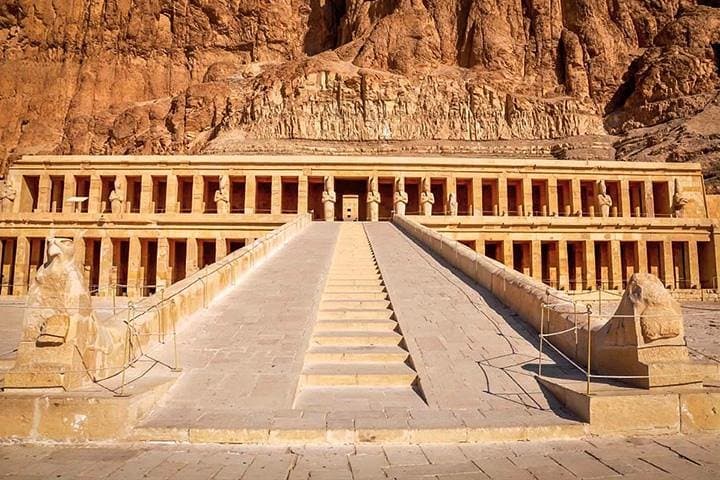
Built by Ramses II and rescued from the rising waters of the Aswan High Dam in the 1960s, Abu Simbel’s twin temples are carved from a cliff of Nubian sandstone. Two landscapes meet here: the Nile floodplain that once fed New Kingdom civilization, and the arid plateau that preserved tombs on Luxor’s west bank for millennia. On day two the tour pivots to Luxor — Karnak’s hypostyle hall that reads like a catalog of pharaonic power, the Valley of the Kings where tombs tunnel into limestone, Hatshepsut’s terraced mortuary temple, and the stoic Colossi of Memnon.
Expect guided walks, stair sections and short transfers by air and road, and plenty of time in open sun. Photography and respectful conduct inside tombs are required by site rules; no-flash is enforced in many burial chambers. Bring layered sun protection, stay hydrated between site visits, and budget energy for stairs and uneven floors. Timing matters: early visits in Abu Simbel and sunrise or late afternoon in Luxor give softer light and fewer crowds. The itinerary compresses big monuments into two days — efficient, intense, and rooted in history.
moderate.
2 days (approx. 48 hours).
Light to moderate fitness; able to walk several short distances, climb stairs and tolerate heat for periods.
The tour includes domestic flights: Cairo–Aswan on day one and Luxor–Cairo at the end of day two; meet at your Cairo hotel for pickup to the airport.
Yes — the itinerary states admission to selected sites and a qualified Egyptologist guide are included, though optional extra sites may require local fees.
The tour is listed as suitable for all fitness levels, but many sites have stairs and uneven terrain; travelers with mobility issues should contact the operator in advance for accommodations.
Standard visits often include a set number of tombs; additional tombs or the Tutankhamun burial chamber may require separate tickets purchased on-site when available.
Abu Simbel was carved under Ramses II in the 13th century BCE and was relocated in the 1960s to save it from Aswan High Dam flooding; Luxor was Thebes, the political and religious heart of New Kingdom Egypt.
Sites face wear from visitor traffic and climate; follow site rules, avoid touching-painted surfaces, and support local guides and official ticketing to fund preservation.
Dahab Safari Day Tours operates guided outdoor trips and adventures with an emphasis on safety, stewardship, and memorable experiences.



You step off the early flight into Aswan and the desert immediately leans in — heat, baked sandstone, and the quiet that only ancient stone can hold. A private bus cuts across the southern reaches of the Nile Valley to Abu Simbel, where four colossal faces stare down the horizon and the carved halls push the weight of history onto your shoulders.
You step off the early flight into Aswan and the desert immediately leans in — heat, baked sandstone, and the quiet that only ancient stone can hold. A private bus cuts across the southern reaches of the Nile Valley to Abu Simbel, where four colossal faces stare down the horizon and the carved halls push the weight of history onto your shoulders.
Built by Ramses II and rescued from the rising waters of the Aswan High Dam in the 1960s, Abu Simbel’s twin temples are carved from a cliff of Nubian sandstone. Two landscapes meet here: the Nile floodplain that once fed New Kingdom civilization, and the arid plateau that preserved tombs on Luxor’s west bank for millennia. On day two the tour pivots to Luxor — Karnak’s hypostyle hall that reads like a catalog of pharaonic power, the Valley of the Kings where tombs tunnel into limestone, Hatshepsut’s terraced mortuary temple, and the stoic Colossi of Memnon.
Expect guided walks, stair sections and short transfers by air and road, and plenty of time in open sun. Photography and respectful conduct inside tombs are required by site rules; no-flash is enforced in many burial chambers. Bring layered sun protection, stay hydrated between site visits, and budget energy for stairs and uneven floors. Timing matters: early visits in Abu Simbel and sunrise or late afternoon in Luxor give softer light and fewer crowds. The itinerary compresses big monuments into two days — efficient, intense, and rooted in history.