THE ADVENTURE COLLECTIVE® · Independent discovery and booking for outdoor travel

Make a long but rewarding day trip from Cairo to Abu Simbel via Aswan, visiting the colossal temples of Ramesses II and enjoying a UNESCO-engineered relocation marvel. Early starts, sun protection, and a sense of history make this a packed but unforgettable experience.
Make a long but rewarding day trip from Cairo to Abu Simbel via Aswan, visiting the colossal temples of Ramesses II and enjoying a UNESCO-engineered relocation marvel. Early starts, sun protection, and a sense of history make this a packed but unforgettable experience.
You leave Cairo before dawn and watch the city blur into desert until Aswan’s palm-stubbed edges appear. By late morning the land opens into the broad, glassy mirror of Lake Nasser, and Abu Simbel’s four seated colossi loom from the sandstone as if the rock itself stood to attention. The sun angles across the great facade; shadows carve the hieroglyphs into relief and the heat presses like a living thing.
Verified experiences and guided adventures in the surrounding area.
Operated by Egypt Tours Online · Abu Simbel, Aswan Governorate
You leave Cairo before dawn and watch the city blur into desert until Aswan’s palm-stubbed edges appear. By late morning the land opens into the broad, glassy mirror of Lake Nasser, and Abu Simbel’s four seated colossi loom from the sandstone as if the rock itself stood to attention. The sun angles across the great facade; shadows carve the hieroglyphs into relief and the heat presses like a living thing.
These temples were carved in the 13th century BC for Ramesses II and his queen Nefertari. Geologically they rise from Nubian sandstone perched above the modern shoreline created by the Aswan High Dam. In the 1960s a UNESCO-led engineering effort moved the entire site block-by-block to higher ground — an achievement visitors still appreciate when they stand inside the hypostyle halls. Local Nubian culture remains visible in Aswan’s markets and the layers of Islamic and Pharaonic history woven through the route.
Practical guidance: expect a very long travel day (approximately 15 hours door-to-door with flights and road transfer). Bring sun protection and sturdy shoes for short uneven strolls around the temples. Photocopies of passports are required at booking, and security checkpoints are routine. Lunch is included, but carry extra water and pace yourself during the hottest hours.
Timing matters: mornings and late afternoons offer softer light for photography and cooler walking. Respect the site: avoid touching reliefs, follow guide instructions, and be prepared for minimal shade between viewpoints.
easy.
15 hours.
Suitable for travelers in average fitness who can handle a long travel day and short walks on uneven ground.
The full excursion runs about 15 hours door-to-door, including flights between Cairo and Aswan and the road transfer to Abu Simbel.
There are short uneven paths and steps, but no technical climbing; people with limited mobility may find some areas challenging.
Entry fees are listed as included in the tour inclusions, but always confirm at booking if any optional charges apply on-site.
Photography is generally allowed in external areas and many interior halls; follow guide and site signage for any restrictions.
Abu Simbel was carved under Ramesses II in the 13th century BC and famously relocated in the 1960s to save it from Lake Nasser after the Aswan High Dam was built.
The relocation was an international conservation feat; ongoing visitor management and obeying no-touch rules help preserve the sandstone reliefs.
Egypt Tours Online operates guided outdoor trips and adventures with an emphasis on safety, stewardship, and memorable experiences.
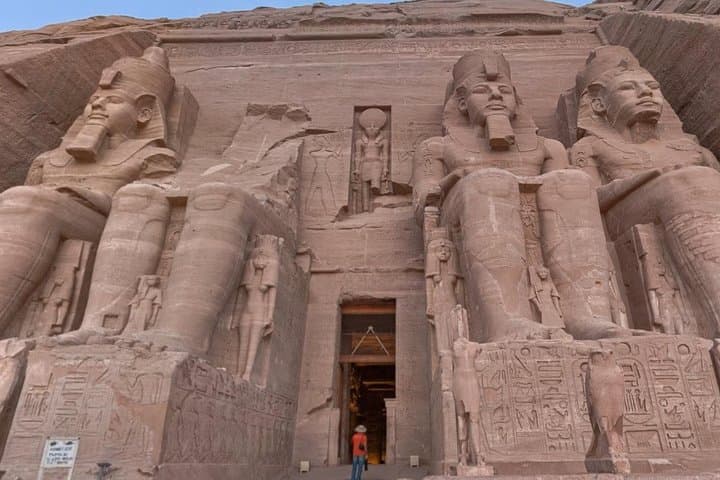
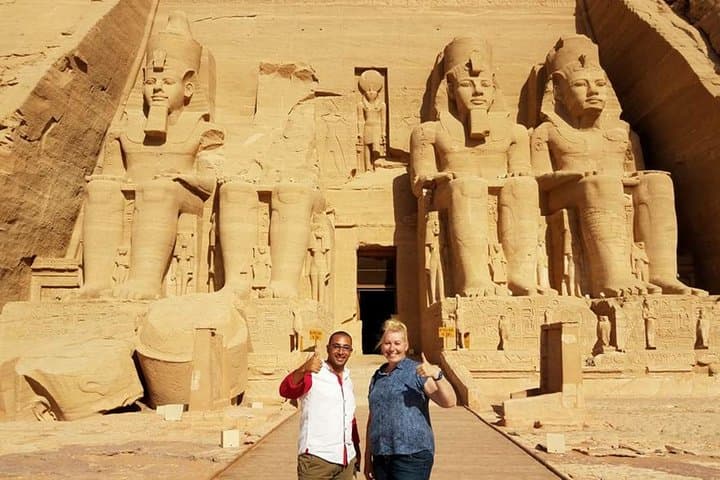
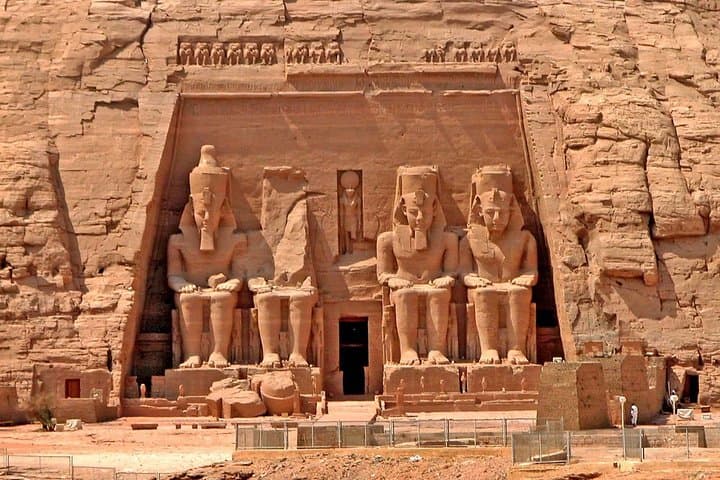
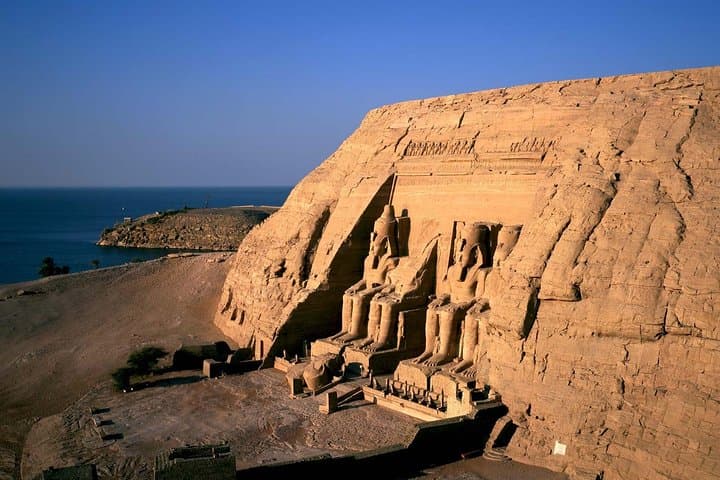
You leave Cairo before dawn and watch the city blur into desert until Aswan’s palm-stubbed edges appear. By late morning the land opens into the broad, glassy mirror of Lake Nasser, and Abu Simbel’s four seated colossi loom from the sandstone as if the rock itself stood to attention. The sun angles across the great facade; shadows carve the hieroglyphs into relief and the heat presses like a living thing.
You leave Cairo before dawn and watch the city blur into desert until Aswan’s palm-stubbed edges appear. By late morning the land opens into the broad, glassy mirror of Lake Nasser, and Abu Simbel’s four seated colossi loom from the sandstone as if the rock itself stood to attention. The sun angles across the great facade; shadows carve the hieroglyphs into relief and the heat presses like a living thing.
These temples were carved in the 13th century BC for Ramesses II and his queen Nefertari. Geologically they rise from Nubian sandstone perched above the modern shoreline created by the Aswan High Dam. In the 1960s a UNESCO-led engineering effort moved the entire site block-by-block to higher ground — an achievement visitors still appreciate when they stand inside the hypostyle halls. Local Nubian culture remains visible in Aswan’s markets and the layers of Islamic and Pharaonic history woven through the route.
Practical guidance: expect a very long travel day (approximately 15 hours door-to-door with flights and road transfer). Bring sun protection and sturdy shoes for short uneven strolls around the temples. Photocopies of passports are required at booking, and security checkpoints are routine. Lunch is included, but carry extra water and pace yourself during the hottest hours.
Timing matters: mornings and late afternoons offer softer light for photography and cooler walking. Respect the site: avoid touching reliefs, follow guide instructions, and be prepared for minimal shade between viewpoints.