THE ADVENTURE COLLECTIVE® · Independent discovery and booking for outdoor travel

Make the long desert drive worth it: this full‑day shared tour from Aswan delivers Abu Simbel’s colossal facades, relocated temples, and layered history in one accessible outing. Practical tips cover timing, sun protection, and what to expect on site.
Make the long desert drive worth it: this full‑day shared tour from Aswan delivers Abu Simbel’s colossal facades, relocated temples, and layered history in one accessible outing. Practical tips cover timing, sun protection, and what to expect on site.
The morning sun slices across the Sahara as the van hums south toward Abu Simbel, and the desert seems to push travelers forward with deliberate heat. On arrival the two rock-cut temples rise from a flattened cliff: four colossi stare out over an open plaza while stone corridors lead into shadowed sanctuaries where gods and kings still demand attention.
Verified experiences and guided adventures in the surrounding area.
Operated by Egypt Sunny Tours · Abu Simbel, Aswan Governorate
The morning sun slices across the Sahara as the van hums south toward Abu Simbel, and the desert seems to push travelers forward with deliberate heat. On arrival the two rock-cut temples rise from a flattened cliff: four colossi stare out over an open plaza while stone corridors lead into shadowed sanctuaries where gods and kings still demand attention.
Built by Ramses II in the 13th century BCE and painstakingly moved block-by-block in the 1960s to escape the rising waters of Lake Nasser, Abu Simbel is both an archaeological showpiece and an engineering story. The main Great Temple honors Ra‑Horus and the pharaoh himself; a smaller temple nearby celebrates Queen Nefertari and the goddess Hathor. Geologically the site sits on Nubian sandstone flanks that catch late light, and culturally it marks the reach of New Kingdom Egypt into Upper Nile trade routes.
Visitors should expect theatrical façades, tight interior chambers with hieroglyphic reliefs, and a straightforward, largely flat site layout that’s accessible but sun‑exposed. This shared full‑day trip from Aswan typically runs around eight hours, including roughly 3–3.5 hours each way by air‑conditioned vehicle.
Practical notes: bring sunscreen, a hat, and at least one liter of water; plan for early or late arrival to avoid peak heat and crowds; photography is allowed but respect barriers and do not touch carvings. The site operates with managed access and a visitor center — permits and entry arrangements are handled as part of organized tours, making a shared full‑day transfer a pragmatic way to see Abu Simbel in a single, focused outing.
easy.
8 hours.
Suitable for travelers in normal physical condition; involves short walks on flat ground and stepping into shaded chambers.
The road distance is about 270–290 km and most shared tours take roughly 3–3.5 hours each way in an air‑conditioned van.
Some tours include permits and handling fees; check your booking — this shared trip states permit charges are handled but admission may be separate.
The site has accessible surfaces and transport options noted by many operators, but final access can depend on vehicle and local arrangements — confirm when booking.
Photography is generally allowed in external and most internal areas, but flash and touching reliefs are prohibited; follow signage and guide directions.
Abu Simbel was carved under Ramses II (c. 13th century BCE) and famously relocated in the 1960s to save it from Lake Nasser after the Aswan High Dam was built.
Tour operators and UNESCO-era efforts emphasize staying on paths, minimizing physical contact with carvings, and managing vehicle access to reduce erosion and vibration.
Egypt Sunny Tours operates guided outdoor trips and adventures with an emphasis on safety, stewardship, and memorable experiences.
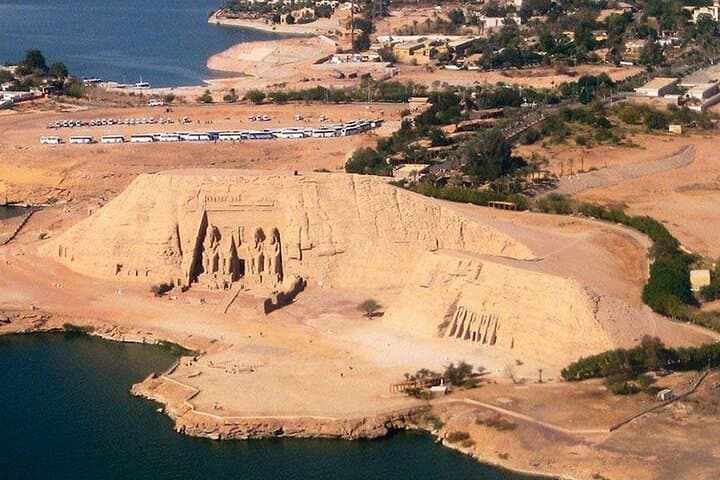
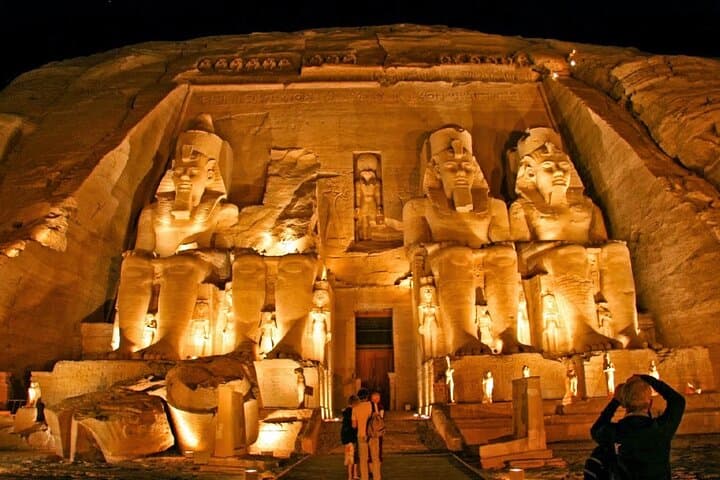
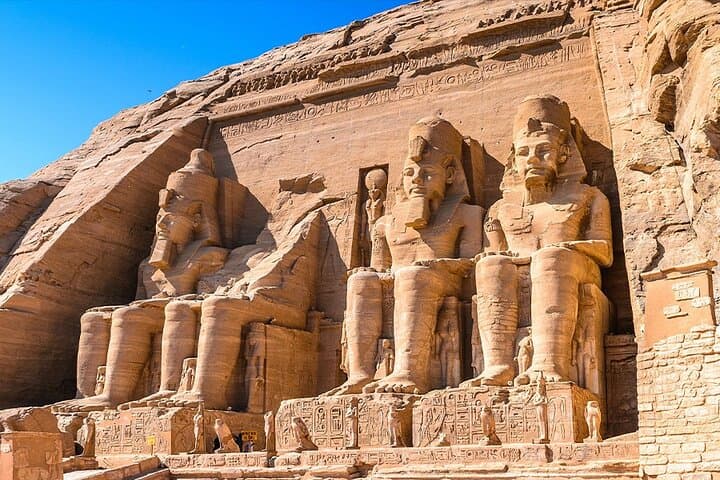
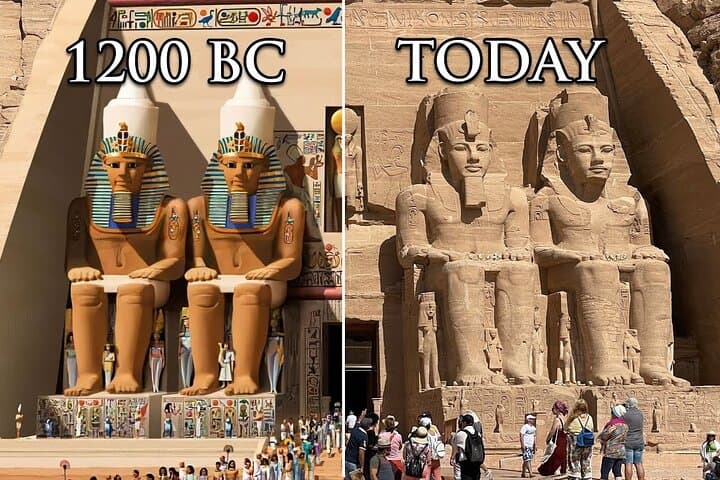
The morning sun slices across the Sahara as the van hums south toward Abu Simbel, and the desert seems to push travelers forward with deliberate heat. On arrival the two rock-cut temples rise from a flattened cliff: four colossi stare out over an open plaza while stone corridors lead into shadowed sanctuaries where gods and kings still demand attention.
The morning sun slices across the Sahara as the van hums south toward Abu Simbel, and the desert seems to push travelers forward with deliberate heat. On arrival the two rock-cut temples rise from a flattened cliff: four colossi stare out over an open plaza while stone corridors lead into shadowed sanctuaries where gods and kings still demand attention.
Built by Ramses II in the 13th century BCE and painstakingly moved block-by-block in the 1960s to escape the rising waters of Lake Nasser, Abu Simbel is both an archaeological showpiece and an engineering story. The main Great Temple honors Ra‑Horus and the pharaoh himself; a smaller temple nearby celebrates Queen Nefertari and the goddess Hathor. Geologically the site sits on Nubian sandstone flanks that catch late light, and culturally it marks the reach of New Kingdom Egypt into Upper Nile trade routes.
Visitors should expect theatrical façades, tight interior chambers with hieroglyphic reliefs, and a straightforward, largely flat site layout that’s accessible but sun‑exposed. This shared full‑day trip from Aswan typically runs around eight hours, including roughly 3–3.5 hours each way by air‑conditioned vehicle.
Practical notes: bring sunscreen, a hat, and at least one liter of water; plan for early or late arrival to avoid peak heat and crowds; photography is allowed but respect barriers and do not touch carvings. The site operates with managed access and a visitor center — permits and entry arrangements are handled as part of organized tours, making a shared full‑day transfer a pragmatic way to see Abu Simbel in a single, focused outing.