THE ADVENTURE COLLECTIVE® · Independent discovery and booking for outdoor travel

Skip the long road and fly from Aswan for a focused visit to the awe-inspiring temples of Abu Simbel. This guided day trip pairs a short flight with expert interpretation of Ramses II’s rock-cut monuments and the UNESCO relocation story.
Skip the long road and fly from Aswan for a focused visit to the awe-inspiring temples of Abu Simbel. This guided day trip pairs a short flight with expert interpretation of Ramses II’s rock-cut monuments and the UNESCO relocation story.
You step from the small air terminal into desert light and a horizon that seems to push the sky away; Lake Nasser’s flat, glassy edge glints nearby and dares you to walk the shoreline after the temples. The flight from Aswan removes the long road and drops you at the foot of two colossal rock-cut temples whose carved faces still dominate the orange sand.
Verified experiences and guided adventures in the surrounding area.
Operated by Sunrise Tours · Abu Simbel, Aswan Governorate
You step from the small air terminal into desert light and a horizon that seems to push the sky away; Lake Nasser’s flat, glassy edge glints nearby and dares you to walk the shoreline after the temples. The flight from Aswan removes the long road and drops you at the foot of two colossal rock-cut temples whose carved faces still dominate the orange sand.
Built in the 13th century BCE, the Great Temple of Ramses II and the smaller Temple of Hathor were famously relocated in the 1960s to save them from the rising waters of the Aswan High Dam. The site’s geology is simple — Nubian sandstone sculpted and then sliced into blocks during the UNESCO relocation — but the scale and precision of the reliefs and statuary make the place feel architecturally loud in a quiet desert.
Culturally the site is one of modern conservation’s landmark achievements; your Egyptologist guide will explain royal iconography, solar alignments, and why so many carvings survived intact. There is a small visitors’ center that documents the move and a shoreline where migratory birds sometimes gather.
Practical guidance: expect a short, paved walk from the plane and compacted-sand approaches to the temples; the visit is largely accessible but involves steps and narrow interiors. Bring sun protection, a refillable bottle, and a camera with extra battery — permission rules vary for flash and tripods. Plan for a four-hour window including flights and transfers; pick morning slots for cooler temperatures and softer light on the facades.
easy.
4 hours.
Suitable for all fitness levels; requires short paved and sand walks and some standing
The tour is approximately four hours round-trip including the short flight, transfers, and site time.
The site has accessible transport and some pathways are adapted, but interiors include steps and narrow passages — check accessibility requests in advance.
Guides are provided; visitors can enter during the visit but interpretation inside may be limited — guides often use illustrations when access is restricted.
The operator may cancel or offer alternatives if flight seats are unavailable; cancel up to the stated deadline for refunds per ticket terms.
Abu Simbel’s temples were carved for Ramses II and moved block-by-block in the 1960s to avoid submersion after construction of the Aswan High Dam.
The relocation is a landmark of heritage conservation; visitors should avoid touching carvings, follow designated paths, and respect crowd control to minimize wear.
Sunrise Tours operates guided outdoor trips and adventures with an emphasis on safety, stewardship, and memorable experiences.
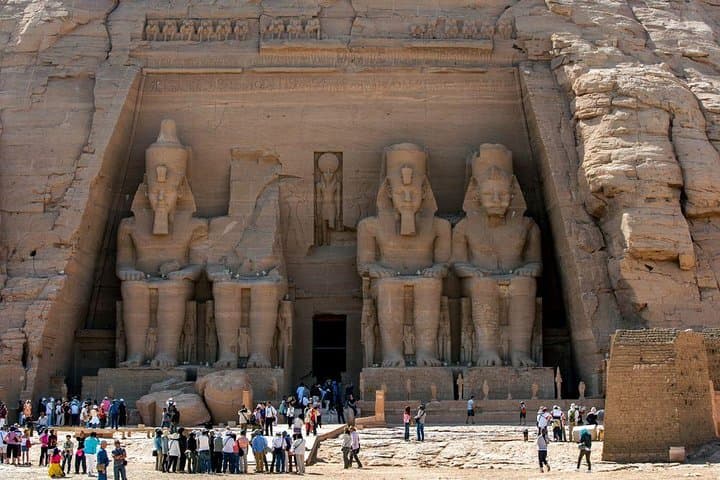
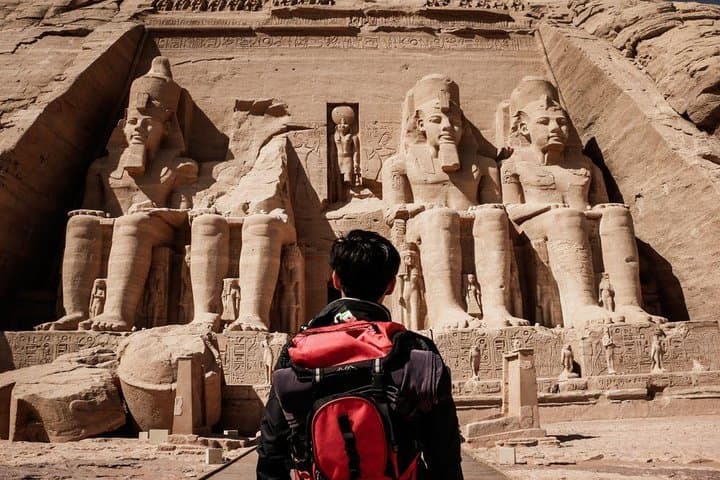
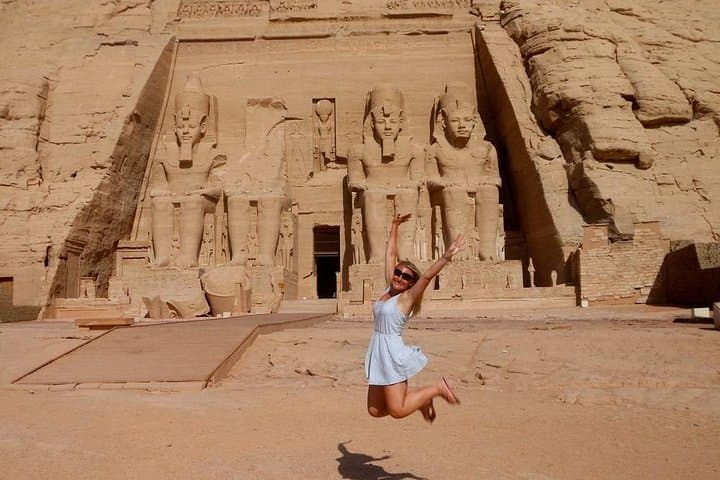
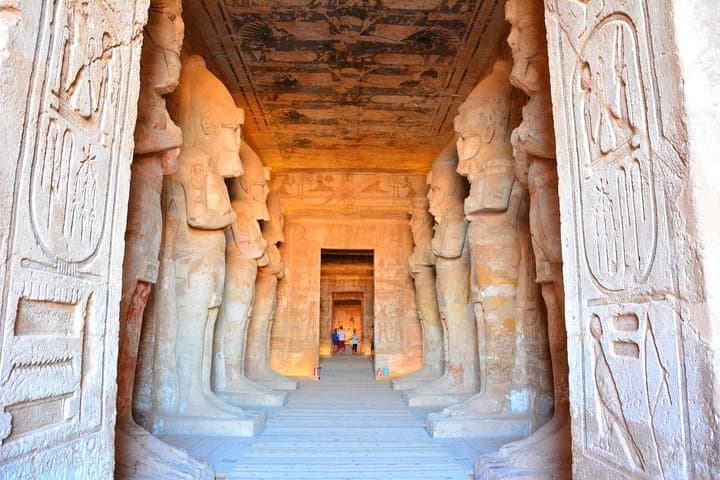
You step from the small air terminal into desert light and a horizon that seems to push the sky away; Lake Nasser’s flat, glassy edge glints nearby and dares you to walk the shoreline after the temples. The flight from Aswan removes the long road and drops you at the foot of two colossal rock-cut temples whose carved faces still dominate the orange sand.
You step from the small air terminal into desert light and a horizon that seems to push the sky away; Lake Nasser’s flat, glassy edge glints nearby and dares you to walk the shoreline after the temples. The flight from Aswan removes the long road and drops you at the foot of two colossal rock-cut temples whose carved faces still dominate the orange sand.
Built in the 13th century BCE, the Great Temple of Ramses II and the smaller Temple of Hathor were famously relocated in the 1960s to save them from the rising waters of the Aswan High Dam. The site’s geology is simple — Nubian sandstone sculpted and then sliced into blocks during the UNESCO relocation — but the scale and precision of the reliefs and statuary make the place feel architecturally loud in a quiet desert.
Culturally the site is one of modern conservation’s landmark achievements; your Egyptologist guide will explain royal iconography, solar alignments, and why so many carvings survived intact. There is a small visitors’ center that documents the move and a shoreline where migratory birds sometimes gather.
Practical guidance: expect a short, paved walk from the plane and compacted-sand approaches to the temples; the visit is largely accessible but involves steps and narrow interiors. Bring sun protection, a refillable bottle, and a camera with extra battery — permission rules vary for flash and tripods. Plan for a four-hour window including flights and transfers; pick morning slots for cooler temperatures and softer light on the facades.