THE ADVENTURE COLLECTIVE® · Independent discovery and booking for outdoor travel

Fly from Cairo to Aswan and drive to Abu Simbel for a concentrated visit to Ramses II’s monumental temples—relocated and rebuilt in the 1960s to escape Lake Nasser. This full-day trip blends short walks on sandstone, immersive ancient reliefs, and practical logistics for a long but manageable cultural day trip.
Fly from Cairo to Aswan and drive to Abu Simbel for a concentrated visit to Ramses II’s monumental temples—relocated and rebuilt in the 1960s to escape Lake Nasser. This full-day trip blends short walks on sandstone, immersive ancient reliefs, and practical logistics for a long but manageable cultural day trip.
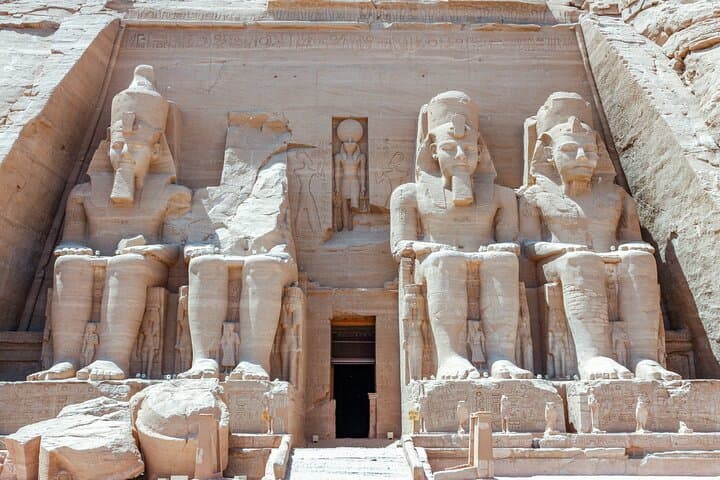
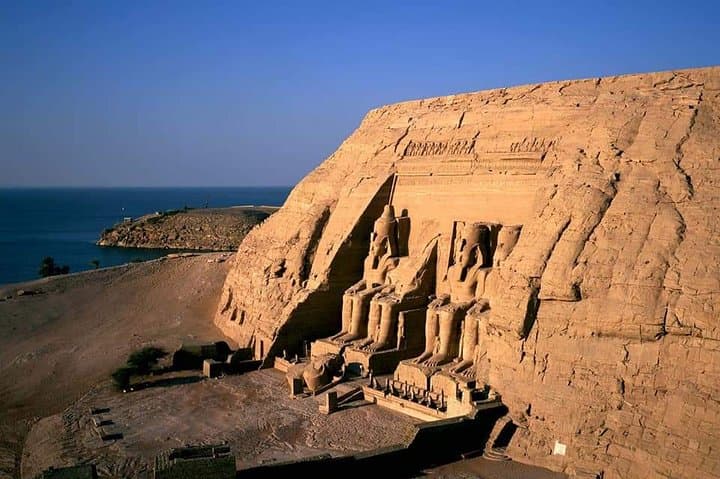
Morning light pushes across flat desert; the plane drops toward Aswan and the world below flattens into ochre and pale blue. From Aswan the road threads south for a few hours until the temple façades at Abu Simbel rise out of the sand—four colossal statues of Ramses II anchored to a cliff that meets the wide, calm surface of Lake Nasser.
Verified experiences and guided adventures in the surrounding area.
Operated by This is Egypt Tours · Abu Simbel, Aswan Governorate
Morning light pushes across flat desert; the plane drops toward Aswan and the world below flattens into ochre and pale blue. From Aswan the road threads south for a few hours until the temple façades at Abu Simbel rise out of the sand—four colossal statues of Ramses II anchored to a cliff that meets the wide, calm surface of Lake Nasser.
Carved into sandstone in the 13th century BCE, Abu Simbel’s two rock-cut temples honor Ramses II and his principal wife, Nefertari. Rediscovered by European explorers in the early 19th century and threatened by the creation of Lake Nasser in the 1960s, the monuments were painstakingly cut from their original sites and rebuilt on an artificial hill—a landmark UNESCO engineering rescue.
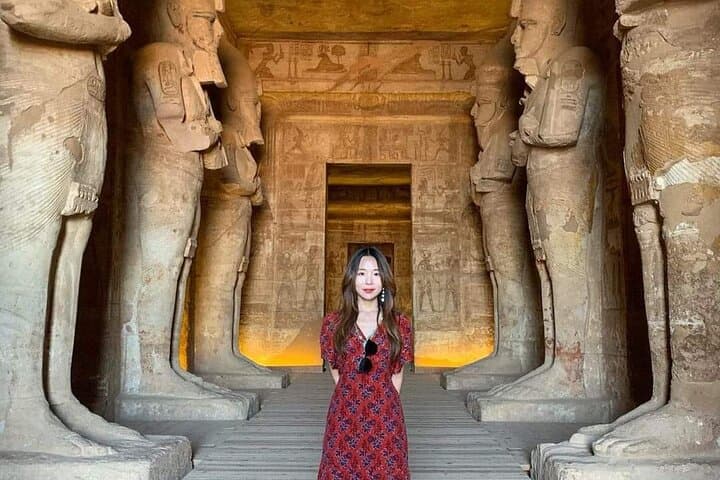
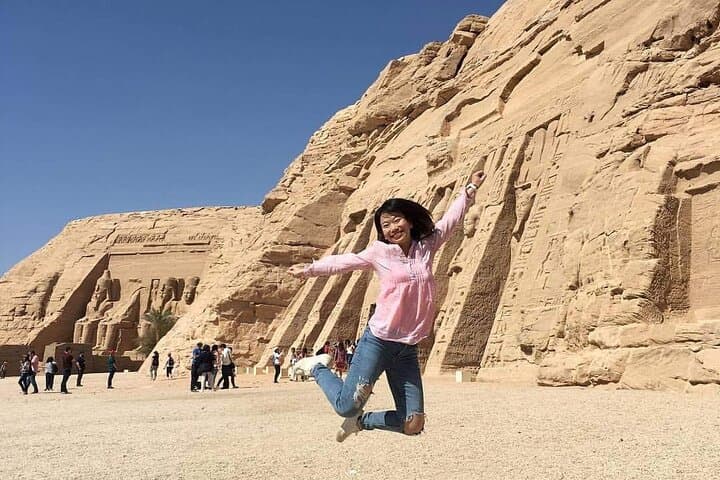
The terrain is flat desert and wide paved access; expect short, uneven stair sections inside the temples and sun-baked stone underfoot. The interior contains low-light chambers, finely carved reliefs and a famous solar alignment that illuminates the sanctuary on two specific dates each year.
Practically: this is a long day—an early flight from Cairo, a drive from Aswan (roughly 3 hours each way), several hours at the site, then return. Pack sun protection, a brimmed hat, plenty of water and a camera with spare batteries. Wear comfortable walking shoes and layers for the cool morning flight and hot afternoon sun. Entry fees and transfers are typically included on organized trips, and many operators provide wheelchair-accessible options. Respect barriers, avoid touching reliefs and plan arrival early in the day to beat heat and peak crowds.
easy.
12 hours.
Suitable for most fitness levels; involves short walks and some stairs inside temple chambers
The road is about 280 km and typically takes roughly 3 hours each way by car, depending on stops and conditions.
Many organized day tours include entrance fees and transfers; confirm on booking to avoid surprises.
The site offers accessible approaches and transfer assistance on many tours, but some interior areas have steps—check operator specifics.
Visit in the cooler months (October–April) and aim for an early morning arrival to avoid peak afternoon temperatures.
The twin temples were carved during Ramses II’s reign and were relocated in the 1960s in a UNESCO-led operation to save them from flooding after the Aswan High Dam.
Tourism puts wear on fragile stone reliefs; follow marked paths, avoid touching carvings and choose operators that support conservation efforts.
This is Egypt Tours operates guided outdoor trips and adventures with an emphasis on safety, stewardship, and memorable experiences.
Morning light pushes across flat desert; the plane drops toward Aswan and the world below flattens into ochre and pale blue. From Aswan the road threads south for a few hours until the temple façades at Abu Simbel rise out of the sand—four colossal statues of Ramses II anchored to a cliff that meets the wide, calm surface of Lake Nasser.
Morning light pushes across flat desert; the plane drops toward Aswan and the world below flattens into ochre and pale blue. From Aswan the road threads south for a few hours until the temple façades at Abu Simbel rise out of the sand—four colossal statues of Ramses II anchored to a cliff that meets the wide, calm surface of Lake Nasser.
Carved into sandstone in the 13th century BCE, Abu Simbel’s two rock-cut temples honor Ramses II and his principal wife, Nefertari. Rediscovered by European explorers in the early 19th century and threatened by the creation of Lake Nasser in the 1960s, the monuments were painstakingly cut from their original sites and rebuilt on an artificial hill—a landmark UNESCO engineering rescue.
The terrain is flat desert and wide paved access; expect short, uneven stair sections inside the temples and sun-baked stone underfoot. The interior contains low-light chambers, finely carved reliefs and a famous solar alignment that illuminates the sanctuary on two specific dates each year.
Practically: this is a long day—an early flight from Cairo, a drive from Aswan (roughly 3 hours each way), several hours at the site, then return. Pack sun protection, a brimmed hat, plenty of water and a camera with spare batteries. Wear comfortable walking shoes and layers for the cool morning flight and hot afternoon sun. Entry fees and transfers are typically included on organized trips, and many operators provide wheelchair-accessible options. Respect barriers, avoid touching reliefs and plan arrival early in the day to beat heat and peak crowds.