THE ADVENTURE COLLECTIVE® · Independent discovery and booking for outdoor travel

A long travel day that rewards patience: fly from Cairo to Aswan, drive south and step face-to-face with Ramses II at Abu Simbel. This guide covers history, what to expect on a 12–15 hour trip, and practical tips to make the most of your temple visit.
A long travel day that rewards patience: fly from Cairo to Aswan, drive south and step face-to-face with Ramses II at Abu Simbel. This guide covers history, what to expect on a 12–15 hour trip, and practical tips to make the most of your temple visit.
You wake before dawn—hotel lights still dim—and slide into a van bound for Cairo’s domestic terminal. The hours that follow are a travel rhythm: check-in, a short morning flight to Aswan, then a three‑hour drive south across an ochre desert that opens suddenly onto the monumental façade of Abu Simbel.
Verified experiences and guided adventures in the surrounding area.
Operated by EMO TOURS EGYPT · Abu Simbel, Aswan Governorate
You wake before dawn—hotel lights still dim—and slide into a van bound for Cairo’s domestic terminal. The hours that follow are a travel rhythm: check-in, a short morning flight to Aswan, then a three‑hour drive south across an ochre desert that opens suddenly onto the monumental façade of Abu Simbel.
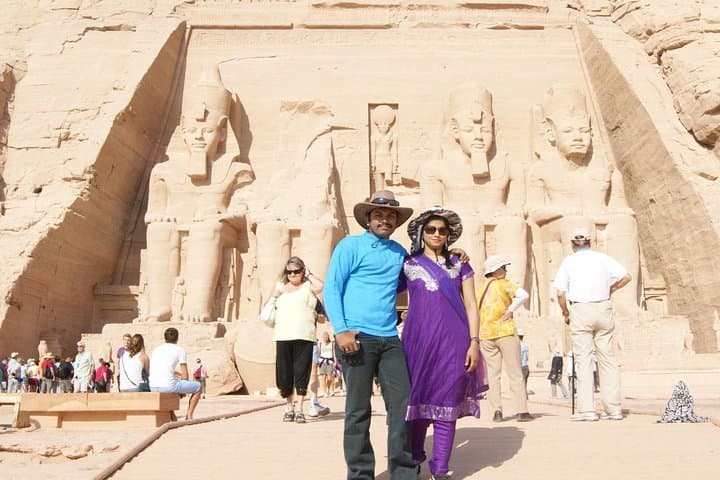
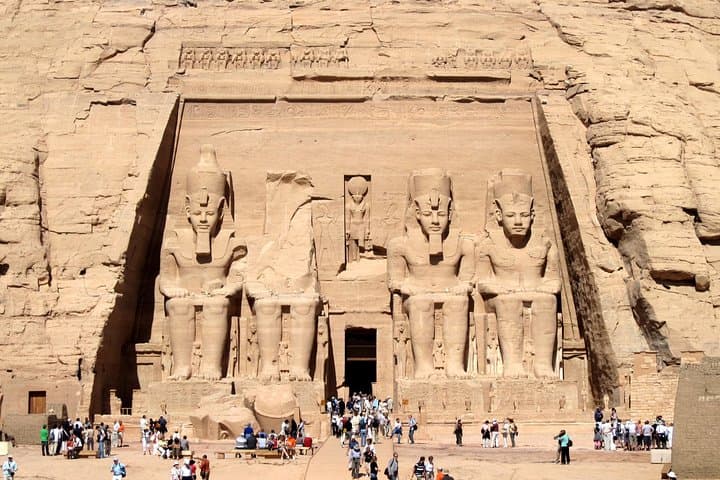
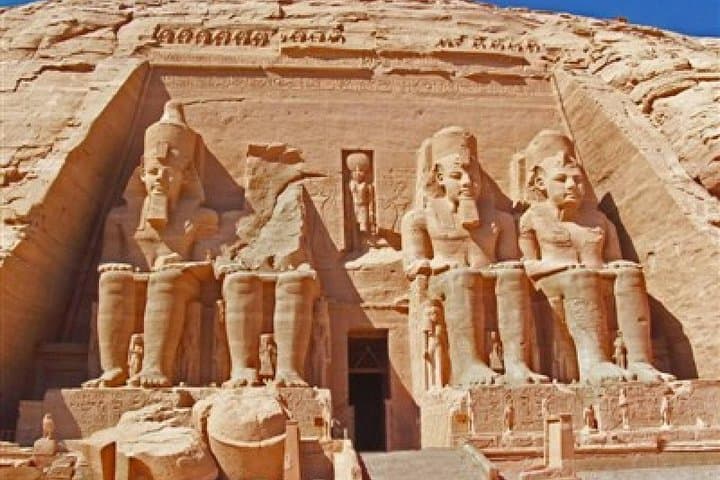
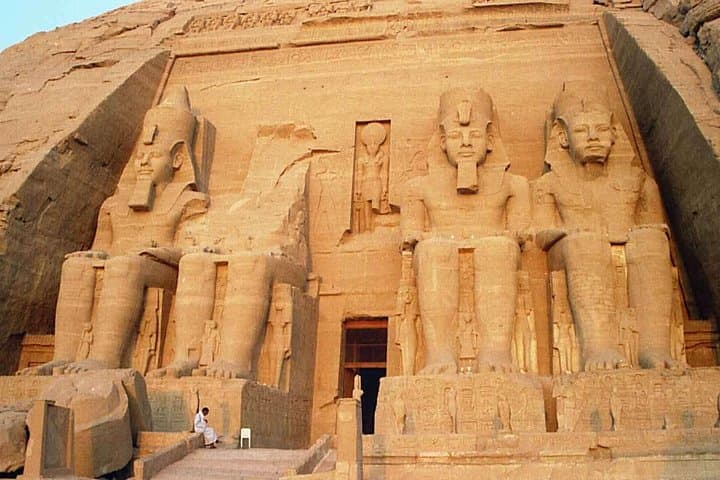
The two rock-cut temples carved under Ramses II loom from the sand: four seated colossi guard the entrance of the Great Temple while the smaller Temple of Nefertari honors Hathor. Built in the 13th century BCE and moved block by block in the 1960s to escape the rising waters of Lake Nasser, these structures are both archaeological triumphs and feats of modern engineering. The stone is Nubian sandstone—soft in places and sharply defined in the carved reliefs—set against broad, arid plains that press toward the lake.
Expect roughly three hours on site for guided exploration: exterior façades, hypostyle halls, and the inner sanctuary where the sun alignment still arrests the eye. Local Nubian culture and Aswan’s river history inform much of the region’s character; hospitality is direct and practical.
Practical notes: this is a long day (12–15 hours) with early pickup and police clearance requirements—bring your passport copy. Sun protection, layered clothing for early cool and midday heat, and sturdy shoes for uneven stone are essential. If you want softer light for photography, aim to arrive earlier in the day; the tour’s schedule often places the visit around midday. Respect signs and barriers—the original reliefs are fragile and protected.
easy.
12–15 hours.
Suitable for travelers in normal health who can manage long travel days and short periods of walking on uneven surfaces.
The tour typically allows around three hours at the temples for guided exploration, photos, and a short break.
Yes—passport details are required for police permission and you should carry your passport and a copy during the trip.
Extreme weather can disrupt flights or road transfers; operators may cancel in poor conditions and the vendor’s policy lists bad-weather cancellations.
The site has uneven surfaces and steps; while some areas are reachable, travelers with serious mobility or spinal conditions should check accessibility and consider assistance.
Abu Simbel’s twin temples were carved into Nubian sandstone under Ramses II (13th century BCE) and were relocated in the 1960s to avoid submersion from the Aswan High Dam.
UNESCO’s relocation project is a landmark in heritage conservation; visitors should stick to marked paths and avoid touching reliefs to limit erosion and damage.
EMO TOURS EGYPT operates guided outdoor trips and adventures with an emphasis on safety, stewardship, and memorable experiences.
You wake before dawn—hotel lights still dim—and slide into a van bound for Cairo’s domestic terminal. The hours that follow are a travel rhythm: check-in, a short morning flight to Aswan, then a three‑hour drive south across an ochre desert that opens suddenly onto the monumental façade of Abu Simbel.
You wake before dawn—hotel lights still dim—and slide into a van bound for Cairo’s domestic terminal. The hours that follow are a travel rhythm: check-in, a short morning flight to Aswan, then a three‑hour drive south across an ochre desert that opens suddenly onto the monumental façade of Abu Simbel.
The two rock-cut temples carved under Ramses II loom from the sand: four seated colossi guard the entrance of the Great Temple while the smaller Temple of Nefertari honors Hathor. Built in the 13th century BCE and moved block by block in the 1960s to escape the rising waters of Lake Nasser, these structures are both archaeological triumphs and feats of modern engineering. The stone is Nubian sandstone—soft in places and sharply defined in the carved reliefs—set against broad, arid plains that press toward the lake.
Expect roughly three hours on site for guided exploration: exterior façades, hypostyle halls, and the inner sanctuary where the sun alignment still arrests the eye. Local Nubian culture and Aswan’s river history inform much of the region’s character; hospitality is direct and practical.
Practical notes: this is a long day (12–15 hours) with early pickup and police clearance requirements—bring your passport copy. Sun protection, layered clothing for early cool and midday heat, and sturdy shoes for uneven stone are essential. If you want softer light for photography, aim to arrive earlier in the day; the tour’s schedule often places the visit around midday. Respect signs and barriers—the original reliefs are fragile and protected.