THE ADVENTURE COLLECTIVE® · Independent discovery and booking for outdoor travel

Fly from Cairo to Aswan, drive along Lake Nasser and spend a concentrated morning at the rock-cut temples of Abu Simbel — relocated by UNESCO and dominated by the colossal statues of Ramses II. This full-day itinerary packs history, geology and dramatic desert views into a single, manageable excursion.
Fly from Cairo to Aswan, drive along Lake Nasser and spend a concentrated morning at the rock-cut temples of Abu Simbel — relocated by UNESCO and dominated by the colossal statues of Ramses II. This full-day itinerary packs history, geology and dramatic desert views into a single, manageable excursion.
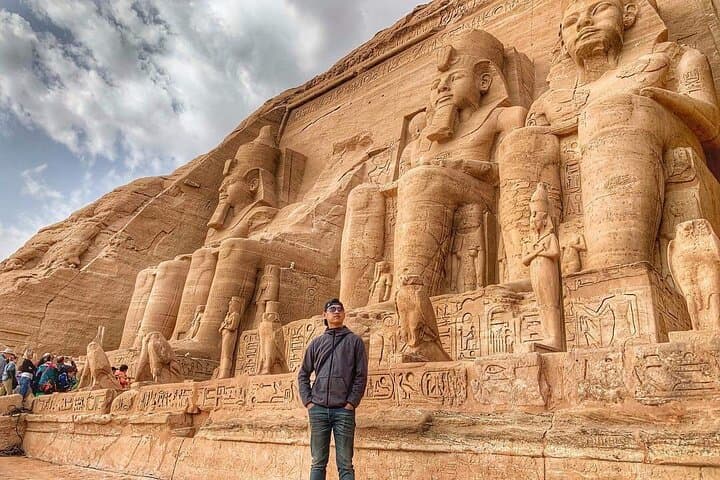
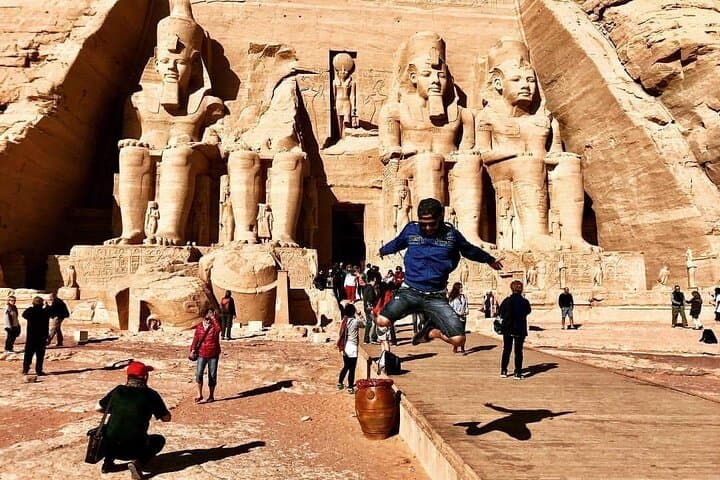
You step off the small plane into Aswan’s low, dry heat and the desert seems to push the horizon forward; the road to Abu Simbel slices along the glassy surface of Lake Nasser. By midmorning the colossal faces of Ramses II loom at the edge of water so silent it dares you to speak. The scale arrests movement: four seated figures carved into living rock, their gazes fixed across centuries.
Verified experiences and guided adventures in the surrounding area.
Operated by This Is Egypt · Abu Simbel, Aswan Governorate
You step off the small plane into Aswan’s low, dry heat and the desert seems to push the horizon forward; the road to Abu Simbel slices along the glassy surface of Lake Nasser. By midmorning the colossal faces of Ramses II loom at the edge of water so silent it dares you to speak. The scale arrests movement: four seated figures carved into living rock, their gazes fixed across centuries.
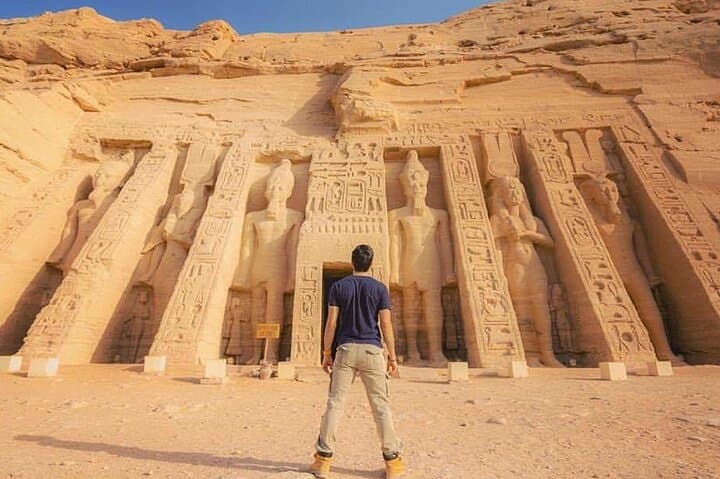
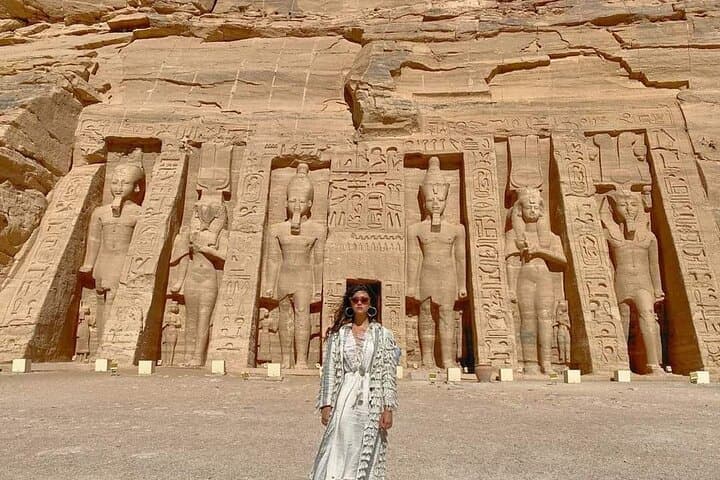
Abu Simbel’s twin temples — Ramses II and Nefertari — date to the 13th century BCE and were rediscovered in 1813. In the 1960s, an international relocation project led by UNESCO lifted both temples block-by-block to save them from the rising waters of the Nile after the Aswan High Dam formed Lake Nasser. The sandstone façades and interior reliefs still read like political theater: battle scenes, gods with intent, and precise solar alignments.
Geologically the site sits on Nubian sandstone, worn smooth in places by wind and sand; culturally it marks imperial Egypt’s reach into Nubia and its ongoing relationships with local Nubian communities who live and trade along the lake.
Practical guidance: expect an early hotel pickup, a domestic flight to Aswan, then a 3-hour round trip by road to Abu Simbel. The visit itself is compact — plan 1.5–2 hours at the temples. Bring sun protection, refillable water, and comfortable shoes for short, uneven steps. Photography is allowed but watch for changing light; late afternoon softens shadows. Mobility-friendly options exist, but check accessibility in advance. The day is long but efficient — a concentrated dose of ancient scale and modern engineering in one outing.
easy.
8 hours.
Suitable for most travelers with basic mobility; involves short walks and some steps at the site.
Yes — the itinerary includes round-trip domestic flights between Cairo and Aswan and private transfers as described in the tour inclusions.
Plan on about 1.5–2 hours at the temple complex, plus driving time from Aswan (roughly 3 hours round trip by road) and flight time.
The tour notes wheelchair accessibility, but some paths and steps at the site can be uneven; confirm vehicle and ramp availability when booking.
Admission is included with this tour per the itinerary; check your booking confirmation for the exact details.
The temples were carved during Ramses II’s reign and rediscovered in 1813; in the 1960s UNESCO coordinated their relocation to protect them from Lake Nasser after the Aswan High Dam.
The temple relocation was an early global conservation effort; visitors should stick to marked paths, avoid touching reliefs and favor refillable water to reduce plastic waste.
This Is Egypt operates guided outdoor trips and adventures with an emphasis on safety, stewardship, and memorable experiences.
You step off the small plane into Aswan’s low, dry heat and the desert seems to push the horizon forward; the road to Abu Simbel slices along the glassy surface of Lake Nasser. By midmorning the colossal faces of Ramses II loom at the edge of water so silent it dares you to speak. The scale arrests movement: four seated figures carved into living rock, their gazes fixed across centuries.
You step off the small plane into Aswan’s low, dry heat and the desert seems to push the horizon forward; the road to Abu Simbel slices along the glassy surface of Lake Nasser. By midmorning the colossal faces of Ramses II loom at the edge of water so silent it dares you to speak. The scale arrests movement: four seated figures carved into living rock, their gazes fixed across centuries.
Abu Simbel’s twin temples — Ramses II and Nefertari — date to the 13th century BCE and were rediscovered in 1813. In the 1960s, an international relocation project led by UNESCO lifted both temples block-by-block to save them from the rising waters of the Nile after the Aswan High Dam formed Lake Nasser. The sandstone façades and interior reliefs still read like political theater: battle scenes, gods with intent, and precise solar alignments.
Geologically the site sits on Nubian sandstone, worn smooth in places by wind and sand; culturally it marks imperial Egypt’s reach into Nubia and its ongoing relationships with local Nubian communities who live and trade along the lake.
Practical guidance: expect an early hotel pickup, a domestic flight to Aswan, then a 3-hour round trip by road to Abu Simbel. The visit itself is compact — plan 1.5–2 hours at the temples. Bring sun protection, refillable water, and comfortable shoes for short, uneven steps. Photography is allowed but watch for changing light; late afternoon softens shadows. Mobility-friendly options exist, but check accessibility in advance. The day is long but efficient — a concentrated dose of ancient scale and modern engineering in one outing.