THE ADVENTURE COLLECTIVE® · Independent discovery and booking for outdoor travel

Make the early drive from Aswan to stand beneath Ramses II and explore a living Nubian island community. This guide covers what to expect, key logistics, and how to prepare for a long but rewarding desert day trip.
Make the early drive from Aswan to stand beneath Ramses II and explore a living Nubian island community. This guide covers what to expect, key logistics, and how to prepare for a long but rewarding desert day trip.
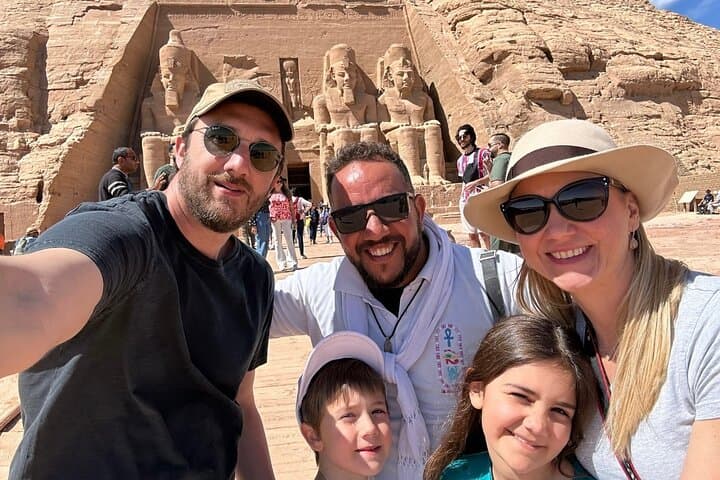
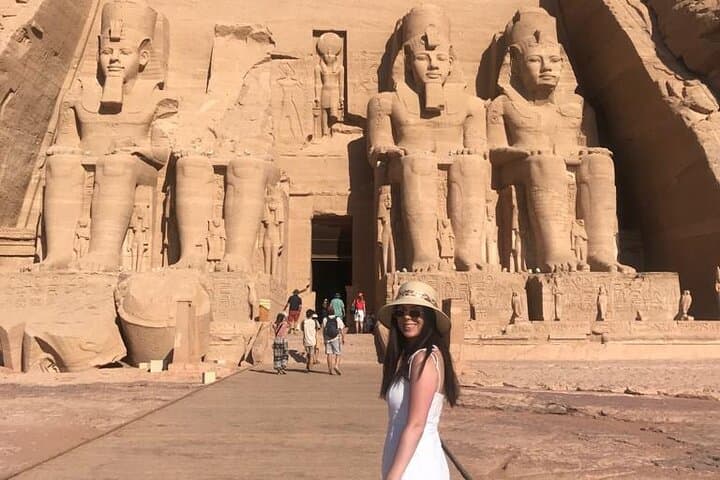
The sun is already angling high when the A/C vehicle pulls away from Aswan at dawn, and the road opens into the wide ochre sweep of the Egyptian desert. Three hours later the colossal façade of Abu Simbel cuts the skyline—four seated Ramses II figures staring out over Lake Nasser—an instant that makes the long drive worthwhile.
Verified experiences and guided adventures in the surrounding area.
Operated by Egypt Super Tours · Aswan, Aswan Governorate
The sun is already angling high when the A/C vehicle pulls away from Aswan at dawn, and the road opens into the wide ochre sweep of the Egyptian desert. Three hours later the colossal façade of Abu Simbel cuts the skyline—four seated Ramses II figures staring out over Lake Nasser—an instant that makes the long drive worthwhile.
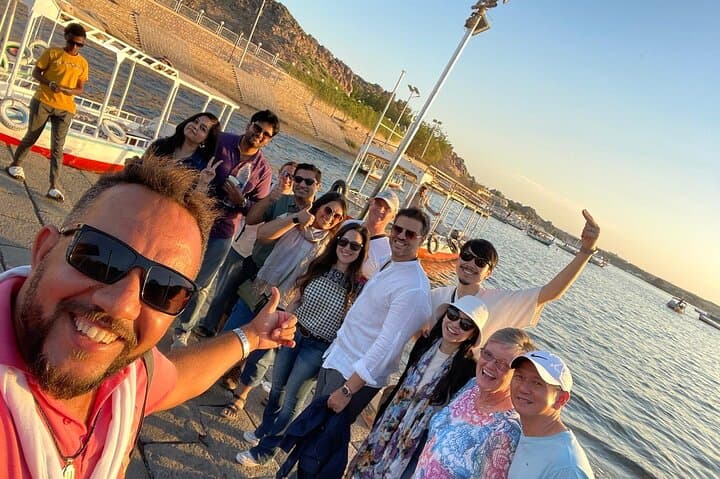
These rock-cut temples date to the 13th century BC and were famously moved, block by block, in the 1960s to avoid inundation by the Aswan High Dam. The area is geologically recent shoreline: sculpted sandstone and man-made terraces ring a modern reservoir where ancient stone meets engineered lake. After a guided 90–120 minute walk through the Great Temple and the smaller Temple of Hathor, the tour returns toward Aswan and transfers to a motorboat to cross to Soheil (the Nubian) Island.
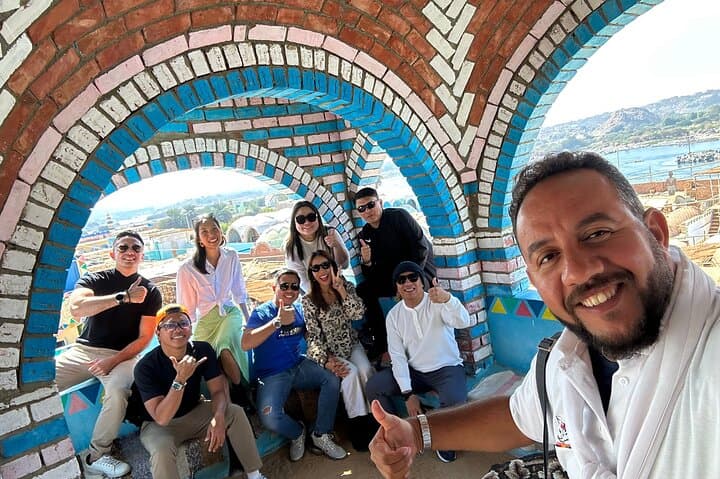
Nubian hospitality is practical and warm—expect a tea with mint or hibiscus, painted house fronts, and brief visits with local families and a community school. The boat ride is short and calm; the village is compact, with markets for small crafts.
Practical notes: the day is long (roughly 10–11 hours total, ~280 km round trip), temperatures can be extreme, and entrance fees at Abu Simbel are typically paid on-site by card. Bring sun protection, a light daypack, and sensible shoes for uneven stone surfaces. Timing matters—early departures beat heat and crowds and make the temple façades read best in soft morning light.
moderate.
10–11 hours.
Good stamina for a long travel day; minimal walking but uneven temple steps require steady balance
Expect approximately a 3‑hour one-way drive (~280 km round trip) on a paved desert highway; travel time can vary with traffic and stops.
Entrance fees to Abu Simbel are not always included and must often be paid on-site by credit/visa card—bring a backup payment method.
Yes, the tour includes a short motorboat transfer to Soheil Island to visit the Nubian Village and return to Aswan.
The operator notes wheelchair accessibility in parts, but temple interiors and uneven surfaces can limit full access—check specific needs with the provider in advance.
The Abu Simbel temples were carved under Ramses II in the New Kingdom and relocated in the 1960s in a UNESCO-led campaign to save them from flooding caused by the Aswan High Dam.
Tourism supports local Nubian craft economies but can stress small island infrastructure—minimize waste, avoid touching carvings, and buy locally made goods to benefit communities.
Egypt Super Tours operates guided outdoor trips and adventures with an emphasis on safety, stewardship, and memorable experiences.
The sun is already angling high when the A/C vehicle pulls away from Aswan at dawn, and the road opens into the wide ochre sweep of the Egyptian desert. Three hours later the colossal façade of Abu Simbel cuts the skyline—four seated Ramses II figures staring out over Lake Nasser—an instant that makes the long drive worthwhile.
The sun is already angling high when the A/C vehicle pulls away from Aswan at dawn, and the road opens into the wide ochre sweep of the Egyptian desert. Three hours later the colossal façade of Abu Simbel cuts the skyline—four seated Ramses II figures staring out over Lake Nasser—an instant that makes the long drive worthwhile.
These rock-cut temples date to the 13th century BC and were famously moved, block by block, in the 1960s to avoid inundation by the Aswan High Dam. The area is geologically recent shoreline: sculpted sandstone and man-made terraces ring a modern reservoir where ancient stone meets engineered lake. After a guided 90–120 minute walk through the Great Temple and the smaller Temple of Hathor, the tour returns toward Aswan and transfers to a motorboat to cross to Soheil (the Nubian) Island.
Nubian hospitality is practical and warm—expect a tea with mint or hibiscus, painted house fronts, and brief visits with local families and a community school. The boat ride is short and calm; the village is compact, with markets for small crafts.
Practical notes: the day is long (roughly 10–11 hours total, ~280 km round trip), temperatures can be extreme, and entrance fees at Abu Simbel are typically paid on-site by card. Bring sun protection, a light daypack, and sensible shoes for uneven stone surfaces. Timing matters—early departures beat heat and crowds and make the temple façades read best in soft morning light.