THE ADVENTURE COLLECTIVE® · Independent discovery and booking for outdoor travel

Drive south from Aswan to stand before the four colossal statues of Ramesses II at Abu Simbel. This full‑day road trip combines a desert drive, lake views, and a close look at one of Egypt’s most dramatic rock‑cut temples.
Drive south from Aswan to stand before the four colossal statues of Ramesses II at Abu Simbel. This full‑day road trip combines a desert drive, lake views, and a close look at one of Egypt’s most dramatic rock‑cut temples.
You roll south into a flat, sun-hardened landscape where the road seems to cut a straight line through ochre and salt-bright plains. After hours of desert ribbon and the occasional shimmer of Lake Nasser, the colossal façade of the Great Temple appears — four seated Ramesses II figures carved from the living cliff, their faces worn but unbowed by millennia.
Verified experiences and guided adventures in the surrounding area.
Operated by NORTH AFRICAN SHIPPING AND TOURISM COMPANY (NASCO TOURS) · Abu Simbel, Aswan Governorate
You roll south into a flat, sun-hardened landscape where the road seems to cut a straight line through ochre and salt-bright plains. After hours of desert ribbon and the occasional shimmer of Lake Nasser, the colossal façade of the Great Temple appears — four seated Ramesses II figures carved from the living cliff, their faces worn but unbowed by millennia.
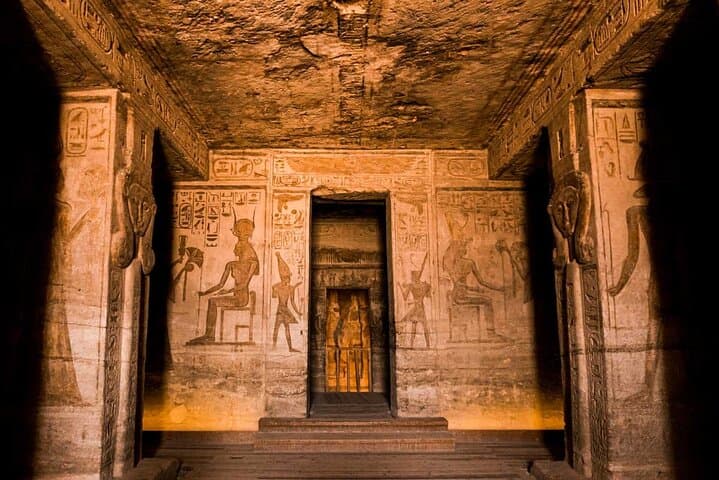
Carved around 1264 B.C., Abu Simbel was designed to impress: stone cut into iconography and axis so precise that on two days each year sunlight reaches the inner sanctuary to illuminate key statues. The complex sits on Nubian sandstone beside modern Lake Nasser; in the 1960s the temples were dismantled and moved block-by-block to escape the rising reservoir created by the Aswan High Dam — a rare engineering conservation success that altered both landscape and local settlement patterns.
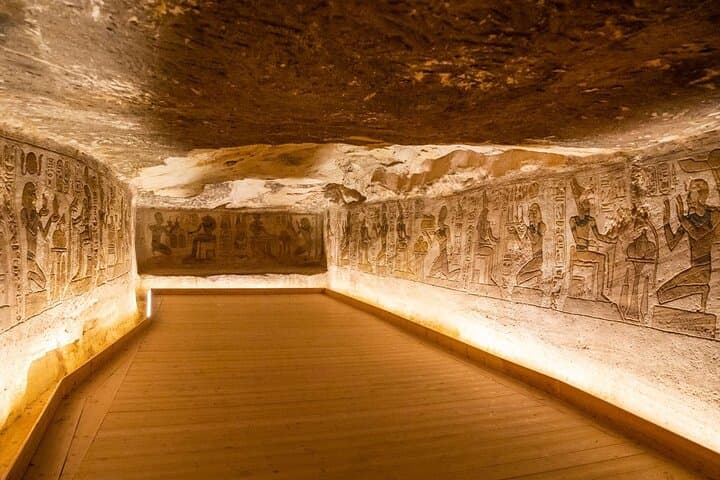
A guided road transfer from Aswan typically takes most of the day (about 8–9 hours door-to-door). You’ll spend time at both the Great Temple and the smaller Temple of Nefertari, walk across compacted sand and paved approaches, and hear stories of Pharaohs, seasonal light alignments, and the 1960s relocation project. Expect strong sun, minimal shade, and interpretive stops led by your guide.
Practicalities: start early to avoid midday heat, carry 2–3 liters of water, wear sturdy closed shoes for uneven thresholds and temple steps, and bring sun protection and a charged camera. Follow site rules — do not climb on reliefs or touch carved faces — and allow time on the return drive for photos of the lakeshore and roadside vistas.
easy.
8–9 hours.
Minimal fitness required — able to enter/exit vehicle and walk short distances on uneven surfaces
The one‑way drive is roughly 3–3.5 hours (about 280 km) along a paved road; expect the full tour to be 8–9 hours including stops.
Policies vary; some operators handle tickets while others expect you to pay on site — check the tour inclusions before booking.
Traditional alignment days are around February 22 and October 22, when sunlight reaches the inner sanctuary — these dates are best verified locally each year.
Yes — you can drive or arrange private transfer, but many travelers choose guided trips for logistics, local context, and handling ticketing and timing.
Constructed under Ramesses II in the 13th century BC and relocated in the 1960s to save it from the Aswan High Dam reservoir, Abu Simbel combines imperial propaganda and astronomical alignment.
The temple’s relocation was a major conservation effort; visitors should stick to paths, avoid touching reliefs, and follow guide instructions to minimize wear.
NORTH AFRICAN SHIPPING AND TOURISM COMPANY (NASCO TOURS) operates guided outdoor trips and adventures with an emphasis on safety, stewardship, and memorable experiences.
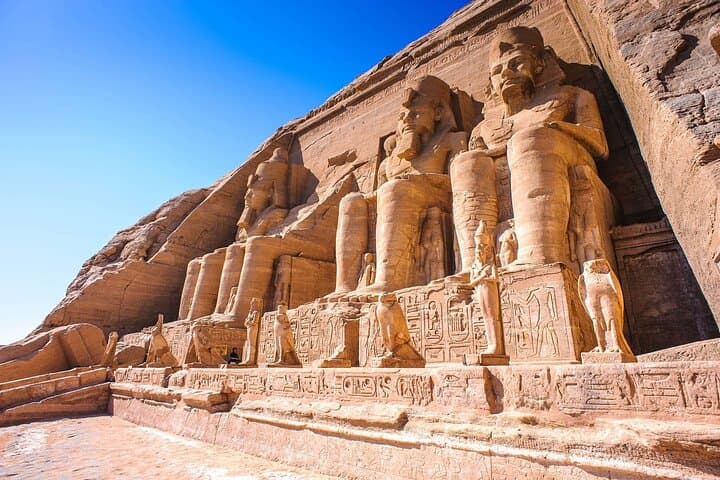
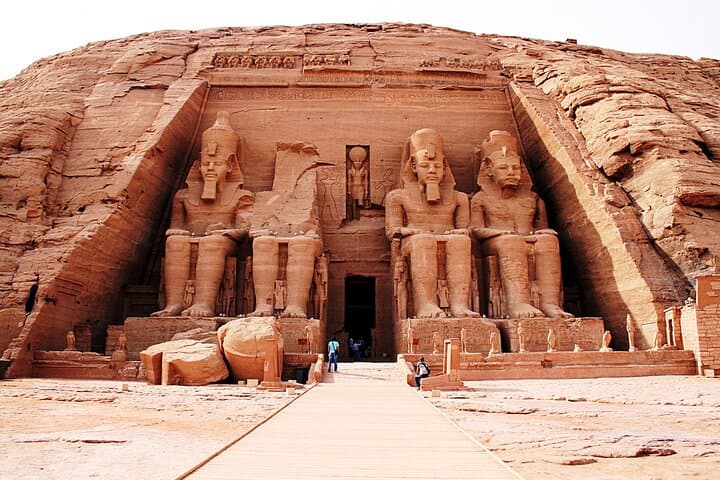
You roll south into a flat, sun-hardened landscape where the road seems to cut a straight line through ochre and salt-bright plains. After hours of desert ribbon and the occasional shimmer of Lake Nasser, the colossal façade of the Great Temple appears — four seated Ramesses II figures carved from the living cliff, their faces worn but unbowed by millennia.
You roll south into a flat, sun-hardened landscape where the road seems to cut a straight line through ochre and salt-bright plains. After hours of desert ribbon and the occasional shimmer of Lake Nasser, the colossal façade of the Great Temple appears — four seated Ramesses II figures carved from the living cliff, their faces worn but unbowed by millennia.
Carved around 1264 B.C., Abu Simbel was designed to impress: stone cut into iconography and axis so precise that on two days each year sunlight reaches the inner sanctuary to illuminate key statues. The complex sits on Nubian sandstone beside modern Lake Nasser; in the 1960s the temples were dismantled and moved block-by-block to escape the rising reservoir created by the Aswan High Dam — a rare engineering conservation success that altered both landscape and local settlement patterns.
A guided road transfer from Aswan typically takes most of the day (about 8–9 hours door-to-door). You’ll spend time at both the Great Temple and the smaller Temple of Nefertari, walk across compacted sand and paved approaches, and hear stories of Pharaohs, seasonal light alignments, and the 1960s relocation project. Expect strong sun, minimal shade, and interpretive stops led by your guide.
Practicalities: start early to avoid midday heat, carry 2–3 liters of water, wear sturdy closed shoes for uneven thresholds and temple steps, and bring sun protection and a charged camera. Follow site rules — do not climb on reliefs or touch carved faces — and allow time on the return drive for photos of the lakeshore and roadside vistas.