THE ADVENTURE COLLECTIVE® · Independent discovery and booking for outdoor travel

See Abu Simbel’s monumental temples on a private day trip from Aswan. This full-day excursion includes hotel pickup, air-conditioned transport and guided time at the Great Temple and the Small Temple of Nefertari.
See Abu Simbel’s monumental temples on a private day trip from Aswan. This full-day excursion includes hotel pickup, air-conditioned transport and guided time at the Great Temple and the Small Temple of Nefertari.
You arrive before the sun has burned the desert flat, the road unspooling under the bus as heat waits at the horizon. Abu Simbel’s colossal façades rise out of ochre rock like a deliberate interruption to the plain — four seated figures of Ramesses II gazing outward while the smaller temple of Nefertari keeps a quieter watch.
Verified experiences and guided adventures in the surrounding area.
Operated by Marwa Tours · Abu Simbel, Aswan Governorate
You arrive before the sun has burned the desert flat, the road unspooling under the bus as heat waits at the horizon. Abu Simbel’s colossal façades rise out of ochre rock like a deliberate interruption to the plain — four seated figures of Ramesses II gazing outward while the smaller temple of Nefertari keeps a quieter watch.
Carved in the 13th century BCE during Ramesses II’s reign, Abu Simbel was a political signal as much as a religious site. In the 1960s the whole complex was moved piece by piece to higher ground to save it from the rising waters of Lake Nasser — an engineering rescue now part of the site’s modern story.
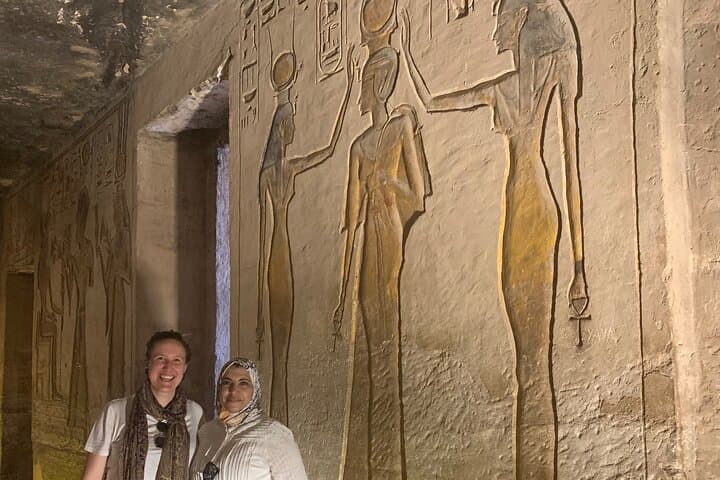
Geology here is sun-baked sandstone and Nile-fed sediment; the temples’ interiors hold crisp bas-reliefs that survive because the stone resists wind-blown sand. Local culture still orients around river time: boat crews, guides from Aswan, and the conservation teams that manage visitor flow.
Practically, expect a full-day excursion from Aswan (about 3–4 hours round trip by road each way). The typical operator provides air-conditioned transport, entry tickets, and a guide. Arrive early for cooler light and to see the temple’s inner sanctum illuminated — the light alignment that marks certain days is subtle but dramatic. Wear sun protection, bring 2–3 liters of water, and plan on gentle walking on level stone and steps; the site is largely accessible. Photography is allowed but be respectful inside sacred spaces. If you have mobility needs, verify wheelchair-access details with the operator in advance. This tour combines hard history, engineered rescue, and the blunt clarity of desert light — a compact day that rewards timing and sensible preparation.
easy.
10 hours (door-to-door).
Light—suitable for most people able to walk short distances and climb a few steps
Expect a 10-hour round trip including roughly 3–4 hours of driving each way and 1–2 hours total at the two temples.
This operator’s tour includes entry tickets; confirm at booking if you need a combined pass for both temples.
The tour lists wheelchair accessibility; contact the operator before booking to confirm vehicle pickup and on-site ramp availability.
Early morning is best for cooler temperatures and softer light; late afternoon is also pleasant but busier.
Built under Ramesses II in the 13th century BCE and relocated in the 1960s to save the complex from Lake Nasser after the Aswan High Dam, Abu Simbel is both ancient monument and modern conservation success.
Visitor numbers are managed to protect delicate reliefs; stick to marked paths, avoid touching carvings, and support guides who prioritize site preservation.
Marwa Tours operates guided outdoor trips and adventures with an emphasis on safety, stewardship, and memorable experiences.
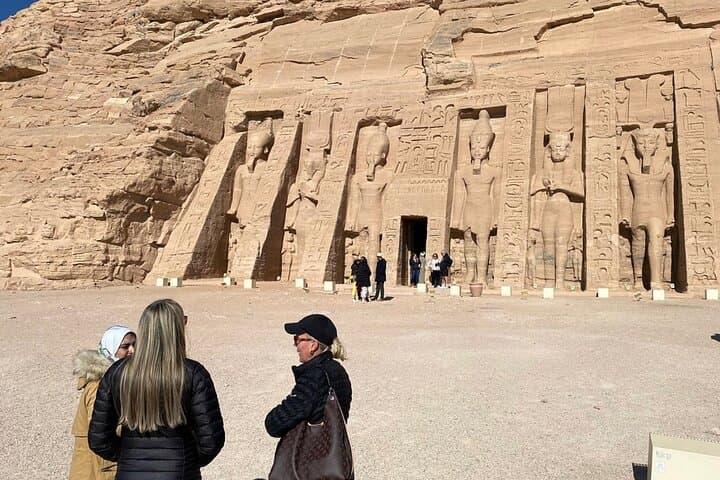
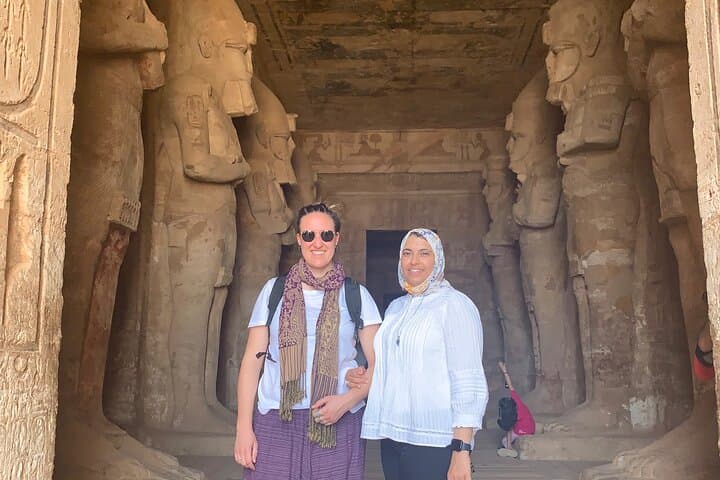
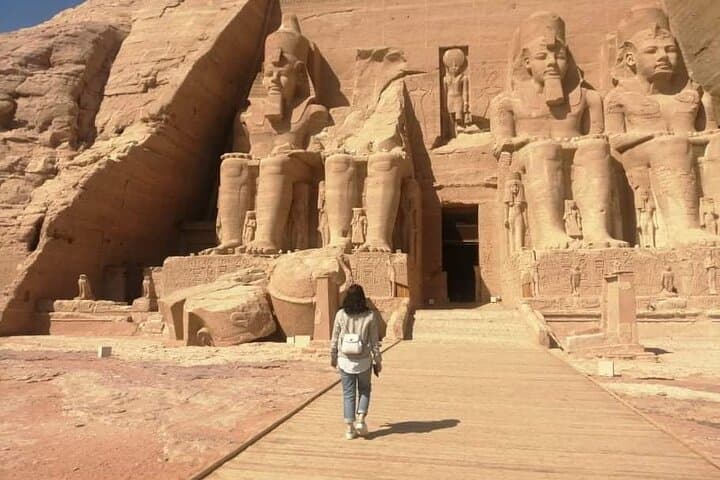
You arrive before the sun has burned the desert flat, the road unspooling under the bus as heat waits at the horizon. Abu Simbel’s colossal façades rise out of ochre rock like a deliberate interruption to the plain — four seated figures of Ramesses II gazing outward while the smaller temple of Nefertari keeps a quieter watch.
You arrive before the sun has burned the desert flat, the road unspooling under the bus as heat waits at the horizon. Abu Simbel’s colossal façades rise out of ochre rock like a deliberate interruption to the plain — four seated figures of Ramesses II gazing outward while the smaller temple of Nefertari keeps a quieter watch.
Carved in the 13th century BCE during Ramesses II’s reign, Abu Simbel was a political signal as much as a religious site. In the 1960s the whole complex was moved piece by piece to higher ground to save it from the rising waters of Lake Nasser — an engineering rescue now part of the site’s modern story.
Geology here is sun-baked sandstone and Nile-fed sediment; the temples’ interiors hold crisp bas-reliefs that survive because the stone resists wind-blown sand. Local culture still orients around river time: boat crews, guides from Aswan, and the conservation teams that manage visitor flow.
Practically, expect a full-day excursion from Aswan (about 3–4 hours round trip by road each way). The typical operator provides air-conditioned transport, entry tickets, and a guide. Arrive early for cooler light and to see the temple’s inner sanctum illuminated — the light alignment that marks certain days is subtle but dramatic. Wear sun protection, bring 2–3 liters of water, and plan on gentle walking on level stone and steps; the site is largely accessible. Photography is allowed but be respectful inside sacred spaces. If you have mobility needs, verify wheelchair-access details with the operator in advance. This tour combines hard history, engineered rescue, and the blunt clarity of desert light — a compact day that rewards timing and sensible preparation.