THE ADVENTURE COLLECTIVE® · Independent discovery and booking for outdoor travel

Fly from Aswan and spend a focused day at Abu Simbel’s monumental temples—Ramses II’s colossal façade, the intimate Nefertari shrine, and the story of their 1960s rescue from rising waters. Ideal for travelers short on time who still want an expert-led archaeological experience.
Fly from Aswan and spend a focused day at Abu Simbel’s monumental temples—Ramses II’s colossal façade, the intimate Nefertari shrine, and the story of their 1960s rescue from rising waters. Ideal for travelers short on time who still want an expert-led archaeological experience.
You step out of the small aircraft onto the sun-scorched apron and the desert stretches away like a silent ocean; the temples of Abu Simbel rise ahead, faces carved to stare across millennia. The giant seated figures of Ramses II dominate the approach, their stone eyes fixed on the horizon where Lake Nasser glints.
Verified experiences and guided adventures in the surrounding area.
Operated by Egypt Lovely Tours · Abu Simbel, Aswan Governorate
You step out of the small aircraft onto the sun-scorched apron and the desert stretches away like a silent ocean; the temples of Abu Simbel rise ahead, faces carved to stare across millennia. The giant seated figures of Ramses II dominate the approach, their stone eyes fixed on the horizon where Lake Nasser glints.
Built in the 13th century BCE and famously relocated in the 1960s during the Aswan High Dam project, Abu Simbel’s twin complexes — the Great Temple of Ramses II and the smaller Temple of Nefertari — are feats of pharaonic engineering and modern conservation. The façades, reliefs and inner sanctums retain original pigment and ritual panels, including depictions of the Battle of Kadesh and sun-aligned chambers.
Geologically the site sits on Eocene sandstone near the man-made Lake Nasser; the desert’s hard light sharpens reliefs and highlights tool marks left by ancient artisans. Culturally, the site reflects imperial propaganda and royal cult worship; your Egyptologist guide will unpack stories of kingship, religion and the 20th-century international effort that saved the temples.
Practically: the excursion runs about six hours total—air time is roughly 30–40 minutes each way with transfers from Aswan, guided exploration on-site, and return. Wear sun-protective clothing, closed shoes for uneven stone surfaces, and bring water and a camera (observe site photography rules). Expect short walks on flat but exposed terrain and limited shade. The tour condenses remote archaeological access into a single day, making it an efficient option for travelers based in Aswan wanting a focused, expert-led visit.
easy.
6 hours.
Suitable for most travelers with basic mobility; involves short, flat walks and standing inside the temples.
The one-way flight is about 30–40 minutes; total tour time including transfers and sightseeing is around six hours.
Admission is generally not included unless specified—check your booking details; the tour includes transfers and a local guide.
The terrain is mostly flat but includes steps and uneven stone; limited accessibility inside some temple chambers may present challenges.
Photography is usually allowed, but follow any site-specific rules and avoid using flash if requested by your guide or signage.
Constructed by Ramses II in the 13th century BCE and relocated stone-by-stone in the 1960s to avoid inundation from the Aswan High Dam, Abu Simbel combines ancient royal cult architecture with modern international conservation.
The 1960s UNESCO-led salvage showed global cooperation; continue to protect the site by following rules, avoiding touching reliefs, and supporting local guides and vendors.
Egypt Lovely Tours operates guided outdoor trips and adventures with an emphasis on safety, stewardship, and memorable experiences.

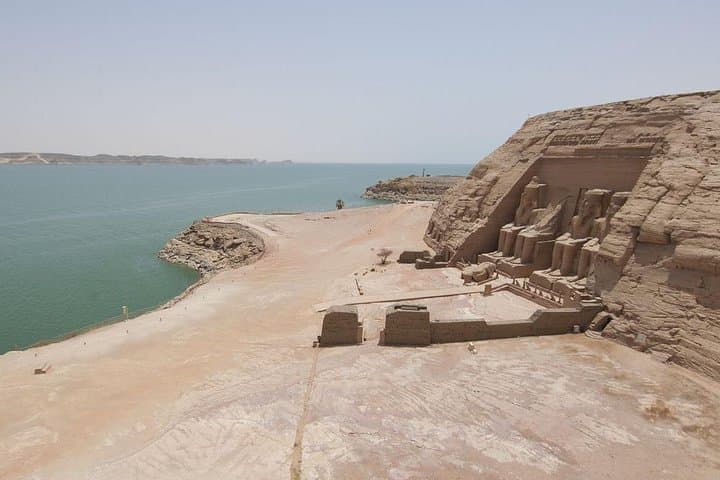
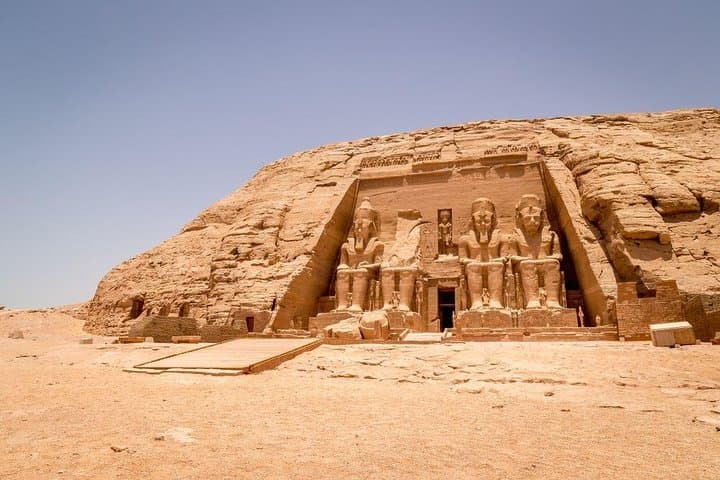
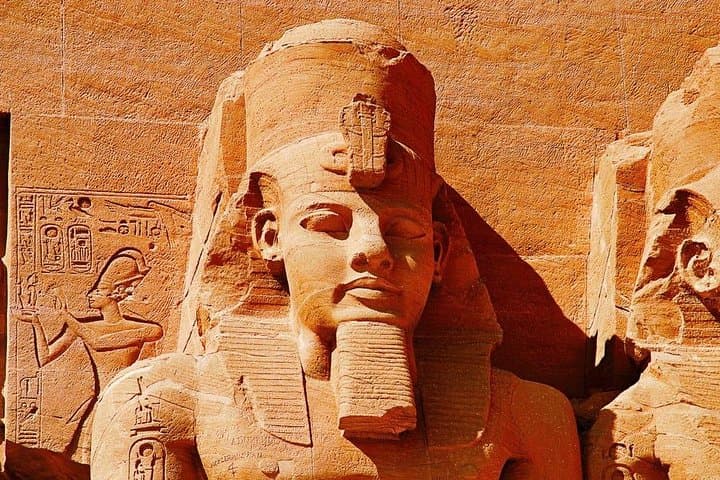
You step out of the small aircraft onto the sun-scorched apron and the desert stretches away like a silent ocean; the temples of Abu Simbel rise ahead, faces carved to stare across millennia. The giant seated figures of Ramses II dominate the approach, their stone eyes fixed on the horizon where Lake Nasser glints.
You step out of the small aircraft onto the sun-scorched apron and the desert stretches away like a silent ocean; the temples of Abu Simbel rise ahead, faces carved to stare across millennia. The giant seated figures of Ramses II dominate the approach, their stone eyes fixed on the horizon where Lake Nasser glints.
Built in the 13th century BCE and famously relocated in the 1960s during the Aswan High Dam project, Abu Simbel’s twin complexes — the Great Temple of Ramses II and the smaller Temple of Nefertari — are feats of pharaonic engineering and modern conservation. The façades, reliefs and inner sanctums retain original pigment and ritual panels, including depictions of the Battle of Kadesh and sun-aligned chambers.
Geologically the site sits on Eocene sandstone near the man-made Lake Nasser; the desert’s hard light sharpens reliefs and highlights tool marks left by ancient artisans. Culturally, the site reflects imperial propaganda and royal cult worship; your Egyptologist guide will unpack stories of kingship, religion and the 20th-century international effort that saved the temples.
Practically: the excursion runs about six hours total—air time is roughly 30–40 minutes each way with transfers from Aswan, guided exploration on-site, and return. Wear sun-protective clothing, closed shoes for uneven stone surfaces, and bring water and a camera (observe site photography rules). Expect short walks on flat but exposed terrain and limited shade. The tour condenses remote archaeological access into a single day, making it an efficient option for travelers based in Aswan wanting a focused, expert-led visit.