THE ADVENTURE COLLECTIVE® · Independent discovery and booking for outdoor travel

A swift flight from Aswan puts you face-to-face with Ramses II's towering temples at Abu Simbel. This private day trip combines efficient logistics with a guided exploration of two relocated rock-cut temples—ideal for travelers short on time but hungry for history.
A swift flight from Aswan puts you face-to-face with Ramses II's towering temples at Abu Simbel. This private day trip combines efficient logistics with a guided exploration of two relocated rock-cut temples—ideal for travelers short on time but hungry for history.
You step off the short domestic flight and the desert greets you like a living wall: flat plains of sun-baked stone leading to the monumental faces of Ramses II, four colossi narrowing toward the temple entrance. The air is dry and bright; shadows from the statues fall across the sand, and the scale of human ambition becomes immediate.
Verified experiences and guided adventures in the surrounding area.
Operated by Dahab Safari Day Tours · Abu Simbel, Aswan Governorate
You step off the short domestic flight and the desert greets you like a living wall: flat plains of sun-baked stone leading to the monumental faces of Ramses II, four colossi narrowing toward the temple entrance. The air is dry and bright; shadows from the statues fall across the sand, and the scale of human ambition becomes immediate.
Carved into Nubian sandstone in the 13th century BCE, Abu Simbel was both a display of pharaonic power and an astronomical stage. The pair of rock-cut temples — the Great Temple of Ramses II and the smaller Temple of Nefertari — were physically moved in the 1960s to higher ground to save them from Lake Nasser after the Aswan High Dam's construction, a feat of mid-20th-century engineering and international cooperation.
The landscape is simple geology and ancient craft: layered sandstone, sun-polished reliefs, and the slow trade of camel caravans that once ran these routes. Local Nubian culture is visible in craft stalls and the hospitality of guides who translate the stones into human stories.
Practically, the day is a logistics exercise as much as a visit: included hotel pickup in Aswan, a scheduled flight, a guided walkthrough, and return transfers. Expect limited time on site — typically a couple of hours — so prioritize the Great Temple interior and the alignment niches. Bring sun protection, plenty of water, and comfortable shoes for uneven stone and shallow steps. Early flights or late afternoons tame the heat and sharpen the light for photography. Respect signage: do not touch reliefs and follow your guide to minimize wear on these relocated treasures.
easy.
8 hours.
Suitable for most fitness levels; requires walking on uneven stone and climbing several short stair sections.
Yes — the tour includes round‑trip domestic flights between Aswan and Abu Simbel as well as transfers, per the itinerary.
Typical on-site time is around 1.5–2.5 hours within an 8‑hour total tour window; the rest is flights and transfers.
Yes — entrance fees to Abu Simbel and a qualified Egyptologist guide are included in the package.
The tour is rated easy, but there are steps and uneven surfaces; travelers with limited mobility should check specific accessibility needs with the operator beforehand.
Abu Simbel was carved under Ramses II in the 13th century BCE and was relocated in the 1960s during an international UNESCO effort to save it from rising waters after the Aswan High Dam.
The site receives heavy visitor traffic; follow rules, avoid touching reliefs, and consider supporting local guides and licensed vendors to help preserve the site and local economy.
Dahab Safari Day Tours operates guided outdoor trips and adventures with an emphasis on safety, stewardship, and memorable experiences.



You step off the short domestic flight and the desert greets you like a living wall: flat plains of sun-baked stone leading to the monumental faces of Ramses II, four colossi narrowing toward the temple entrance. The air is dry and bright; shadows from the statues fall across the sand, and the scale of human ambition becomes immediate.
You step off the short domestic flight and the desert greets you like a living wall: flat plains of sun-baked stone leading to the monumental faces of Ramses II, four colossi narrowing toward the temple entrance. The air is dry and bright; shadows from the statues fall across the sand, and the scale of human ambition becomes immediate.
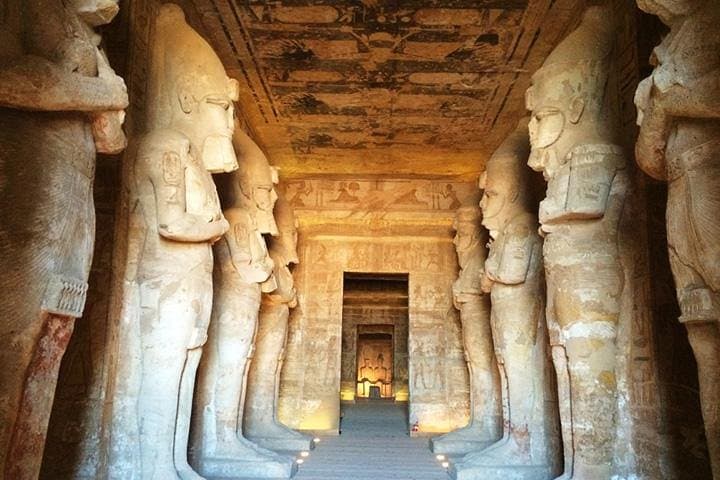
Carved into Nubian sandstone in the 13th century BCE, Abu Simbel was both a display of pharaonic power and an astronomical stage. The pair of rock-cut temples — the Great Temple of Ramses II and the smaller Temple of Nefertari — were physically moved in the 1960s to higher ground to save them from Lake Nasser after the Aswan High Dam's construction, a feat of mid-20th-century engineering and international cooperation.
The landscape is simple geology and ancient craft: layered sandstone, sun-polished reliefs, and the slow trade of camel caravans that once ran these routes. Local Nubian culture is visible in craft stalls and the hospitality of guides who translate the stones into human stories.
Practically, the day is a logistics exercise as much as a visit: included hotel pickup in Aswan, a scheduled flight, a guided walkthrough, and return transfers. Expect limited time on site — typically a couple of hours — so prioritize the Great Temple interior and the alignment niches. Bring sun protection, plenty of water, and comfortable shoes for uneven stone and shallow steps. Early flights or late afternoons tame the heat and sharpen the light for photography. Respect signage: do not touch reliefs and follow your guide to minimize wear on these relocated treasures.