THE ADVENTURE COLLECTIVE® · Independent discovery and booking for outdoor travel

A long but rewarding day: fly from Cairo to Aswan, transfer by private vehicle to Abu Simbel, and spend focused time at Ramesses II’s monumental temples. Early start and careful planning make this one of Egypt’s most unforgettable single-day cultural excursions.
A long but rewarding day: fly from Cairo to Aswan, transfer by private vehicle to Abu Simbel, and spend focused time at Ramesses II’s monumental temples. Early start and careful planning make this one of Egypt’s most unforgettable single-day cultural excursions.
You arrive before sunrise: the plane descends over the ochre sweep of southern Egypt, and by the time the convoy reaches Abu Simbel the carved faces of Ramesses II are catching the first hard light. The air is dry, the cliffs sharp-edged, and the temples sit like monumental statements cut into the rock—bold geometry against the flat of Lake Nasser.
Verified experiences and guided adventures in the surrounding area.
Operated by Egyptian Daily Tours · Abu Simbel, Aswan Governorate
You arrive before sunrise: the plane descends over the ochre sweep of southern Egypt, and by the time the convoy reaches Abu Simbel the carved faces of Ramesses II are catching the first hard light. The air is dry, the cliffs sharp-edged, and the temples sit like monumental statements cut into the rock—bold geometry against the flat of Lake Nasser.
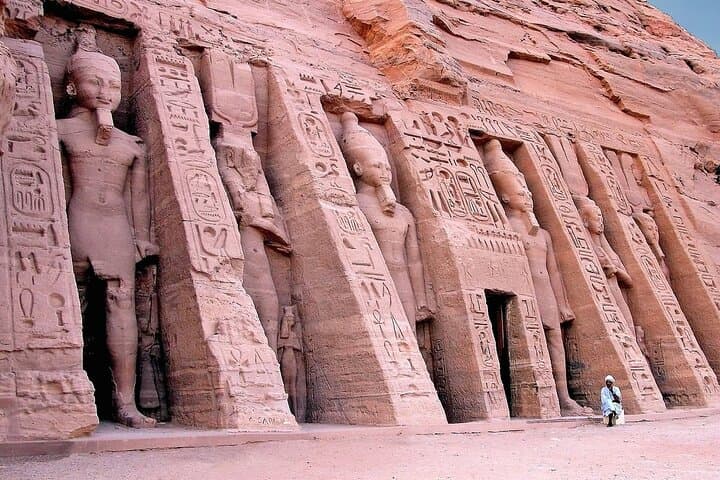
Built in the 13th century BCE, the twin temples of Abu Simbel celebrate Ramesses II and his queen Nefertari. The site’s modern story is equally dramatic: in the 1960s UNESCO coordinated the relocation of both temples to avoid inundation from the Aswan High Dam, an engineering feat that moved ancient stone blocks and reset the sunlight alignment that lights the inner sanctum twice a year.
Expect straightforward walking on paved ramps and shaded interior rooms where reliefs detail war, diplomacy, and divine kingship. Guides commonly explain the sun-god alignment, the temple’s original river access, and the Roman-era graffiti left by travelers centuries ago.
Practical side: this is a long day—flights to Aswan, a three-hour road transfer, and guided time at the site—so plan for an early wake-up, secure passport documents, and limited on-site services. Bring layered clothing for cool mornings and hot midday, plenty of water, sun protection, and comfortable shoes for short climbs and stairs. Photography is allowed in most areas, but follow guide directions inside the temple. For travelers who want maximum comfort, choose the included private transfers and flight option to compress travel time and return to Cairo the same night.
easy.
About 15 hours (door-to-door).
Suitable for most fitness levels; requires standing, short stair climbs, and a few hundred meters of walking at the site.
The guided visit is typically 2–4 hours on this itinerary, allowing time to see both temples and key reliefs.
This itinerary includes transfers and guide services; visitors should confirm whether official site admission is covered—many private tours include it.
The site has ramps but also steps; consult the operator in advance—some areas may be difficult for wheelchair users.
Photography is generally allowed, but flash may be restricted in certain chambers—follow the guide’s instructions.
Abu Simbel’s two rock-cut temples date to Ramesses II’s reign (c. 1279–1213 BCE) and were relocated in the 1960s to prevent submersion by Lake Nasser after the Aswan High Dam was built.
UNESCO’s relocation preserved the monuments but ongoing visitor pressure and climate require managed access—stick to marked paths and avoid touching reliefs.
Egyptian Daily Tours operates guided outdoor trips and adventures with an emphasis on safety, stewardship, and memorable experiences.
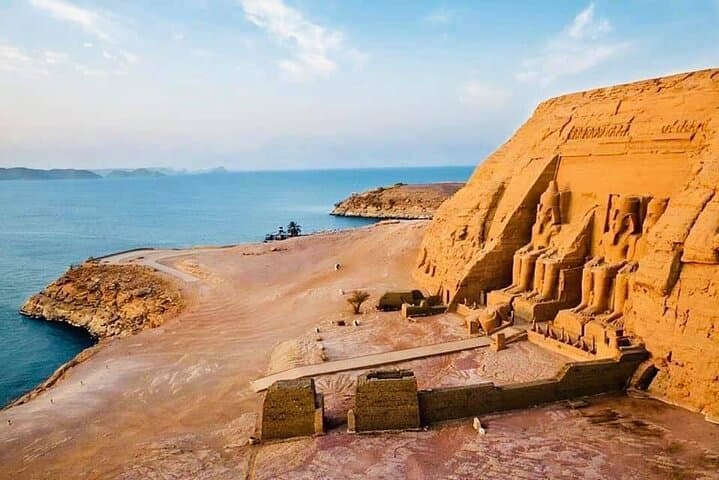
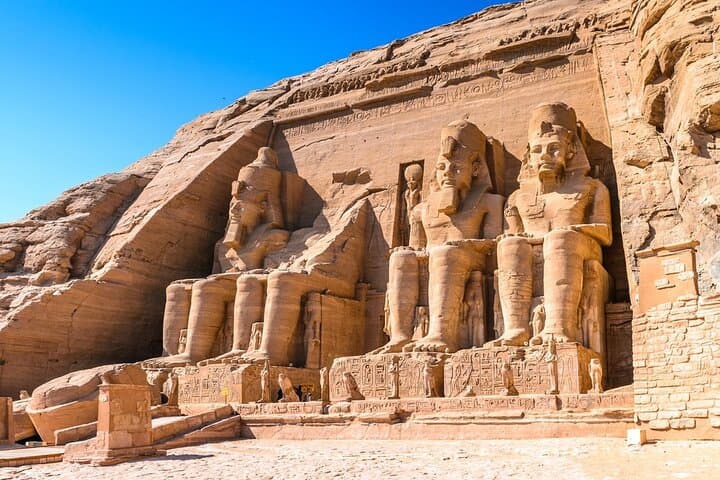
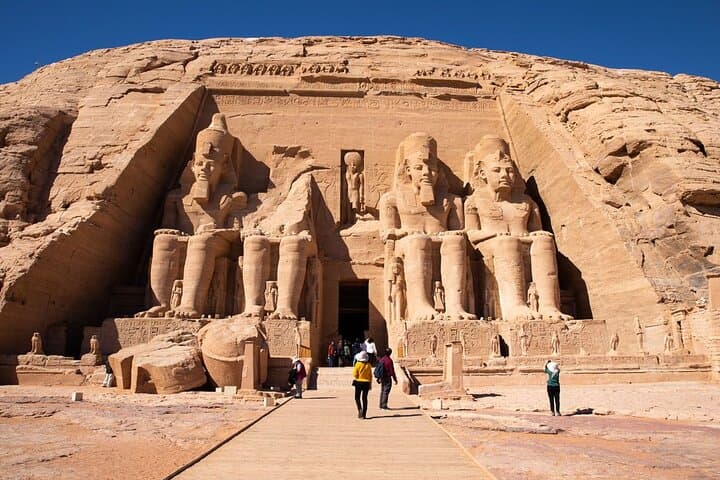
You arrive before sunrise: the plane descends over the ochre sweep of southern Egypt, and by the time the convoy reaches Abu Simbel the carved faces of Ramesses II are catching the first hard light. The air is dry, the cliffs sharp-edged, and the temples sit like monumental statements cut into the rock—bold geometry against the flat of Lake Nasser.
You arrive before sunrise: the plane descends over the ochre sweep of southern Egypt, and by the time the convoy reaches Abu Simbel the carved faces of Ramesses II are catching the first hard light. The air is dry, the cliffs sharp-edged, and the temples sit like monumental statements cut into the rock—bold geometry against the flat of Lake Nasser.
Built in the 13th century BCE, the twin temples of Abu Simbel celebrate Ramesses II and his queen Nefertari. The site’s modern story is equally dramatic: in the 1960s UNESCO coordinated the relocation of both temples to avoid inundation from the Aswan High Dam, an engineering feat that moved ancient stone blocks and reset the sunlight alignment that lights the inner sanctum twice a year.
Expect straightforward walking on paved ramps and shaded interior rooms where reliefs detail war, diplomacy, and divine kingship. Guides commonly explain the sun-god alignment, the temple’s original river access, and the Roman-era graffiti left by travelers centuries ago.
Practical side: this is a long day—flights to Aswan, a three-hour road transfer, and guided time at the site—so plan for an early wake-up, secure passport documents, and limited on-site services. Bring layered clothing for cool mornings and hot midday, plenty of water, sun protection, and comfortable shoes for short climbs and stairs. Photography is allowed in most areas, but follow guide directions inside the temple. For travelers who want maximum comfort, choose the included private transfers and flight option to compress travel time and return to Cairo the same night.