THE ADVENTURE COLLECTIVE® · Independent discovery and booking for outdoor travel

A full-day group excursion from Aswan to Abu Simbel delivers monumental rock-cut temples, a dramatic relocation story, and a long but scenic drive along the Nile’s southern edge. Ideal for history-focused travelers who don’t mind early starts.
A full-day group excursion from Aswan to Abu Simbel delivers monumental rock-cut temples, a dramatic relocation story, and a long but scenic drive along the Nile’s southern edge. Ideal for history-focused travelers who don’t mind early starts.
The sun burns low over the Nubian plain as your bus eases onto the highway toward Abu Simbel, three hours of flat desert and limestone folding into the horizon. By midmorning the facade of Ramesses II rises out of ochre rock — four colossal seated pharaohs watching the lake — and the scale of ancient Egypt becomes physical: stone faces three stories tall, hieroglyphs carved into sheltered recesses.
Verified experiences and guided adventures in the surrounding area.
Operated by Egyptian Felucca ride On the Nile · Abu Simbel, Aswan Governorate
The sun burns low over the Nubian plain as your bus eases onto the highway toward Abu Simbel, three hours of flat desert and limestone folding into the horizon. By midmorning the facade of Ramesses II rises out of ochre rock — four colossal seated pharaohs watching the lake — and the scale of ancient Egypt becomes physical: stone faces three stories tall, hieroglyphs carved into sheltered recesses.
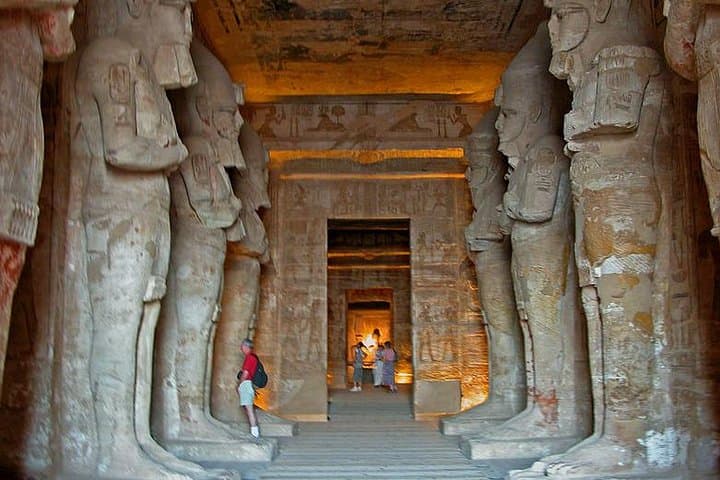
Built in the 13th century BCE by Ramesses II and accompanied by the smaller Temple of Nefertari (Hathor), Abu Simbel was disassembled and raised stone-by-stone in the 1960s to escape Lake Nasser after the Aswan High Dam. The relocation is as much a part of the site’s modern story as its sun-alignment event, when twice yearly light penetrates to the inner sanctuary.
Expect a guided, largely seated day: a roughly 10–11 hour round trip from Aswan with hotel pickup, a group bus, and on-site walking between temples and viewpoints. The terrain at the temples is flat but exposed — bring sun protection and fluids. Photography is straightforward but avoid touching reliefs and follow path markers; the site is carefully managed to protect delicate surfaces.
Practical notes: passport details are required at booking and bottle water is commonly provided. If you’re chasing the solar alignment, plan travel on or near Feb 22 or Oct 22; otherwise arrive prepared for a long drive with rewarding, close-up archaeology and Lake Nasser’s broad horizon as your backdrop.
easy.
10–11 hours.
Suitable for most fitness levels — mostly seated transfer with short, flat walks and stairs at the temples; be prepared for long periods on a bus.
Expect about 3 hours each way by road in a private A/C vehicle; total tour time is typically 10–11 hours including stops.
Entrance fees are not always included—check your booking details. If not included, you’ll pay the site fee on arrival or via your operator.
The inner sanctuary alignment occurs around Feb 22 and Oct 22; most day tours visit outside those dates, so don’t rely on seeing the solar phenomenon unless booked for those specific dates.
Yes — the walking is short and the tour is described as suitable for all fitness levels, but long transfer times may be tiring for very young children or those with mobility limits.
The twin temples were carved in the 13th century BCE for Ramesses II and Nefertari; in the 1960s they were relocated to higher ground to prevent submersion from Lake Nasser following construction of the Aswan High Dam.
The 1960s relocation remains one of archaeology’s largest preservation projects; visitors should stick to marked paths and avoid touching reliefs to minimize wear on ancient stone.
Egyptian Felucca ride On the Nile operates guided outdoor trips and adventures with an emphasis on safety, stewardship, and memorable experiences.
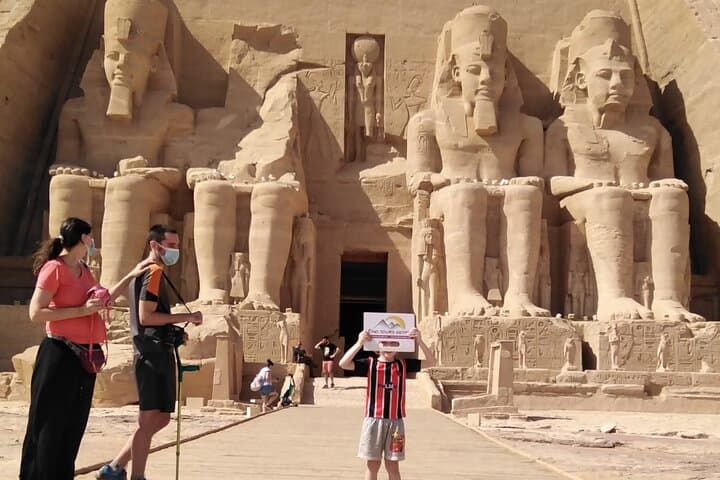
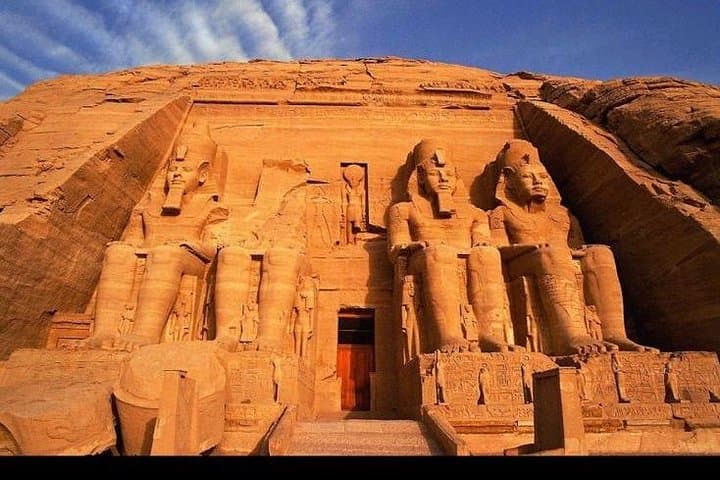
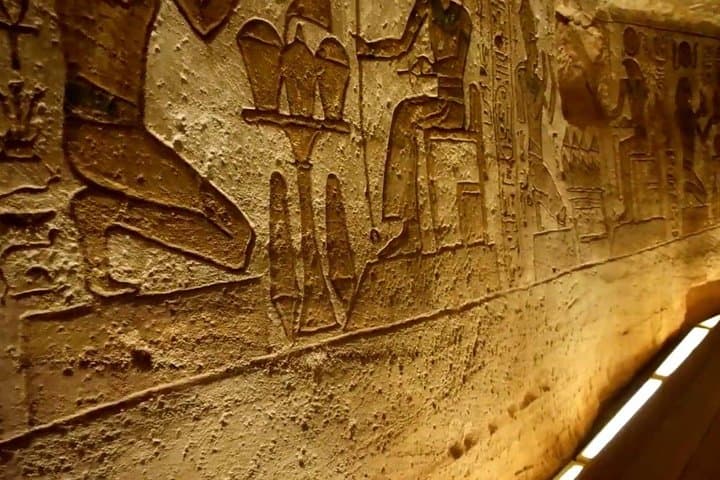
The sun burns low over the Nubian plain as your bus eases onto the highway toward Abu Simbel, three hours of flat desert and limestone folding into the horizon. By midmorning the facade of Ramesses II rises out of ochre rock — four colossal seated pharaohs watching the lake — and the scale of ancient Egypt becomes physical: stone faces three stories tall, hieroglyphs carved into sheltered recesses.
The sun burns low over the Nubian plain as your bus eases onto the highway toward Abu Simbel, three hours of flat desert and limestone folding into the horizon. By midmorning the facade of Ramesses II rises out of ochre rock — four colossal seated pharaohs watching the lake — and the scale of ancient Egypt becomes physical: stone faces three stories tall, hieroglyphs carved into sheltered recesses.
Built in the 13th century BCE by Ramesses II and accompanied by the smaller Temple of Nefertari (Hathor), Abu Simbel was disassembled and raised stone-by-stone in the 1960s to escape Lake Nasser after the Aswan High Dam. The relocation is as much a part of the site’s modern story as its sun-alignment event, when twice yearly light penetrates to the inner sanctuary.
Expect a guided, largely seated day: a roughly 10–11 hour round trip from Aswan with hotel pickup, a group bus, and on-site walking between temples and viewpoints. The terrain at the temples is flat but exposed — bring sun protection and fluids. Photography is straightforward but avoid touching reliefs and follow path markers; the site is carefully managed to protect delicate surfaces.
Practical notes: passport details are required at booking and bottle water is commonly provided. If you’re chasing the solar alignment, plan travel on or near Feb 22 or Oct 22; otherwise arrive prepared for a long drive with rewarding, close-up archaeology and Lake Nasser’s broad horizon as your backdrop.