THE ADVENTURE COLLECTIVE® · Independent discovery and booking for outdoor travel

A full-day minibus trip from Aswan delivers you to the monumental temples of Ramses II and Hathor at Abu Simbel. Expect a long but smooth drive, guided insights into the UNESCO relocation, and time inside two of Egypt’s most photogenic ancient sanctuaries.
A full-day minibus trip from Aswan delivers you to the monumental temples of Ramses II and Hathor at Abu Simbel. Expect a long but smooth drive, guided insights into the UNESCO relocation, and time inside two of Egypt’s most photogenic ancient sanctuaries.
A pale ribbon of asphalt unfurls south from Aswan and the desert begins to talk in wind-sanded voices. By the time the bus rounds the final dunes, the twin facades of Abu Simbel appear—colossal seated figures carved into living rock that dominate the shoreline of Lake Nasser and command the horizon.
Verified experiences and guided adventures in the surrounding area.
Operated by Here Egypt Tours · Abu Simbel, Aswan Governorate
A pale ribbon of asphalt unfurls south from Aswan and the desert begins to talk in wind-sanded voices. By the time the bus rounds the final dunes, the twin facades of Abu Simbel appear—colossal seated figures carved into living rock that dominate the shoreline of Lake Nasser and command the horizon.
Built under Ramses II in the 13th century BCE and supplemented by the intimate Temple of Hathor for Queen Nefertari, these monuments were lifted stone by stone and moved above the rising waters of the Aswan High Dam in the 1960s — a UNESCO-coordinated rescue that reshaped the modern story of this place.
Geology here is straightforward: a low sandstone plateau cut by seasonal wind, with the man-made breadth of Lake Nasser close enough to reflect the temples on still days. Local culture is present in the small service town and the visitor center that charts the relocation engineering; guides explain the solar alignment that brightens the inner sanctum twice a year.
Practically, expect an early pickup from Aswan, roughly 3–3.5 hours drive each way, and 60–90 minutes on site to move through the Great Temple and the smaller Hathor temple. Wear sun protection, bring water and a camera (respect restrictions), and allow time for the visitor center. The route is mostly flat and accessible by minibus; the walkways in front of the temples are firm but can be hot mid-day. This day trip pairs a straightforward travel logistics footprint with one of Egypt’s most dramatic, hands-on lessons in archaeology and conservation.
easy.
8 hours.
Suitable for most fitness levels; requires short periods of standing and walking on uneven surfaces for up to 60–90 minutes
The road journey is about 280–300 km and normally takes around 3 to 3.5 hours each way by air-conditioned minibus.
Yes—both the tour transportation and many site surfaces are wheelchair accessible, but inquire about exact pickup logistics and any mobility needs when booking.
Photography rules vary by room and by current site regulations; exterior photography is common but follow posted signs and your guide’s instructions about interiors and flash use.
Early morning arrivals or late-afternoon light offer the best colors and cooler temperatures; weekday travel tends to be quieter than weekends and cruise-changeover days.
Abu Simbel was carved during the reign of Ramses II; in the 1960s the entire site was dismantled and rebuilt on higher ground to avoid flooding from the Aswan High Dam under a UNESCO-led effort.
The relocation set a precedent for cultural-site preservation; visitors should stick to marked paths, avoid touching reliefs, and support conservation messaging at the visitor center.
Here Egypt Tours operates guided outdoor trips and adventures with an emphasis on safety, stewardship, and memorable experiences.
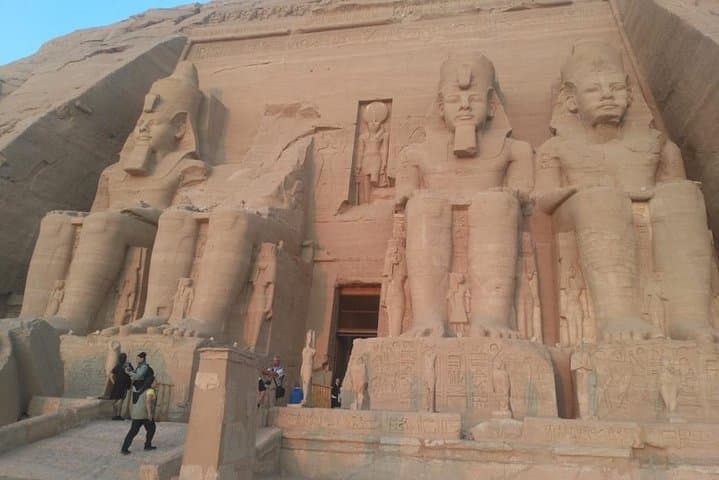
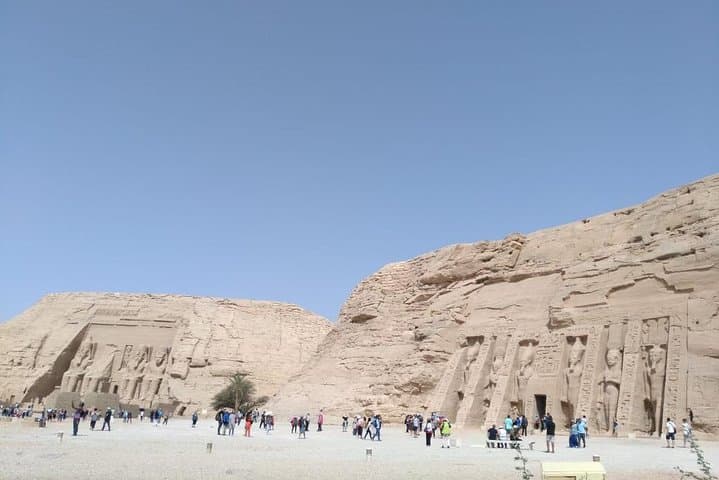
A pale ribbon of asphalt unfurls south from Aswan and the desert begins to talk in wind-sanded voices. By the time the bus rounds the final dunes, the twin facades of Abu Simbel appear—colossal seated figures carved into living rock that dominate the shoreline of Lake Nasser and command the horizon.
A pale ribbon of asphalt unfurls south from Aswan and the desert begins to talk in wind-sanded voices. By the time the bus rounds the final dunes, the twin facades of Abu Simbel appear—colossal seated figures carved into living rock that dominate the shoreline of Lake Nasser and command the horizon.
Built under Ramses II in the 13th century BCE and supplemented by the intimate Temple of Hathor for Queen Nefertari, these monuments were lifted stone by stone and moved above the rising waters of the Aswan High Dam in the 1960s — a UNESCO-coordinated rescue that reshaped the modern story of this place.
Geology here is straightforward: a low sandstone plateau cut by seasonal wind, with the man-made breadth of Lake Nasser close enough to reflect the temples on still days. Local culture is present in the small service town and the visitor center that charts the relocation engineering; guides explain the solar alignment that brightens the inner sanctum twice a year.
Practically, expect an early pickup from Aswan, roughly 3–3.5 hours drive each way, and 60–90 minutes on site to move through the Great Temple and the smaller Hathor temple. Wear sun protection, bring water and a camera (respect restrictions), and allow time for the visitor center. The route is mostly flat and accessible by minibus; the walkways in front of the temples are firm but can be hot mid-day. This day trip pairs a straightforward travel logistics footprint with one of Egypt’s most dramatic, hands-on lessons in archaeology and conservation.