THE ADVENTURE COLLECTIVE® · Independent discovery and booking for outdoor travel

A private vehicle trip from Aswan to Abu Simbel puts you at the temples before the crowds, pairing a scenic desert drive with expert archaeological context. Expect early pickup, a 3–4 hour drive each way, and unhurried time to explore the Great Temple of Ramses II and the intimate Temple of Nefertari.
A private vehicle trip from Aswan to Abu Simbel puts you at the temples before the crowds, pairing a scenic desert drive with expert archaeological context. Expect early pickup, a 3–4 hour drive each way, and unhurried time to explore the Great Temple of Ramses II and the intimate Temple of Nefertari.
Before dawn the desert breathes cool and empty as your private vehicle slips away from Aswan. The road is a ribbon across ochre sands; the air feels vast and insistent, pushing you toward two of Egypt’s most theatrical monuments.
Verified experiences and guided adventures in the surrounding area.
Operated by Ibis Travel · Abu Simbel, Aswan Governorate
Before dawn the desert breathes cool and empty as your private vehicle slips away from Aswan. The road is a ribbon across ochre sands; the air feels vast and insistent, pushing you toward two of Egypt’s most theatrical monuments.
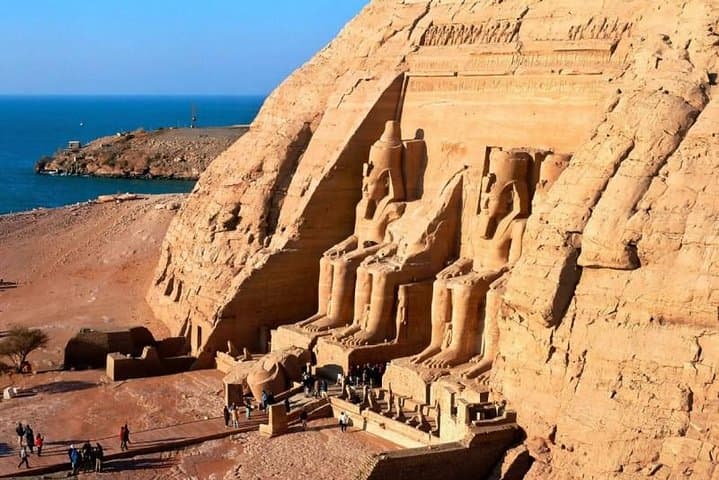
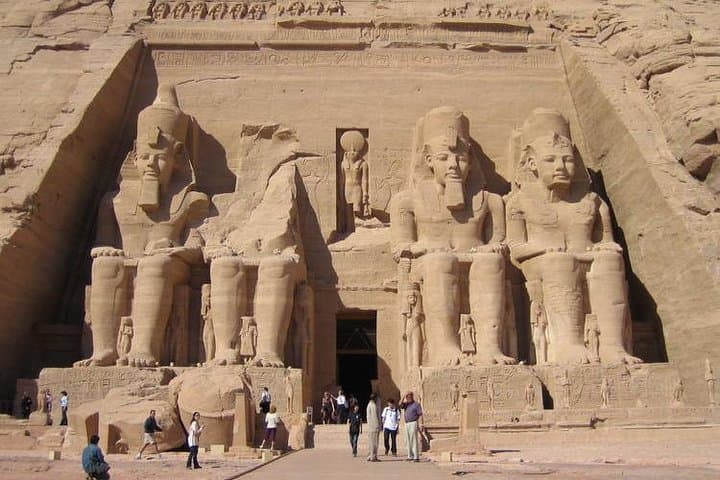
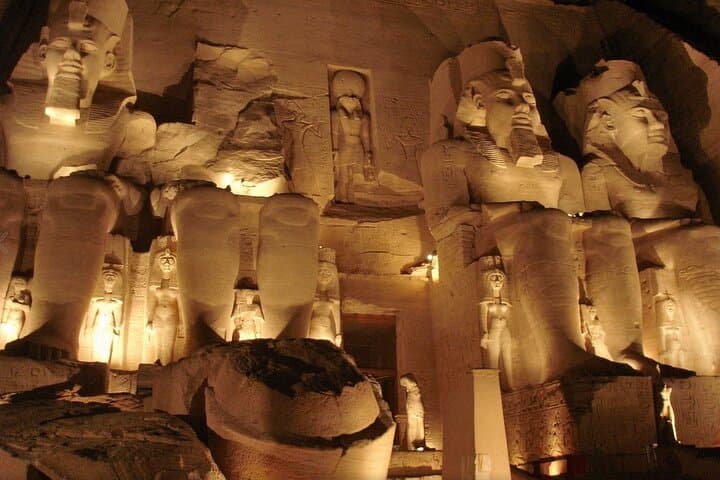
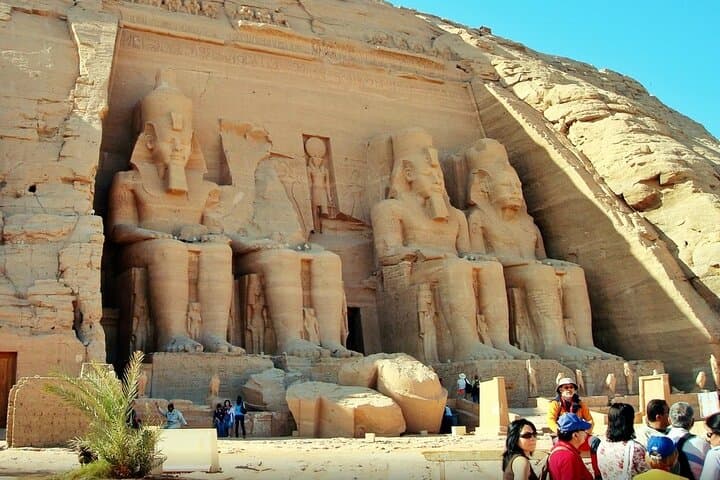
You arrive at Abu Simbel with the sun low and the façades still cool. Four colossal Ramses II statues loom at the Great Temple, their chipped noses and original polychrome faintly visible beneath centuries of wind and sun. A short walk brings you to the Temple of Nefertari, rarer and richer in surviving paint, where the queen is carved at nearly equal scale to the pharaoh.
Geology here is simple and severe: sandstone cliffs carved into royal rock. The temples were famously dismantled and relocated in the 1960s under a UNESCO-led effort to save them from Lake Nasser after the Aswan High Dam — an engineering rescue that adds modern drama to the ancient story. The inner sanctuary still aligns with sunlight twice a year, illuminating statues that once defined divine rule.
Practical side: expect a 3–4 hour drive each way from Aswan, early pickup around 4–5 AM, and 2–3 hours on site for guided exploration and photos. Walks are short but on hot, exposed ground — sun protection, steady water, and comfortable shoes matter more than technical hiking ability. Guides decode iconography and the relocation history, turning stone into story.
Plan arrival before the crowds, keep to marked paths, and conserve your energy for the drive back: the desert will have long since warmed, and the temples’ silence stays with you all the way to Aswan.
moderate.
8–10 hours.
Moderate fitness to tolerate a long day with short walks on uneven, exposed ground
The drive is about 3–4 hours each way by private vehicle; tours typically start 4–5 AM to arrive before crowds.
Entrance fees may be included depending on the selected tour option; check your booking details to confirm.
Yes—standard day tours include unhurried visits to both temples, with time for photos and guided interpretation.
Children are allowed but must be accompanied by an adult; moderate mobility is recommended since there are steps and uneven surfaces at the site.
The temples were carved for Ramses II in the 13th century BCE and were relocated block-by-block in the 1960s to save them from flooding caused by the Aswan High Dam.
The relocation is a landmark conservation project; visitors should stay on paths, avoid touching reliefs, and minimize single-use plastics to reduce local impact.
Ibis Travel operates guided outdoor trips and adventures with an emphasis on safety, stewardship, and memorable experiences.
Before dawn the desert breathes cool and empty as your private vehicle slips away from Aswan. The road is a ribbon across ochre sands; the air feels vast and insistent, pushing you toward two of Egypt’s most theatrical monuments.
Before dawn the desert breathes cool and empty as your private vehicle slips away from Aswan. The road is a ribbon across ochre sands; the air feels vast and insistent, pushing you toward two of Egypt’s most theatrical monuments.
You arrive at Abu Simbel with the sun low and the façades still cool. Four colossal Ramses II statues loom at the Great Temple, their chipped noses and original polychrome faintly visible beneath centuries of wind and sun. A short walk brings you to the Temple of Nefertari, rarer and richer in surviving paint, where the queen is carved at nearly equal scale to the pharaoh.
Geology here is simple and severe: sandstone cliffs carved into royal rock. The temples were famously dismantled and relocated in the 1960s under a UNESCO-led effort to save them from Lake Nasser after the Aswan High Dam — an engineering rescue that adds modern drama to the ancient story. The inner sanctuary still aligns with sunlight twice a year, illuminating statues that once defined divine rule.
Practical side: expect a 3–4 hour drive each way from Aswan, early pickup around 4–5 AM, and 2–3 hours on site for guided exploration and photos. Walks are short but on hot, exposed ground — sun protection, steady water, and comfortable shoes matter more than technical hiking ability. Guides decode iconography and the relocation history, turning stone into story.
Plan arrival before the crowds, keep to marked paths, and conserve your energy for the drive back: the desert will have long since warmed, and the temples’ silence stays with you all the way to Aswan.