THE ADVENTURE COLLECTIVE® · Independent discovery and booking for outdoor travel

Fly from Cairo to Aswan, drive to Abu Simbel, and spend a focused day among Ramses II’s monumental temples. This private full-day tour pairs fast travel with ample time to explore the relocated rock-cut sanctuaries on Lake Nasser’s shore.
Fly from Cairo to Aswan, drive to Abu Simbel, and spend a focused day among Ramses II’s monumental temples. This private full-day tour pairs fast travel with ample time to explore the relocated rock-cut sanctuaries on Lake Nasser’s shore.
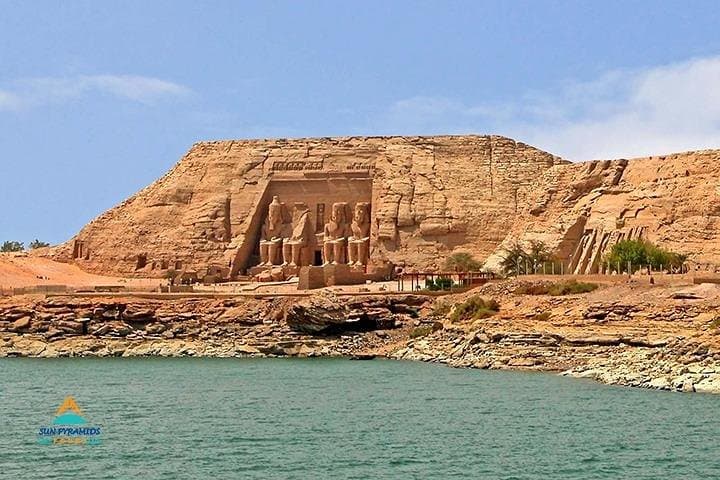
You arrive before the desert heat asserts itself, the plane descending toward Aswan and the flat, ochre sweep of Lake Nasser. The road to Abu Simbel stretches like a deliberate promise; the temples appear on the horizon as carved faces cutting into sandstone, massive and deliberate in scale.
Verified experiences and guided adventures in the surrounding area.
Operated by Sun Pyramids Vip Tours · Abu Simbel, Aswan Governorate
You arrive before the desert heat asserts itself, the plane descending toward Aswan and the flat, ochre sweep of Lake Nasser. The road to Abu Simbel stretches like a deliberate promise; the temples appear on the horizon as carved faces cutting into sandstone, massive and deliberate in scale.
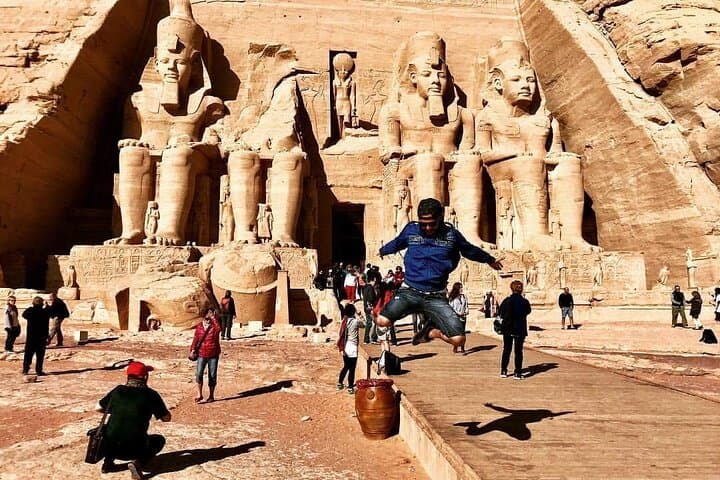
Built during the 13th century BCE under Ramses II, the Great Temple and the nearby Temple of Nefertari were cut directly into the rock and later moved block-by-block in the 1960s to escape the rising waters of Lake Nasser—a modern engineering chapter that sits beside ancient kingship. Geologically, the temples rest on Nubian sandstone; the flat plain means little climbing but a lot of bright sun and reflective water nearby. Culturally, Abu Simbel marks a moment of Egyptian diplomacy and power projection: the façade is propaganda in stone, interiors full of war reliefs and solar alignments.
Practical guidance: this private flight-and-drive day starts early and returns late—expect a full 12-hour day from hotel pickup in Cairo. Walking around the temples involves short, firm ramps and compacted gravel; wear closed shoes with good traction. Carry sun protection and layered clothing—the morning can be cool, midday intense, late afternoon breezy. Bring local currency for a simple lunch and tips; restrooms and shaded areas are limited.
Timing is everything—early visits avoid the largest crowds and the worst heat. If you value interpretation, request a guide who can explain the 1960s relocation and the astronomical alignments inside Ramses’ sanctuary. The trip is straightforward logistically but rewarding: ancient stone meets modern logistics across a vast, patient landscape.
easy.
12 hours.
Suitable for most travelers; requires the ability to walk short distances on uneven surfaces and tolerate a long travel day.
Scheduled domestic flights take roughly 1 hour 20 minutes each way; transfers and the road drive to Abu Simbel add several hours to the itinerary.
This private tour includes entrance fees to the Abu Simbel temples as listed in the itinerary inclusions.
The tour is marked accessible in parts—approaches are relatively flat with ramps, but some areas have uneven surfaces; check specific accessibility needs with the operator in advance.
Yes; the standard visit includes both the Great Temple of Ramses II and the nearby Temple of Nefertari, with time allocated to each.
Abu Simbel’s temples date to the 13th century BCE under Ramses II; in the 1960s they were dismantled and relocated to avoid flooding caused by the Aswan High Dam and the creation of Lake Nasser.
The relocation was an early large-scale conservation effort; ongoing visitor management and limits on onsite facilities aim to reduce wear on ancient stone and protect the site from pollution and erosion.
Sun Pyramids Vip Tours operates guided outdoor trips and adventures with an emphasis on safety, stewardship, and memorable experiences.


You arrive before the desert heat asserts itself, the plane descending toward Aswan and the flat, ochre sweep of Lake Nasser. The road to Abu Simbel stretches like a deliberate promise; the temples appear on the horizon as carved faces cutting into sandstone, massive and deliberate in scale.
You arrive before the desert heat asserts itself, the plane descending toward Aswan and the flat, ochre sweep of Lake Nasser. The road to Abu Simbel stretches like a deliberate promise; the temples appear on the horizon as carved faces cutting into sandstone, massive and deliberate in scale.
Built during the 13th century BCE under Ramses II, the Great Temple and the nearby Temple of Nefertari were cut directly into the rock and later moved block-by-block in the 1960s to escape the rising waters of Lake Nasser—a modern engineering chapter that sits beside ancient kingship. Geologically, the temples rest on Nubian sandstone; the flat plain means little climbing but a lot of bright sun and reflective water nearby. Culturally, Abu Simbel marks a moment of Egyptian diplomacy and power projection: the façade is propaganda in stone, interiors full of war reliefs and solar alignments.
Practical guidance: this private flight-and-drive day starts early and returns late—expect a full 12-hour day from hotel pickup in Cairo. Walking around the temples involves short, firm ramps and compacted gravel; wear closed shoes with good traction. Carry sun protection and layered clothing—the morning can be cool, midday intense, late afternoon breezy. Bring local currency for a simple lunch and tips; restrooms and shaded areas are limited.
Timing is everything—early visits avoid the largest crowds and the worst heat. If you value interpretation, request a guide who can explain the 1960s relocation and the astronomical alignments inside Ramses’ sanctuary. The trip is straightforward logistically but rewarding: ancient stone meets modern logistics across a vast, patient landscape.