THE ADVENTURE COLLECTIVE® · Independent discovery and booking for outdoor travel

Fly from Aswan to Abu Simbel and spend a focused half-day with a private Egyptologist at the colossal temples of Ramses II. Fast logistics, deep history, and close-up encounters with one of Egypt’s most dramatic relocation projects.
Fly from Aswan to Abu Simbel and spend a focused half-day with a private Egyptologist at the colossal temples of Ramses II. Fast logistics, deep history, and close-up encounters with one of Egypt’s most dramatic relocation projects.
The plane dips low over the still expanse of Lake Nasser and the desert reaches up like an open palm; below, the twin façades of Abu Simbel sit cut into the cliff with a blunt, ancient authority. You step from a short flight into dry heat and the shadow of four colossal Ramses II figures, their faces leveled by centuries and then by a modern engineering rescue. A private Egyptologist meets you at the strip and begins a compact, interpretive walk that balances archaeological detail with the raw presence of carved stone.
Verified experiences and guided adventures in the surrounding area.
Operated by Roxana Travel · Abu Simbel, Aswan Governorate
The plane dips low over the still expanse of Lake Nasser and the desert reaches up like an open palm; below, the twin façades of Abu Simbel sit cut into the cliff with a blunt, ancient authority. You step from a short flight into dry heat and the shadow of four colossal Ramses II figures, their faces leveled by centuries and then by a modern engineering rescue. A private Egyptologist meets you at the strip and begins a compact, interpretive walk that balances archaeological detail with the raw presence of carved stone.
Built in the 13th century BCE and famously relocated in the 1960s to escape the rising waters of Lake Nasser, the Great Temple and the smaller Hathor temple are as much a story of 20th-century conservation as of New Kingdom ambition. The sandstone cliff here is soft in places and hard-wearing in others; sunlight chisels reliefs clear in the morning and flattens them at midday. Local Nubian communities and Aswan’s long river-trade routes shaped the culture that once served these shrines.
Practically: the flight is ~30 minutes; the tour is private and accessible for most fitness levels, but expect uneven stone approaches and brief stair climbs. Guides use photos to explain interior scenes when regulations limit access; bring sun protection, a good camera, and patience for security checks. Aim for early departures to catch cooler air and better side-light on the colossi, and respect posted routes to protect fragile reliefs. This visit compresses deep history and bold engineering into a tight, unforgettable half-day.
easy.
4 hours.
Suitable for most travelers—short to moderate walking on uneven stone and a few steps; minimal sustained exertion.
Yes — the tour includes the roundtrip flight between Aswan and Abu Simbel as part of the private transfer.
Guides are sometimes restricted from entering interior chambers; they will use photos and explanations, and you will generally have time to enter the temples yourself when allowed.
The tour lists wheelchair-accessible options, but some temple approaches have steps and uneven surfaces—check specifics with the operator before booking.
Meals are not listed as included; bring water and snacks if you have dietary needs, though options at the airport or nearby may be limited.
Commissioned by Ramses II in the 13th century BCE and notably relocated in 1964–1968 during the Aswan High Dam project, Abu Simbel is both an ancient monument and a mid-20th-century conservation achievement.
Visitor pressure and lake-level changes require strict pathing; stick to marked routes, avoid touching reliefs, and carry out any trash to protect the fragile sandstone surfaces.
Roxana Travel operates guided outdoor trips and adventures with an emphasis on safety, stewardship, and memorable experiences.
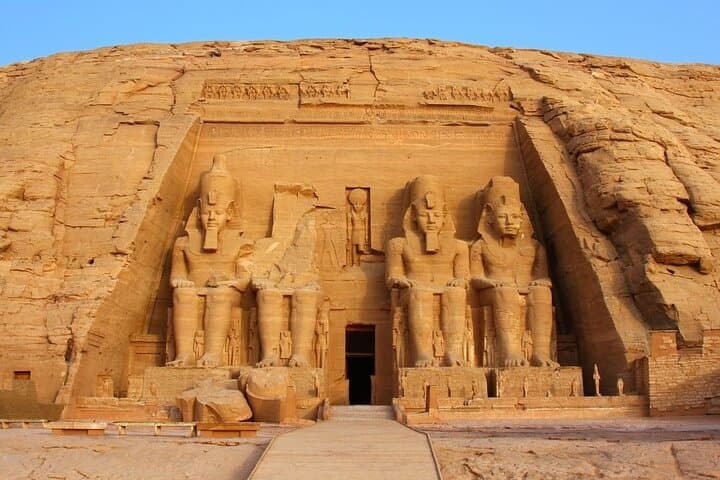
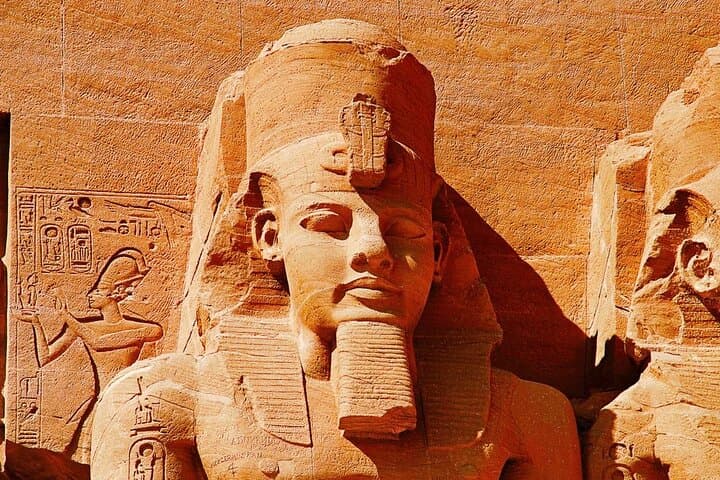
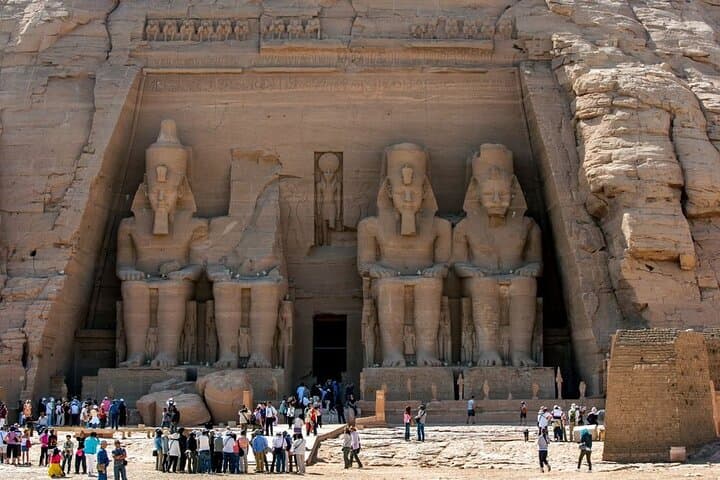
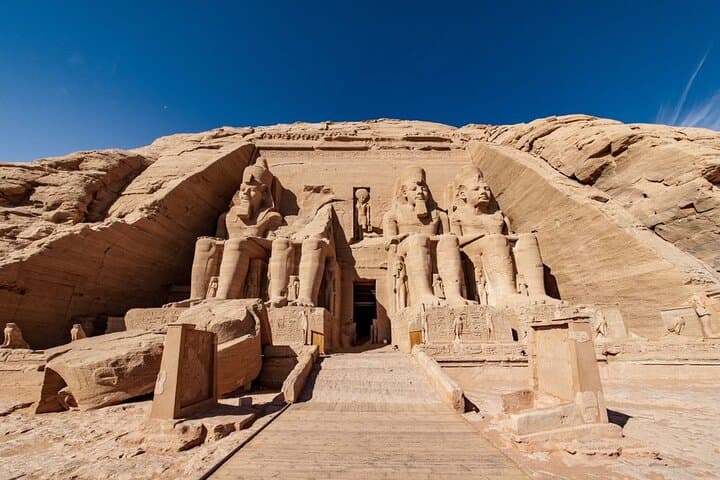
The plane dips low over the still expanse of Lake Nasser and the desert reaches up like an open palm; below, the twin façades of Abu Simbel sit cut into the cliff with a blunt, ancient authority. You step from a short flight into dry heat and the shadow of four colossal Ramses II figures, their faces leveled by centuries and then by a modern engineering rescue. A private Egyptologist meets you at the strip and begins a compact, interpretive walk that balances archaeological detail with the raw presence of carved stone.
The plane dips low over the still expanse of Lake Nasser and the desert reaches up like an open palm; below, the twin façades of Abu Simbel sit cut into the cliff with a blunt, ancient authority. You step from a short flight into dry heat and the shadow of four colossal Ramses II figures, their faces leveled by centuries and then by a modern engineering rescue. A private Egyptologist meets you at the strip and begins a compact, interpretive walk that balances archaeological detail with the raw presence of carved stone.
Built in the 13th century BCE and famously relocated in the 1960s to escape the rising waters of Lake Nasser, the Great Temple and the smaller Hathor temple are as much a story of 20th-century conservation as of New Kingdom ambition. The sandstone cliff here is soft in places and hard-wearing in others; sunlight chisels reliefs clear in the morning and flattens them at midday. Local Nubian communities and Aswan’s long river-trade routes shaped the culture that once served these shrines.
Practically: the flight is ~30 minutes; the tour is private and accessible for most fitness levels, but expect uneven stone approaches and brief stair climbs. Guides use photos to explain interior scenes when regulations limit access; bring sun protection, a good camera, and patience for security checks. Aim for early departures to catch cooler air and better side-light on the colossi, and respect posted routes to protect fragile reliefs. This visit compresses deep history and bold engineering into a tight, unforgettable half-day.