THE ADVENTURE COLLECTIVE® · Independent discovery and booking for outdoor travel

Travel three hours south of Aswan to watch Abu Simbel transform: an atmospheric Sound & Light show the first night and a sunrise-guided exploration the next morning. This two-day private transfer pairs dramatic lighting with early-morning serenity and close study of Ramses II’s monumental temples.
Travel three hours south of Aswan to watch Abu Simbel transform: an atmospheric Sound & Light show the first night and a sunrise-guided exploration the next morning. This two-day private transfer pairs dramatic lighting with early-morning serenity and close study of Ramses II’s monumental temples.
The road drops away from Aswan into ochre desert; after three hours the silhouette of rock-carved colossi appears, sudden and enormous against Lake Nasser's flat light. On the first night the facade is painted with moving color and narration—stone becomes stage, and the past speaks through sound and light. By dawn the same faces are washed in gold as sun threads the temple's axis.
Verified experiences and guided adventures in the surrounding area.
Operated by Eyes of Egypt · Abu Simbel, Aswan Governorate
The road drops away from Aswan into ochre desert; after three hours the silhouette of rock-carved colossi appears, sudden and enormous against Lake Nasser's flat light. On the first night the facade is painted with moving color and narration—stone becomes stage, and the past speaks through sound and light. By dawn the same faces are washed in gold as sun threads the temple's axis.
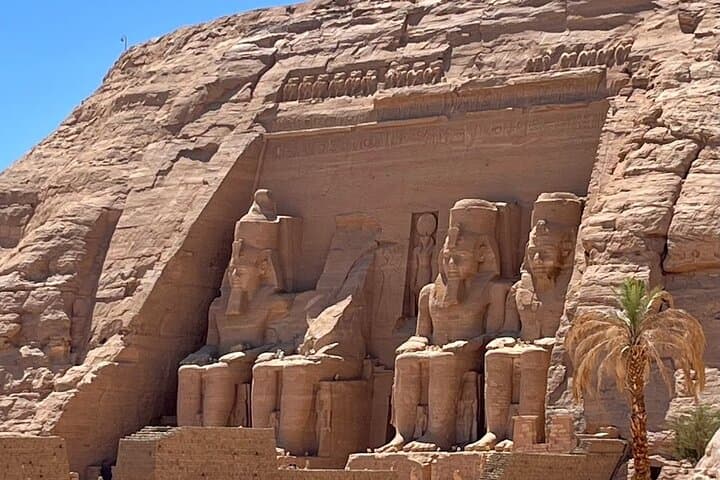
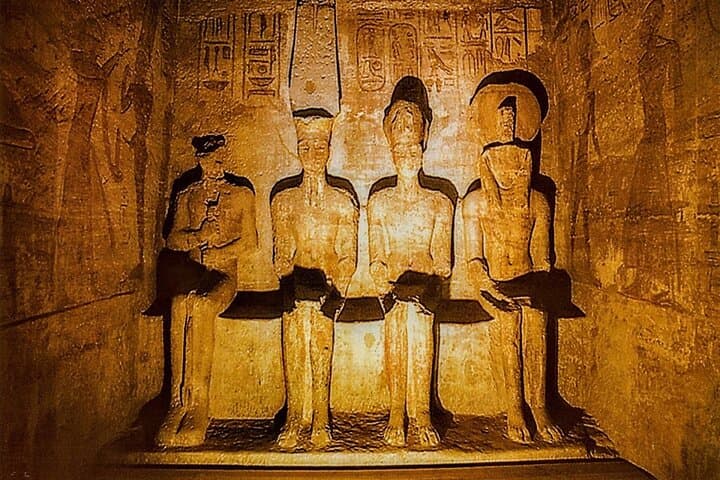
The twin temples at Abu Simbel were carved under Ramses II in the 13th century BCE and relocated in the 1960s to save them from rising waters after the Aswan High Dam—a modern engineering story that sits beside millennia of pharaonic ambition. Geologically the site is Nubian sandstone cut into a cliff; culturally it marks imperial reach and solar ritual, visible in the precise inner sanctuary alignment that lights statues on specific days.
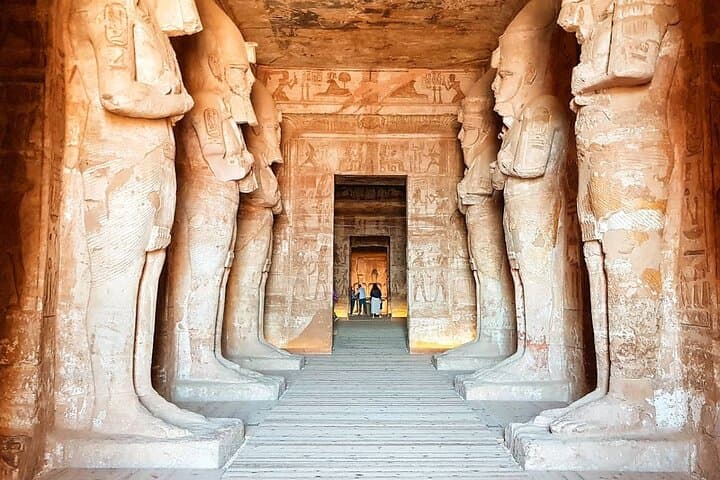
Expect two compact visits: an evening Sound & Light presentation that interprets the site, and a morning guided walk through the Great Temple of Ramses II and the smaller Hathor temple to Nefertari. Transfers are private and air‑conditioned, with a relaxed overnight in Abu Simbel to spread out the travel.
Practical guidance: plan for intense sun and long car legs—carry 2–3 liters of water, sun protection, and sturdy, comfortable shoes for uneven stone floors. Cameras are welcome but respect signage; timed entry and the guide's narration structure the visit. If you prefer quieter moments, request the earliest morning entry to catch the solar illumination and fewer crowds.
easy.
2 days.
Suitable for most fitness levels; involves short walks on uneven stone surfaces and standing during presentations
The private transfer takes about three hours each way by comfortable, air‑conditioned vehicle.
The tour notes that hotel and entrance tickets are not included—confirm ticket arrangements with the operator before traveling.
The site is listed as wheelchair accessible, but contact the operator in advance to arrange assistance and accessible seating for the show.
Early morning visits around the seasonal alignment days yield the strongest interior lighting; ask your guide for specifics and try the first morning slot to maximize light and low crowds.
Built by Ramses II in the 13th century BCE and relocated stone-by-stone in the 1960s to save them from Lake Nasser, Abu Simbel combines ancient ritual architecture with a modern UNESCO rescue story.
The relocation and ongoing site management are examples of large-scale cultural conservation; visitors should avoid touching reliefs and follow marked paths to protect fragile sandstone surfaces.
Eyes of Egypt operates guided outdoor trips and adventures with an emphasis on safety, stewardship, and memorable experiences.
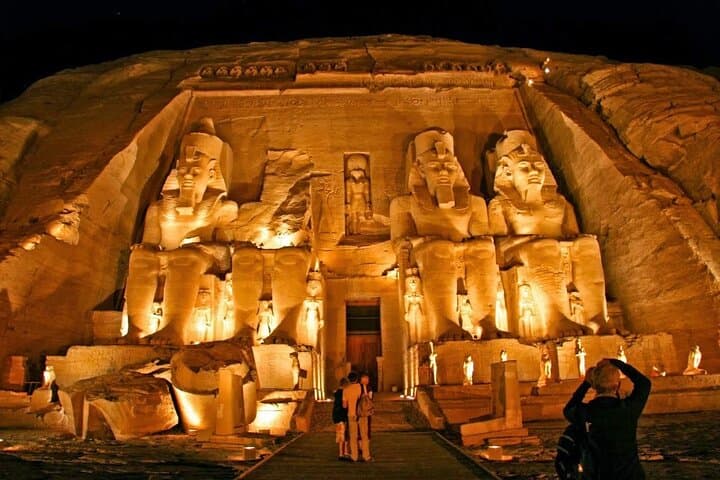
The road drops away from Aswan into ochre desert; after three hours the silhouette of rock-carved colossi appears, sudden and enormous against Lake Nasser's flat light. On the first night the facade is painted with moving color and narration—stone becomes stage, and the past speaks through sound and light. By dawn the same faces are washed in gold as sun threads the temple's axis.
The road drops away from Aswan into ochre desert; after three hours the silhouette of rock-carved colossi appears, sudden and enormous against Lake Nasser's flat light. On the first night the facade is painted with moving color and narration—stone becomes stage, and the past speaks through sound and light. By dawn the same faces are washed in gold as sun threads the temple's axis.
The twin temples at Abu Simbel were carved under Ramses II in the 13th century BCE and relocated in the 1960s to save them from rising waters after the Aswan High Dam—a modern engineering story that sits beside millennia of pharaonic ambition. Geologically the site is Nubian sandstone cut into a cliff; culturally it marks imperial reach and solar ritual, visible in the precise inner sanctuary alignment that lights statues on specific days.
Expect two compact visits: an evening Sound & Light presentation that interprets the site, and a morning guided walk through the Great Temple of Ramses II and the smaller Hathor temple to Nefertari. Transfers are private and air‑conditioned, with a relaxed overnight in Abu Simbel to spread out the travel.
Practical guidance: plan for intense sun and long car legs—carry 2–3 liters of water, sun protection, and sturdy, comfortable shoes for uneven stone floors. Cameras are welcome but respect signage; timed entry and the guide's narration structure the visit. If you prefer quieter moments, request the earliest morning entry to catch the solar illumination and fewer crowds.